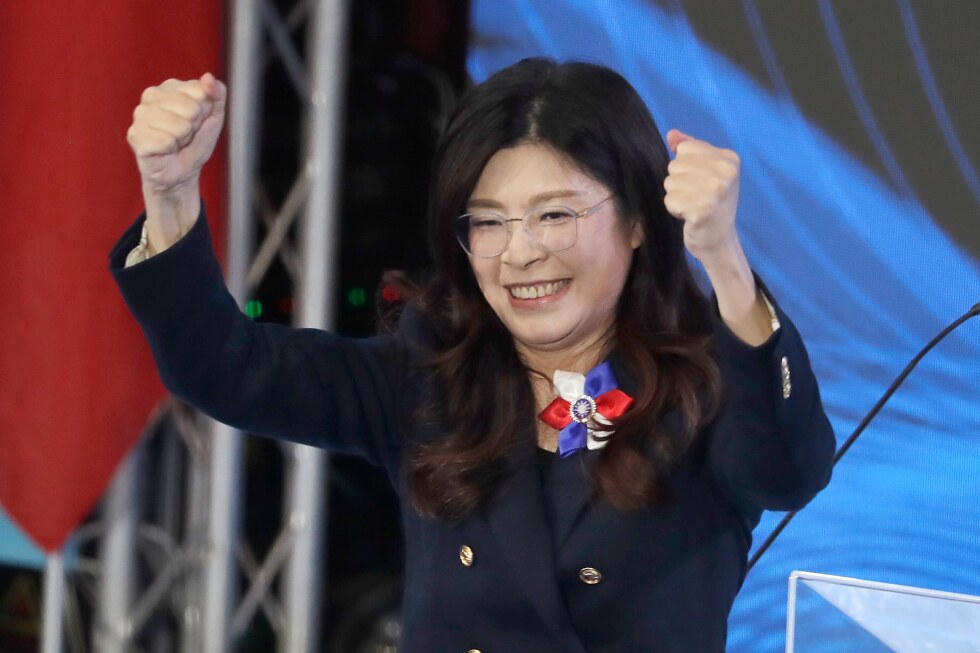
TAIPEI, Taiwan — In a significant development that marks the first visit by a Taiwanese opposition leader to mainland China in 10 years, Kuomintang chairwoman Cheng Li-wun departed Taipei Tuesday for a trip to mainland China, accepted an official invitation from Chinese President Xi Jinping. Cheng frames her trip as a peace-seeking mission amid long-running cross-Strait tensions, as Beijing maintains its sovereign claim over the self-governing island and has repeatedly refused to rule out the use of military force to assert control.
The well-timed trip comes weeks ahead of a scheduled Beijing summit between Chinese President Xi Jinping and former U.S. President Donald Trump, adding an extra layer of geopolitical significance to cross-Strait and U.S.-China relations. Ahead of her departure, Cheng stressed to waiting reporters at Taipei International Airport that all possible efforts must be made by both sides to avoid conflict and pursue every available opening to advance cross-Strait peace.
Cheng emphasized that the core goal of her visit is to demonstrate to the global community that desire for peace is not limited to one side of the Taiwan Strait. “Through this journey for peace, I believe the world will see more clearly the sincerity and determination of the Communist Party of China Central Committee to resolve all outstanding differences between the two sides through peaceful dialogue and people-to-people exchange,” she added.
A small crowd of both supporters and critics gathered at the Taipei airport, holding contrasting signs and chanting competing slogans as Cheng prepared to depart, reflecting the deep domestic divides in Taiwan over cross-Strait engagement policy.
The visit unfolds against a backdrop of heightened tensions between Beijing, Washington, and the current ruling government in Taipei. In December of the relevant year, the Trump administration announced a $10 billion arms sales package to Taiwan, including medium-range missiles, howitzers, and reconnaissance drones — a move that drew sharp criticism and anger from Beijing.
Under Beijing’s one-China policy, all diplomatic partners of China are barred from maintaining official formal relations with Taipei. The U.S. remains Taiwan’s most powerful informal ally and primary arms supplier, and the controversial arms sale is expected to be a top agenda item during the Xi-Trump summit in Beijing.
During a February phone call between Xi and Trump, the Chinese leader made clear that “Taiwan will never be allowed to separate from China,” according to an official readout of the conversation released by the Chinese government at the time. He also urged the U.S. to exercise extreme caution when handling Taiwan arms sales issues, repeating Beijing’s long-standing position that the Taiwan question is the most sensitive and critical issue at the core of U.S.-China relations.
In recent months, Beijing has ramped up military pressure on Taiwan, deploying warplanes and naval vessels near the island on an almost daily basis and holding two large-scale joint military exercises around its borders. The most recent major exercise, held in December immediately following the announcement of the U.S. arms sale, included coordinated live-fire drills involving air force, navy, and long-range missile units. The U.S. State Department responded at the time by condemning the drills, saying they unnecessarily raised regional tensions and calling on Beijing to halt its military pressure campaign against Taipei.
Beijing currently refuses all official engagement with Taiwan’s sitting President Lai Ching-te, whom it labels a dangerous separatist pushing for permanent separation from the mainland. Cheng’s trip also coincides with a domestic political standoff in Taipei, where the opposition-controlled legislative yuan has blocked attempts by Lai’s government to pass a $40 billion special defense budget aimed at upgrading the island’s defense capabilities.