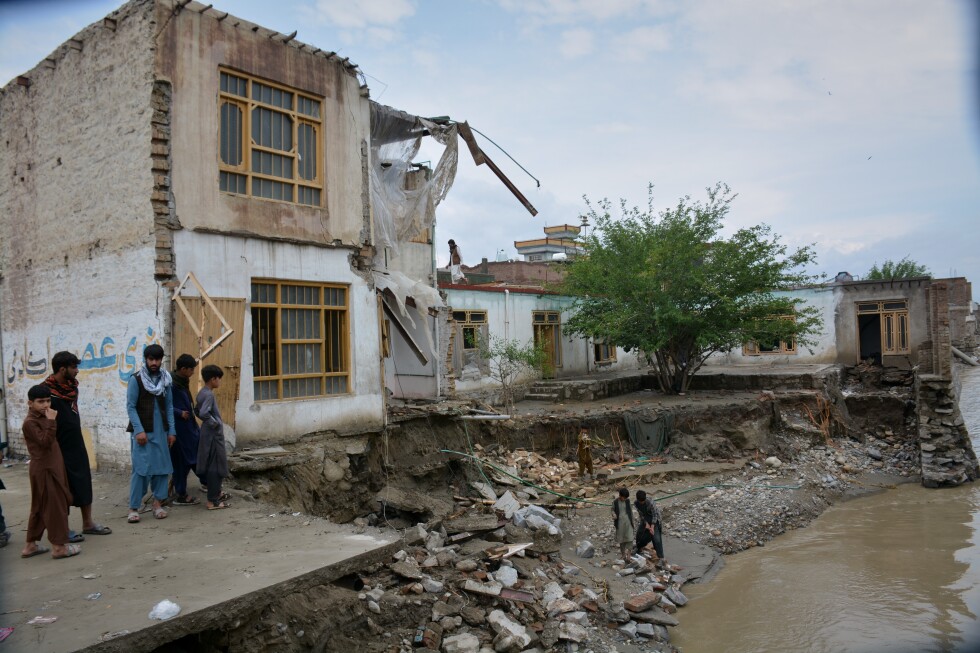
Twelve days of relentless extreme weather across Afghanistan has left a devastating trail of destruction, with the national disaster authority confirming Monday that the death toll from widespread flooding and landslides has climbed to at least 110. Authorities have also warned that more heavy precipitation is on the way, leaving the country bracing for further hardship.
The prolonged storm system has impacted almost all of Afghanistan’s 34 provinces, with new casualties continuing to mount in the most recent 24-hour window: the Disaster Management Authority reported 11 additional deaths, six new injuries, and seven people unaccounted for, all swept away by surging floodwaters in separate incidents.
When accounting for all fatalities from flooding, landslides and associated lightning strikes over the 12-day crisis period, the total casualty count stands at 110 dead and 160 injured. The damage to infrastructure and private property is equally staggering: 958 homes have been completely leveled, and a further 4,155 residences have sustained partial damage that leaves many uninhabitable. More than 325 kilometers (200 miles) of critical public roads have been destroyed, while widespread damage to commercial property, agricultural plots, irrigation canals and drinking water wells has disrupted the lives of 6,122 registered families to date. Disaster management officials stress these numbers remain preliminary, as assessments are still ongoing in hard-to-reach affected areas.
Emergency response operations are already underway across hard-hit regions. In the western province of Herat, Afghanistan’s Defense Ministry confirmed Monday that military helicopter crews successfully airlifted two stranded residents to safety after floodwaters cut off their escape route.
Two of the country’s major arterial highways have been closed for days due to landslide and flood damage, forcing thousands of travelers to take lengthy, unplanned detours. The critical Kabul-Jalalabad highway, which connects the national capital to the Pakistani border and Afghanistan’s eastern provinces, has been shut since last Thursday. A second key route, running from Jalalabad city northeast to Kunar and Nuristan provinces, was closed Sunday by falling rock debris from unstable hillsides damaged by heavy rain.
In anticipation of continued severe weather, national authorities have issued widespread flood warnings for Tuesday across nearly the entire country, urging residents to avoid low-lying river valleys and areas historically prone to flash flooding.
This latest extreme weather event comes on the heels of multiple deadly climate disasters in Afghanistan already this year. Earlier in 2025, heavy snowfall followed by sudden flash floods killed dozens of people across the country. Afghanistan is annually at high risk of seasonal flood events, as spring melting and heavy rainfall often trigger sudden deadly flash floods on steep, deforested terrain that can kill scores or even hundreds of people in a single event. In 2024 alone, spring flash floods claimed more than 300 lives across the nation.