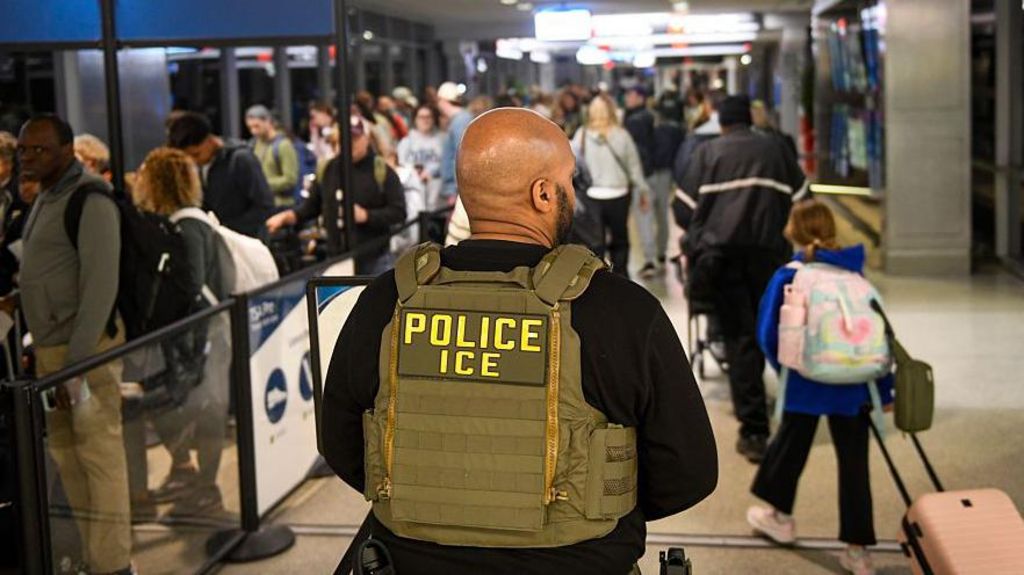
The Democratic Republic of Congo (DRC) has entered into a new agreement with the United States that will see the central African nation accept non-Congolese migrants deported from U.S. territory, with the policy set to take effect this month, senior Congolese government officials have confirmed.
In an official statement released Sunday, the DRC’s Ministry of Communication announced that a temporary reception framework for incoming deportees has already been established, and purpose-built accommodation facilities have been secured in the capital city of Kinshasa. According to the statement, all logistical and technical support for the program will be covered by the U.S. government, and the Congolese state will not incur any financial costs related to the reception scheme.
To date, Congolese authorities have not publicly disclosed how many third-country deportees – individuals who are neither citizens of the deporting country, the U.S., nor the receiving country, DRC – they expect to take in under the agreement. The deal makes DRC the latest African nation to participate in the Trump administration’s broad crackdown on unauthorized immigration, a policy that has already seen the U.S. arrange third-country deportations to multiple other African states.
Addressing growing concerns from human rights groups that DRC would eventually transfer received migrants to their home countries, where many face credible risks of persecution, Congolese officials stressed that no such secondary transfers are currently planned. The statement framed the decision to accept third-country migrants as aligned with DRC’s long-standing commitments to upholding human dignity, advancing international solidarity, and protecting the fundamental rights of all migrants. Congolese authorities also emphasized that the scheme is not intended to act as a permanent relocation program, nor does it represent an outsourcing of U.S. migration policy to African soil.
The BBC reached out to both the U.S. State Department and the Department of Homeland Security for comment on the new agreement, but had not received a response as of publication.
Since taking office in January 2025, President Donald Trump’s administration has pursued a aggressively hard-line stance on immigration, deporting dozens of migrants to third-party countries as part of this policy agenda. The practice has drawn widespread condemnation from human rights campaigners, many of whom have raised serious questions about the legal standing of the third-country deportation scheme.
DRC now joins a growing list of African nations already participating in the program, including Eswatini, Ghana, and South Sudan. Just last week, eight migrants from various African nations were deported by the U.S. to Uganda under the same policy framework.
A minority report released by the U.S. Senate Committee on Foreign Relations estimates that the Trump administration had likely spent more than $40 million (approximately £30 million) on third-country deportation operations as of January 2026, though the full total cost of the program remains officially unknown. The report also notes that the U.S. has provided more than $32 million in direct funding to five participating nations: Equatorial Guinea, Rwanda, El Salvador, Eswatini, and Palau.
The new migration deal comes as the U.S. is currently negotiating a separate minerals agreement with DRC, which aims to secure greater American access to the central African country’s abundant reserves of strategically critical metals, including cobalt, tantalum, lithium, and copper. During the Trump administration, the U.S. also mediated a landmark peace agreement between DRC and neighboring Rwanda, though consistent implementation of the deal has remained an ongoing challenge for both nations.