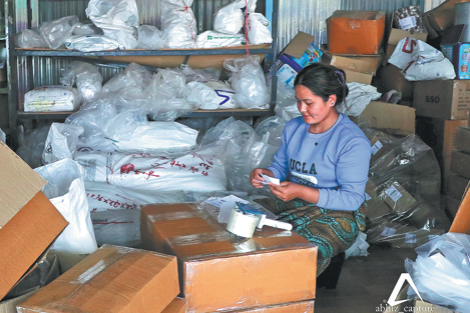
In November 2026, Nepal will complete its long-awaited transition out of the United Nations’ Least Developed Country (LDC) classification and move up to developing country status — a milestone widely seen as confirmation of a nation’s developmental progress. But a new analysis from the International Labour Organization (ILO) released on March 16 warns that this landmark shift comes with substantial near-term economic and employment risks: up to 132,000 existing jobs could be lost over five years, with total economic losses reaching nearly $1 billion. The report breaks down projected losses evenly by gender, with 67,000 jobs for men and 65,000 for women expected to disappear, almost entirely driven by shrinking export volumes that will follow the expiration of trade preferences exclusively reserved for LDCs.
The manufacturing sector, Nepal’s largest export-driven employer, will bear the brunt of the impact: the *Employment Impact Assessment on Nepal’s LDC Graduation* estimates that roughly 142,000 manufacturing positions will face disruption, placing urgent pressure on the Nepali government to both offset existing losses and create new, stable roles to replace them. What makes the outlook particularly concerning for gender equity is that women, who already face far lower labor force participation rates across Nepal, will see a proportional share of losses. Urban areas will see steeper job declines than rural regions, with urban women facing twice the rate of job loss as their male counterparts. This imbalance, the report warns, could trigger reverse migration of displaced female workers from cities back to rural communities, where work is overwhelmingly informal, low-productivity, and frequently unpaid, deepening the economic precarity of already vulnerable groups.
Key export-reliant sub-sectors including apparel, textiles, and handwoven carpets are most exposed to losses, as these industries already contend with steep domestic transport costs and cutthroat global competition. Overall, the report projects total export losses will equal between 2.5% and 4.3% of Nepal’s total annual export value, varying by target market and product category.
Numan Ozcan, ILO’s country director for Nepal, framed the upcoming 2026 graduation as a critical turning point for the South Asian nation, but emphasized that the milestone is just the start of a challenging new phase. “It is a transition into a more competitive environment with fewer international support measures and higher expectations,” Ozcan said. “That can sound very technical, but it can also become very real and very personal. Maybe not for the people sitting in this meeting room, but for business owners, factory workers, and workers in small shops, hotels, transport or the informal economy. It can become very real and personal.”
The ILO’s analysis does not only outline risks, however: through simulated policy testing, the report found that targeted strategic investments can fully offset projected GDP losses and create new employment to replace the roles lost. The most promising areas for intervention, the report notes, include upgraded trade facilitation infrastructure, expanded investment in the tourism sector, and deliberate growth of the information and communications technology (ICT) industry. The organization stressed that the success of these mitigation efforts will hinge entirely on proactive policy design and timely implementation ahead of the November graduation date, urging the Nepali government to begin preparations immediately to secure a smooth transition. Ultimately, Ozcan said, the true test of Nepal’s graduation will not be the milestone itself, but whether the country can convert its new developing country status into sustained, inclusive growth: “The real test is how Nepal can translate graduation into better jobs, stronger enterprises and greater economic security for everyone.”