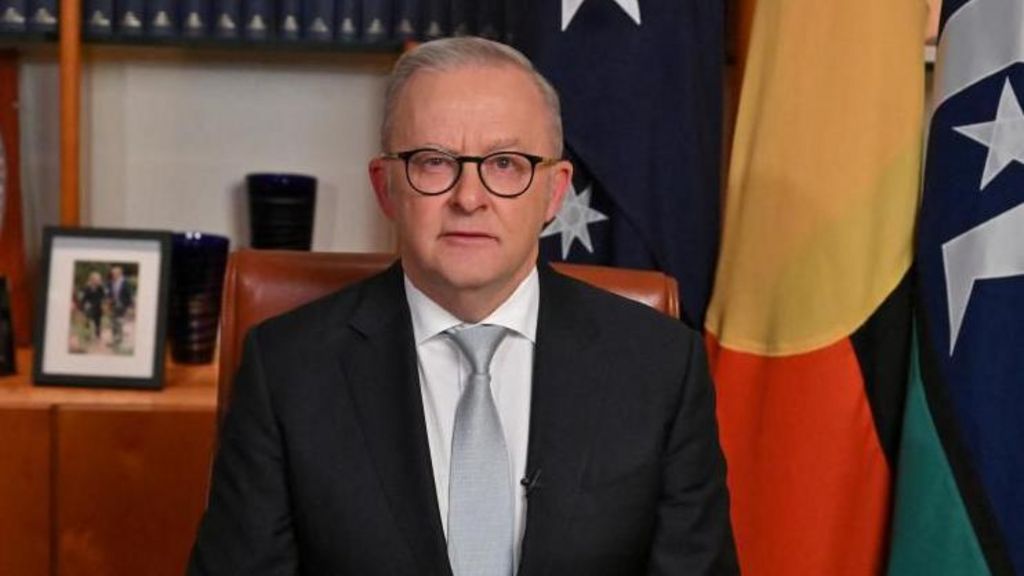
In an uncommon televised national address delivered Wednesday, Australian Prime Minister Anthony Albanese has delivered a stark warning to citizens: the economic fallout from the ongoing Middle East conflict involving Iran will ripple through Australian households for months to come. The rare national address, a format reserved for defining moments of national and international crisis — most recently deployed during the COVID-19 pandemic, and prior to that during the 2008 global financial crisis — comes amid unprecedented volatility in global fuel markets triggered by the conflict and the near-total closure of the Strait of Hormuz.
Albanese emphasized that while Australia is not a direct participant in the hostilities, all Australians are already bearing the cost of the conflict through skyrocketing fuel prices. The conflict has caused the single largest spike in petrol and diesel prices on record, with cost-of-living pressures already hitting household budgets across the country. Around 20% of the world’s total oil and natural gas supplies pass through the Strait of Hormuz, making its effective blockade a critical disruption to global energy markets. Countries across the globe, Australia included, have recorded sharp jumps in fuel prices in recent weeks, prompting governments to roll out emergency measures to stabilize supplies.
The Prime Minister acknowledged that the weeks and months ahead will bring financial hardship for many Australian families, and made clear that no federal government can fully insulate the country from these sweeping global economic pressures. The warning comes after reports of panic buying at petrol stations across the country, which left multiple retailers dry of fuel, and follows earlier efforts from Albanese to calm public anxiety.
In response to the crisis, the Australian government has unveiled a package of temporary emergency measures designed to ease immediate cost burdens for consumers and businesses. The plan includes a 50% cut to the national fuel excise tax and a three-month suspension of road user charges for heavy commercial vehicles. To strengthen domestic supply chains, officials are also working to boost domestic fuel stockpiles and increase imports through regional alliances under a newly finalized National Fuel Security Plan.
Alongside government action, Albanese called on all Australians to do their part to conserve fuel supplies, particularly for essential industries that rely on steady energy access to function. He urged residents to avoid unnecessary fuel use, and encouraged people to switch to public transport for daily commutes where possible. While calling for voluntary conservation, the Prime Minister also reassured the public that there is no need to disrupt daily life, urging Australians to go forward with planned Easter holiday travel as scheduled. “You should go about your business and your life, as normal,” he said, adding: “Enjoy your Easter. If you’re hitting the road, don’t take more fuel than you need — just fill up like you normally would. Think of others in your community, in the bush and in critical industries. And over coming weeks, if you can switch to catching the train or bus or tram to work, do so.”
Closing the address, Albanese struck a unifying tone, framing the challenge as one that Australia can overcome through collective action and mutual support, echoing the national resilience that has seen the country through past crises. “We will deal with these global challenges, the Australian way,” he said. “Working together — and looking after each other. As we always have.”