During a Wednesday press briefing with reporters in Washington D.C., a senior Trump administration official tasked with United Nations reform laid out the White House’s stance on the global body, confirming that President Donald Trump still endorses the UN’s core founding missions while pushing for sweeping changes to help the institution exceed its long-unrealized potential.
This positioning comes amid well-documented friction between the Trump White House and the UN, after the administration cut U.S. funding earlier this year to several UN-affiliated bodies, including the UN Register of Conventional Arms and the Global Counterterrorism Forum — initiatives that have traditionally enjoyed bipartisan support across successive U.S. administrations. The Trump administration also implemented further withdrawals from UN-led climate action programs, building on its first-term policy of pulling out of the Paris Agreement.
Jeff Bartos, the U.S. Ambassador for UN Management and Reform — a political appointee confirmed to the post in July with no prior formal diplomatic experience — emphasized that the administration’s reform push aligns with the president’s core belief that the UN holds untapped potential. “It’s our responsibility, under the president’s leadership, to help the UN reach and exceed that potential,” Bartos told Middle East Eye in response to a question during the briefing.
As a partial gesture of commitment to the institution, Bartos confirmed the administration has disbursed $159 million toward the UN’s regular assessed budget, alongside an additional $2 billion in pooled funding for the UN Office for the Coordination of Humanitarian Affairs. However, the full financial picture remains deeply strained: when Trump took office 15 months ago, Washington halted all scheduled payments to the UN, leaving the institution — which relies heavily on U.S. contributions to operate — facing a severe liquidity crisis with more than $3.5 billion in unpaid U.S. arrears. This backlog is not unique to the current Trump term; the prior Biden administration also accumulated significant unpaid dues during its time in office.
UN Secretary-General António Guterres has repeatedly warned that the institution risks total financial collapse if the U.S. does not resolve its outstanding arrears.
Bartos pushed back on criticism of the funding hold, saying his team has worked “very, very effectively” with UN leadership and other member states to advance targeted reforms within the UN Secretariat, the administrative body that oversees the institution’s daily operations. The core of the U.S. reform agenda, he argued, is refocusing the UN on its foundational mission of global peace and security, with major changes proposed for long-running peacekeeping operations.
“The idea that missions can go on for 20, 30, 40, 50, even 70 years is unacceptable,” Bartos said. He argued all new and existing peacekeeping deployments must include clear strategic objectives, measurable performance milestones, and a predefined exit strategy to prevent open-ended, costly missions that outlive their purpose.
One immediate cost-saving reform the administration is pushing changes the way the UN reimburses member states for peacekeeping equipment. Bartos explained the new policy would end reimbursement for unused gear, a shift projected to save the institution tens of millions of dollars annually. “We’re deeply grateful to the countries and the troops who serve in these missions, but we can’t keep paying for equipment that isn’t being used,” he noted.
Bartos recently returned from a field visit to peacekeeping operations in the Central African Republic, Kenya, and the Democratic Republic of the Congo, where he said he was impressed by the leadership quality of on-the-ground mission command. He even raised questions about the UN’s processes for selecting senior peacekeeping leadership during the trip.
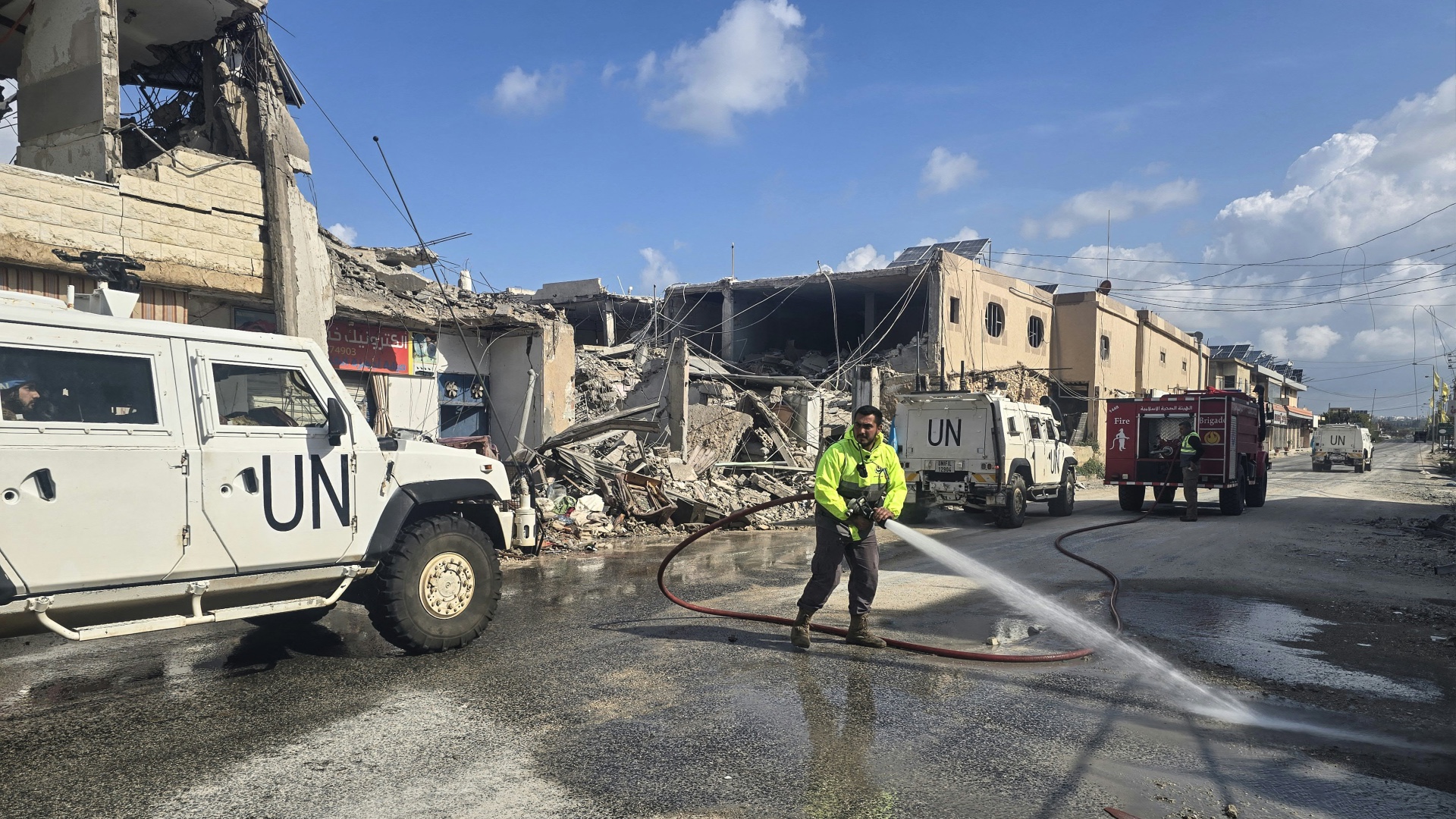
His positive on-the-ground assessment comes amid heightened scrutiny of UN peacekeeping, however. Just days before the briefing, three UN peacekeepers were killed amid Israel’s escalating ground invasion of southern Lebanon. No group has yet claimed responsibility for the attack, but Israeli officials have repeatedly expressed open hostility toward the UN as an institution, which has repeatedly accused Israel of violating international law in multiple regional conflicts and ongoing military operations in the occupied West Bank. Israeli forces have also deliberately targeted UN facilities in Gaza during its ongoing military campaign, killing multiple UN civilian staff based in the enclave.
When questioned about the Trump administration’s pledge to crack down on what it calls “anti-Israel bias” within the UN system, Bartos launched a sharp attack on Francesca Albanese, the UN Special Rapporteur for the Occupied Palestinian Territories, who was sanctioned by the U.S. after she labeled Israel’s military assault on Gaza a genocide and published a report naming U.S. corporations allegedly complicit in potential war crimes. Bartos did not name Albanese explicitly during his comments.
“The UN has this remarkable global brand on the humanitarian side, but it’s doing an incredible disservice — almost like self-sabotage — to allow this type of unaccountable special rapporteur to run around wreaking havoc and spewing hatred,” Bartos said. “I strongly encourage UN leadership to finally put an end to this poison that others are injecting into what is otherwise a remarkable achievement for the institution on the humanitarian side.”
Looking ahead to the upcoming election of a new UN Secretary-General later this year, Bartos said the U.S. is open to considering all candidate nominations, as long as they commit to implementing the broad package of reforms Washington is pushing. However, recent developments suggest one leading candidate could face a U.S. veto.
In a letter to U.S. Secretary of State Marco Rubio obtained by development outlet Devex, Republican members of Congress urged the Trump administration to use its Security Council veto power to block the candidacy of former Chilean President Michelle Bachelet. Lawmakers cited Bachelet’s long-held pro-choice position on abortion rights and her failure to confront China over the treatment of the Uyghur minority — an issue the first Trump administration labeled a genocide in 2020. This is not the first time the U.S. and Israel have sought to block Bachelet from a senior UN role; the two countries unsuccessfully tried to block her confirmation as UN High Commissioner for Human Rights in 2018. Last month, Bachelet lost the support of her home country after Chile’s new right-wing president, José Antonio Kast — an open admirer of Trump who was endorsed by him during his election campaign — withdrew Chile’s backing for her bid.