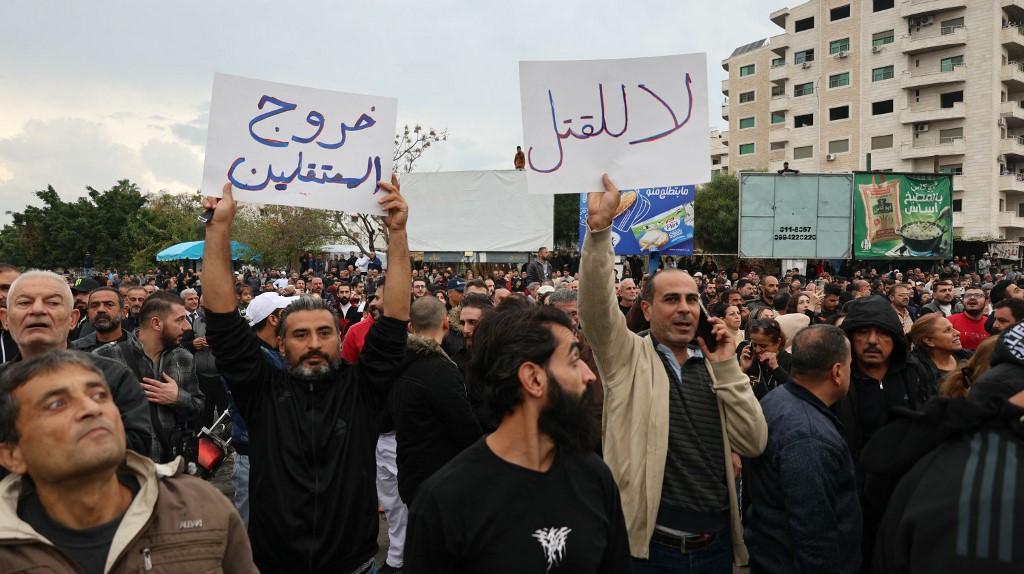
In the months after Syria’s transitional government ousted former President Bashar al-Assad in December 2024, a bombshell new investigation by *The New York Times* has confirmed that authorities in Damascus are drastically underreporting widespread kidnapping, violent assault, and sexual abuse targeting women and girls from Assad’s native Alawite community.
Since taking power, the administration led by President Ahmed al-Sharaa has publicly acknowledged only one confirmed case of an Alawite woman being abducted. But the Times’ on-the-ground investigation, which relied on anonymous victim testimony to protect survivors from further harm, has verified at least 13 separate kidnappings of Alawite women and girls. Of those confirmed cases, five survivors reported being gang-raped during their captivity, and two of those victims returned to their families after being released with unplanned pregnancies resulting from the abuse.
The Times’ findings reinforce earlier independent documentation of the crisis. Human rights watchdog Amnesty International warned in July 2025 that it had corroborated credible reports of at least 36 comparable kidnappings, while the Syrian Feminist Lobby has recorded 80 Alawite women and girls as missing since the start of 2025.
Survivors and observers have offered differing accounts of the motive behind the attacks. Multiple kidnapped women told investigators they experienced explicitly sectarian abuse, with their captors framing the attacks as revenge for the Alawite community’s historical alignment with the Assad regime. Other analysts have characterized many of the incidents as criminal enterprises driven by ransom demands. In one documented case, a family paid kidnappers $17,000 to secure their relative’s release, only for the abductors to keep the money and refuse to free her. Another 24-year-old survivor described being held for three weeks in a squalid, unkempt room, where she was repeatedly raped, beaten, had her head and eyebrows shaved as a humiliation, and cut multiple times with razor blades. She was ultimately freed only after her parents paid a large ransom.
Tensions between Syria’s new ruling leadership and the Alawite community have remained at a fever pitch ever since Assad’s ouster and subsequent exile to Moscow. Just last year, small-scale armed attacks on transitional government security forces by suspected Assad loyalists in the coastal Alawite stronghold of Latakia escalated into large-scale brutal sectarian violence. A separate investigation by Reuters later traced the bulk of the resulting civilian deaths back to Damascus-based security officials, with at least 1,500 Alawite civilians killed in the crackdown.
When contacted by *The New York Times* for comment on its latest findings, Interior Ministry spokesman Nour al-Din Baba claimed the government could not respond to the investigation unless the outlet turned over the full names of all interviewed victims. The newspaper declined this request, having granted formal anonymity to all survivors to protect them from retaliation. Baba reaffirmed the government’s stance, standing by an official November 2025 inquiry that examined 42 reported kidnappings and concluded only one of the cases was “authentic.”
The roots of Syria’s ongoing sectarian tension stretch back to the start of the country’s 13-year civil conflict, which began in 2011 when Assad regime forces opened fire on peaceful pro-democracy protestors. The war ultimately left hundreds of thousands of Syrians dead and millions more displaced internally across the country and as refugees abroad. While a portion of the Alawite community initially backed the pro-democracy movement, widespread government persecution of dissent and growing fears over sectarian extremist groups within the opposition pushed most Alawites to align with Assad over the course of the war.
Following Assad’s overthrow, Alawite community leaders have repeatedly called for international protection from targeted sectarian revenge attacks. The issue flared into public view this week during al-Sharaa’s official visit to London, where he was met by large protests organized by Alawite and Alevi (a related sect primarily found among Turkey’s Kurdish and Turkish communities) activists. Protesters accused al-Sharaa’s transitional government of enabling what they describe as systematic violence amounting to genocide against Alawite civilians.
Maher Hamadouch, director of the UK-based Alawite advocacy group Syrian Coastal Society, argued that hosting al-Sharaa in the United Kingdom sends a dangerous message to the international community that accountability for human rights abuses can be ignored. “At a time when Syrians continue to endure displacement, insecurity, and marginalisation, allowing such a figure to enter the UK risks sending the wrong message: that accountability can be overlooked, and that those associated with violence can be normalised on the international stage,” Hamadouch said. His organization has called on the UK government to refuse to grant any public platform or political legitimacy to individuals linked to extremist activity or human rights violations. Hamadouch, who has previously defended Assad’s decades-long rule over Syria, added that al-Sharaa’s public record is “inseparable from violence, sectarianism and the repression of civilian populations in Syria.”