As China embarks on its 15th Five-Year Plan (2026-2030), a sweeping transformation is unfolding in the country’s consumer market, driven by the strategic push to cultivate new quality productive forces. Integrated into the national plan’s core goal of high-quality development, these emerging forces — spanning artificial intelligence integration, smart manufacturing, data-centric industries, and green technology — are steering the nation away from traditional mass consumption toward a new era of personalized, premium, and sustainable purchasing. Independent analysts and policy experts across the Asia-Pacific have outlined the far-reaching impacts of this shift, detailing how technological innovation is rewiring both production patterns and consumer expectations.
Anna Rosario Malindog-Uy, vice president of Manila-based think tank the Asian Century Philippines Strategic Studies Institute, notes that cutting-edge tools like AI and smart manufacturing have dramatically lowered the cost of customized production, allowing brands to rapidly respond to niche market demands while lifting overall product quality. This enabling environment, she explains, is pushing consumers to shift their priorities from purchasing more goods to seeking more selective, higher-quality offerings that align with individual values and needs.
“China’s consumer future is not about buying more; it’s about buying better, smarter and more meaningfully,” Malindog-Uy said. She projects that consumer demand will continue to grow around three key trends: selective premiumization, AI-powered personalized experiences, and green, health-focused products and services.
Peter T.C. Chang, a research associate at the Malaysia-China Friendship Association, echoes this assessment, confirming that new quality productive forces are accelerating the transition from one-size-fits-all mass consumption to tailored, high-end consumption. He argues that China’s consumer market is evolving into a purpose-driven ecosystem where purchasing choices reflect personal identity and lifestyle values, not just basic need.
Thanks to flexible production lines, AI-powered demand forecasting, and intelligent quality control systems, manufacturers can now deliver mass customized goods without charging significant extra costs, Chang explained. He points to Chinese home appliance giant Haier as a leading example: the company allows customers to co-design custom refrigerators via online platforms, and its smart factories fulfill each unique order with the same efficiency that once only applied to large-scale mass production. This innovation upends the long-held trade-off between affordability and individualization, creating a new consumption model that delivers both personalization and quality, Chang added.
The 15th Five-Year Plan outline, approved by Chinese lawmakers during the annual Two Sessions legislative and political advisory meetings earlier this year, also ties this technological shift to national environmental goals. As part of the Beautiful China Initiative, the government has pledged to continue its anti-pollution campaign, advance ecosystem restoration, speed up the adoption of eco-friendly production and lifestyles, and keep the country on track to meet its 2030 carbon peaking target. Green technology and smart systems are central to this effort, reshaping not just what consumers buy, but how they use resources.
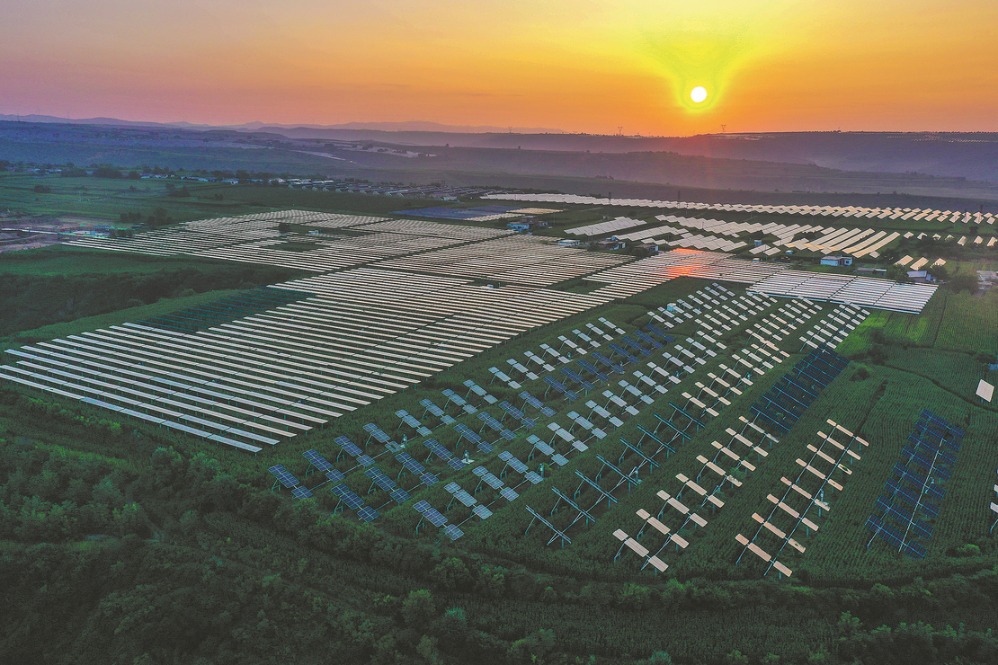
Yang Muyi, senior analyst at global energy policy think tank Ember, explains that AI and connected smart devices are revolutionizing household energy consumption. As clean energy production becomes more distributed and variable across time of day, AI can help households and local communities adjust their energy use patterns to match supply. For example, a home with rooftop solar panels and battery storage can store excess power when generation is high, then share or trade that surplus within a local community. Widespread smartphone penetration across China means mobile apps can already facilitate these local solar energy exchanges, Yang added. “AI may matter less in telling people what to buy, and more in helping them use energy in a smarter, more efficient way,” he noted.
Beyond energy, advanced technologies such as AI and biotechnology are also meeting growing consumer demand for healthier and more sustainable consumption patterns, Chang said. AI-powered precision nutrition and connected smart home appliances can deliver personalized wellness solutions, from customized dietary supplements to tailored home health routines, while blockchain-tracked supply chains allow consumers to independently verify the environmental footprint of the products they purchase.
Digital infrastructure and smart logistics also carry transformative potential for reducing inequality in China’s consumer market, Chang added. These tools can bring high-quality, customized goods to underserved rural areas, helping narrow the persistent consumption gap between urban and rural regions. However, he emphasized that these benefits are not automatic: their full impact depends on targeted supporting infrastructure and inclusive policies, with sustained investment needed in rural digital networks, last-mile logistics delivery, and public digital literacy training. “When paired with inclusive policies, AI and smart manufacturing can serve as powerful tools for more balanced consumption growth,” Chang said.
One example of this inclusive growth in action is the pairing of smart manufacturing with e-commerce platforms, which has opened access to personalized, high-quality goods for rural consumers that were previously unavailable in local markets. Chang cites Chinese online retailer Pinduoduo’s Duo Duo Farms initiative, which uses AI to connect small-scale rural farmers directly with urban consumers. Beyond improving farmer incomes, the initiative also encourages rural households to purchase customized agricultural equipment and home appliances at affordable prices via group-buying models, bringing the benefits of personalized consumption to underserved communities.