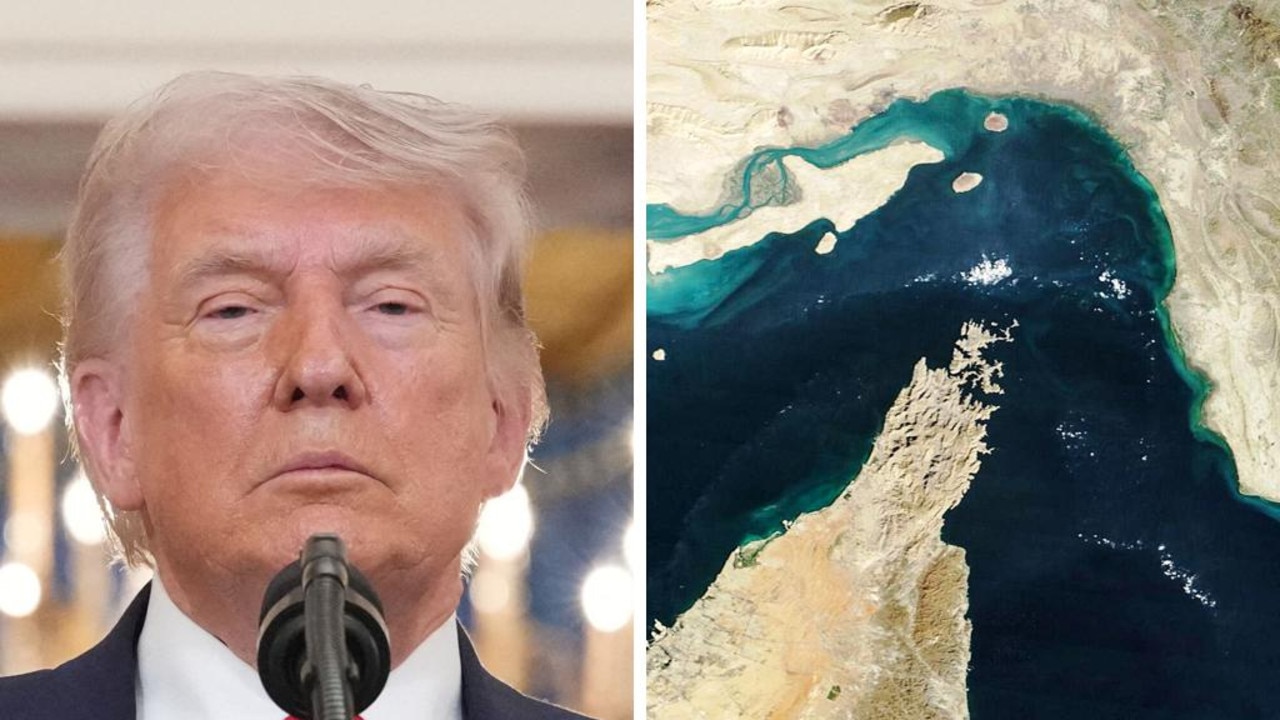
As former U.S. President Donald Trump issues a stark 48-hour ultimatum to Iran over the closure of the Strait of Hormuz, Australia’s ruling Albanese government has voiced cautious optimism that the ongoing Middle East conflict is nearing its end, while moving swiftly to mitigate widespread domestic fuel shortages and price volatility.
Local time Saturday saw Trump, the Republican incumbent leading U.S. military operations against Iran, deliver the ultimatum: Tehran must reopen the critical global oil chokepoint, or the U.S. will unleash “all hell” on the Islamic Republic. Earlier, in a national address, Trump laid out a public timeline for the conflict, stating that joint U.S.-Israeli military operations against Iran would conclude within two to three weeks.
Australian Assistant Immigration Minister Matt Thistlethwaite confirmed that Canberra is aligning its expectations with the U.S. timeline, telling Sky News the federal government remains hopeful the conflict will wrap up soon. “The original goal of military action against Iran was to degrade and eliminate the country’s nuclear capabilities,” Thistlethwaite explained. “Per President Trump and U.S. intelligence assessments, that objective has already been accomplished. On that basis, we want to see rapid de-escalation, and a swift return to normal operations through the Strait of Hormuz.”
Thistlethwaite added that Trump, who has full access to intelligence briefings and military input, shares the assessment that the conflict is drawing to a close. Even so, the Australian government has prepped contingency plans under its national fuel security framework to guarantee continued access to fuel for Australian households and businesses, and to cap upward price pressure as much as possible if hostilities drag on.
Already this week, the Albanese government has enacted two temporary cuts to the national fuel excise tax. The second cut was finalized only after state and territory governments reached an agreement on how to allocate GST windfall gains to offset the revenue loss from the tax reduction. Thistlethwaite acknowledged that despite expected de-escalation, the conflict will leave a “long tail” of economic impacts that will be felt in Australia for months to come.
To shore up supply, the federal government has already secured direct assurances from key Southeast Asian and East Asian fuel suppliers, which account for the majority of Australia’s imported fuel. “I met last week with Japan’s energy minister, and requested that existing supply volumes continue,” Thistlethwaite said. “Tokyo has given me a formal assurance that normal supply will hold. I’ve secured the same commitment from South Korea and Singapore, our three main suppliers. At the same time, we are actively diversifying our supply chains, and we have already started receiving additional fuel shipments from the United States to cover any gaps. We are covering all bases to expand supply diversification and secure as much fuel as possible for the domestic market.”
The severity of the current supply crunch came into clear focus Saturday, when Federal Energy Minister Chris Bowen confirmed that more than 600 fuel stations across Australia have already run out of at least one grade of fuel, with 410 stations entirely out of diesel. The most acute shortages are in New South Wales, where 182 stations have no diesel and 48 are out of all petrol grades. Bowen urged the public to avoid panic buying, advising: “I encourage people to act sensibly. Only fill up when you need to, only take as much fuel as you normally would, and don’t stockpile.”
Amid the domestic upheaval, opposition foreign policy figure and Liberal Senator Dave Sharma has backed the assessment that the conflict will end soon, predicting hostilities will wrap up within two to four additional weeks. Sharma told Sky News that Trump is eager to wrap up military operations, having concluded that Iran’s nuclear program and ballistic missile infrastructure have already been severely set back. While Trump has publicly held out hope for further political change in Iran, and has called for the Strait of Hormuz to be reopened, Sharma noted the U.S. leader is not making an end to operations conditional on the strait reopening immediately.
Sharma added that the marine expeditionary forces the U.S. has deployed to the Middle East give Trump flexible options to seize strategic territory if needed, though he does not expect a full-scale ground invasion of Iran. “The most likely move would be seizing key islands within the Strait of Hormuz to allow unimpeded control of commercial shipping through the waterway,” he explained.
Sharma’s position puts him at odds with fellow Liberal frontbencher Andrew Hastie, a prominent critic of both the conflict and Trump’s handling of it. Sharma argued that even if hostilities end immediately, Iran’s ability to foment regional instability and export terrorism has already been permanently reduced.
The developments come on the heels of an emergency diplomatic meeting attended by Australia, the United Kingdom, and more than 40 allied nations focused on coordinating efforts to reopen the Strait of Hormuz, one of the world’s most critical chokepoints for global oil supplies.