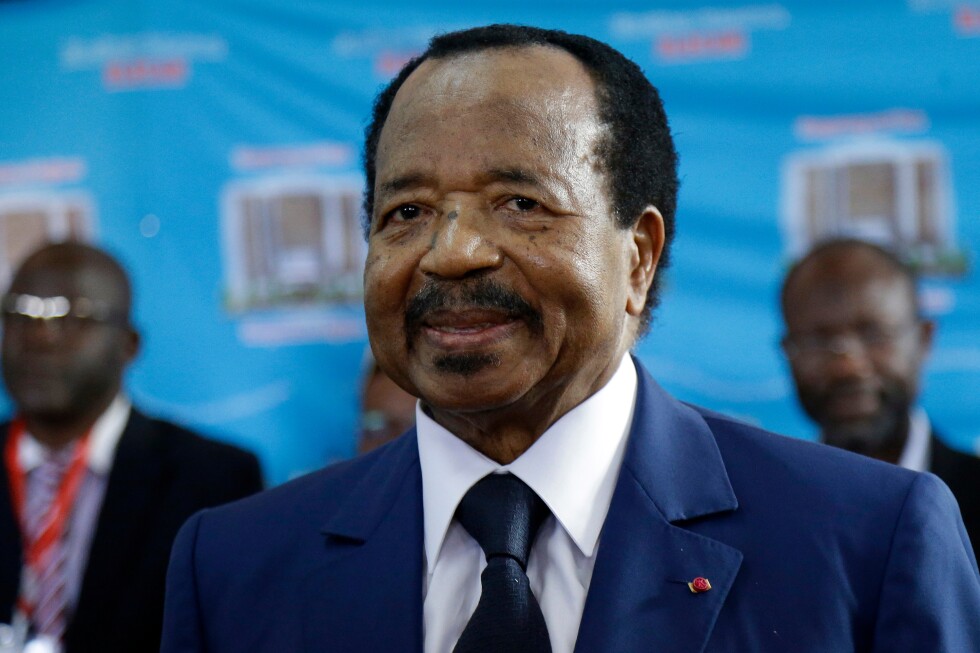
In a move that has reignited long-simmering political tensions across the Central African nation, Cameroon’s parliament has passed a deeply divisive constitutional amendment that reinstates the office of vice president, a change opponents warn will solidify 93-year-old President Paul Biya’s hold on power after more than four decades in office.
Biya, the world’s oldest sitting head of state, has led Cameroon since 1982 and secured his seventh consecutive term in 2018, with his most recent 2025 reelection结果 widely contested by opposition groups and international observers. The amendment, which is all but certain to be signed into law by Biya, was approved during a Saturday joint sitting of the National Assembly and Senate, with the main opposition party boycotting the vote entirely. Final tallies showed 200 lawmakers backing the bill, 18 voting against it, and 4 abstentions.
Under the terms of the new amendment, the sitting president retains unchecked authority over the vice presidency. Biya will have the unilateral power to appoint and remove a vice president at any time, and the appointee will only be able to exercise powers explicitly delegated to them by the president. Critically, if the president dies, resigns, or is permanently unable to carry out his duties, the vice president will automatically serve out the remainder of the seven-year presidential term, rather than triggering a new national election.
Lawmakers from the ruling Cameroon People’s Democratic Movement (CPDM) have framed the change as a critical safeguards for institutional continuity, arguing that a clear line of succession will prevent political chaos in the event of a sudden leadership vacuum. But critics across the political and legal spectrum have decried the amendment as a direct attack on Cameroon’s democratic foundations, arguing it replaces electoral legitimacy with a system of presidential appointment that concentrates power even further in Biya’s hands.
The main opposition Social Democratic Front (SDF) said in an official statement that the amendment “fails to guarantee democratic legitimacy, inclusiveness, and proper institutional balance.” Fusi Namukong, an SDF member of parliament, told the Associated Press that the new law effectively lays the groundwork for authoritarian dynastic rule. “It’s not democratic. This is a republic, and in a republic, those who wield power at the highest level of the state should be elected and not appointed,” Namukong said.
The Cameroon Bar Association has echoed these concerns, warning that the change “erodes the democratic legitimacy (of) the presidential office” and undermines the core guardrails of the country’s constitution. The vice presidency was first eliminated from Cameroon’s political structure in 1972, following a national constitutional referendum.
Biya’s health has been the subject of persistent public speculation for years, with the aging leader spending the majority of his time abroad in Europe, leaving day-to-day governance to a small circle of senior party officials and family members. His 2025 reelection sparked widespread mass protests across the country, which left at least four people dead and highlighted deepening friction between Cameroon’s largely young population and one of the longest-ruling, oldest leaders in the world.