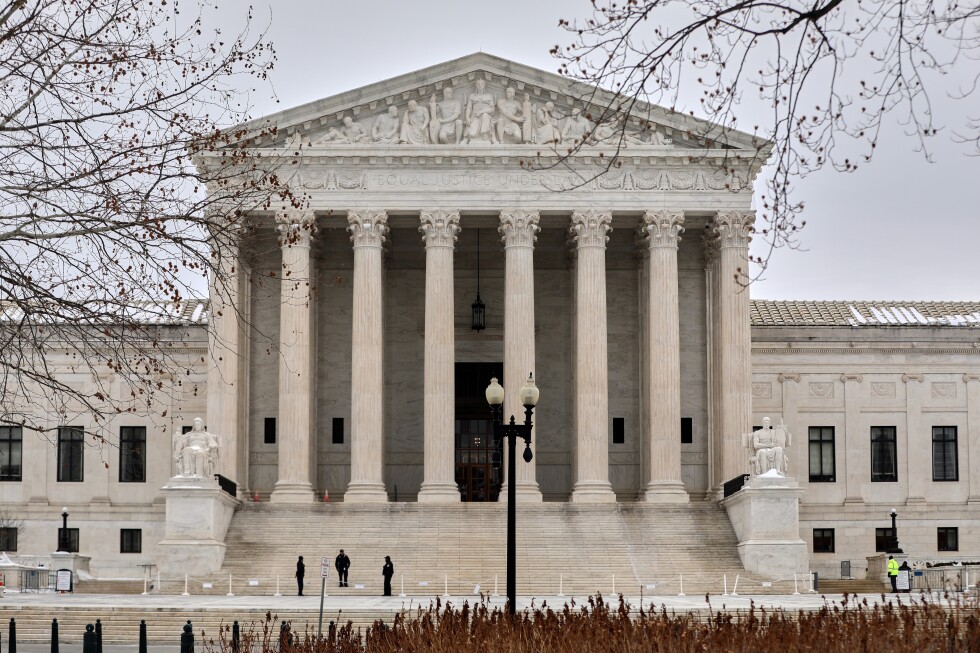
The U.S. Supreme Court has opened oral arguments in one of the most consequential constitutional immigration cases of recent years, challenging the century-long American tradition of birthright citizenship. The case centers on an executive order signed by former President Donald Trump on the first day of his second term, which seeks to roll back the longstanding policy that grants automatic U.S. citizenship to nearly all people born on American soil.
The policy at the heart of the legal fight is rooted in the 14th Amendment of the U.S. Constitution, ratified in the years following the Civil War. Framed around the centuries-old legal principle of jus soli, or “right of soil,” the amendment explicitly states: “All persons born or naturalized in the United States and subject to the jurisdiction thereof, are citizens of the United States.” When it was adopted, its core purpose was to guarantee full citizenship to formerly enslaved people, who had long been denied legal personhood in the U.S.
The scope of this constitutional guarantee was cemented by a landmark 1898 Supreme Court ruling, United States v. Wong Kim Ark. In that case, Wong Kim Ark, a man born in the U.S. to Chinese immigrant parents who were not U.S. citizens, was denied reentry to the country after a trip abroad. The nation’s highest court ruled that the 14th Amendment guarantees citizenship to every person born on U.S. soil, regardless of their parents’ immigration or citizenship status. To this day, only narrow exceptions to the policy exist: for example, children born to foreign diplomats stationed in the U.S. do not receive automatic citizenship.
While birthright citizenship has been a cornerstone of American law for over 150 years, the policy is far from the global norm. Only around 36 countries worldwide, nearly all located in North, Central, and South America, offer unconditional automatic birthright citizenship. The vast majority of the world’s nations follow the opposing principle of jus sanguinis, or “right of blood,” which ties a child’s citizenship to the citizenship of their parents, rather than their place of birth. None of the 27 member states of the European Union grant automatic, unconditional citizenship to children born on their territory to non-citizen parents. Many nations across Asia, the Middle East, and Africa have similar policies.
A growing number of countries have adopted mixed frameworks that blend elements of both principles. Australia, for example, maintained unconditional birthright citizenship until 1986, when it changed rules to require that at least one parent be an Australian citizen or permanent resident for a child to receive citizenship at birth. In a recent shift toward expanded access, Germany updated its own citizenship laws in 2024. For decades, the country relied exclusively on jus sanguinis, granting citizenship by birth only to children with at least one German parent. The 2024 reform allows children born in Germany to non-German parents to receive automatic citizenship if one parent has been a legal permanent resident in the country for at least five years. German officials justified the liberalization by noting research showing that children with migration backgrounds see improved educational outcomes when they receive citizenship early in life.
The Trump administration’s legal argument for restricting birthright citizenship hinges on a narrow interpretation of one phrase in the 14th Amendment: “subject to the jurisdiction thereof.” Administration lawyers argue that this clause excludes children born to parents living in the U.S. without legal authorization, giving the federal government the power to deny them citizenship at birth.
The executive order has already faced extensive legal challenges in lower courts, which have repeatedly paused implementation of the policy and ruled against the administration. The current case originated in New Hampshire, where a U.S. District Court judge ruled that Trump’s order “likely violates” both the U.S. Constitution and existing federal law. Trump has confirmed he will attend the Supreme Court’s oral arguments for the high-profile case, drawing additional attention to the legal fight that could reshape decades of U.S. immigration and citizenship policy.