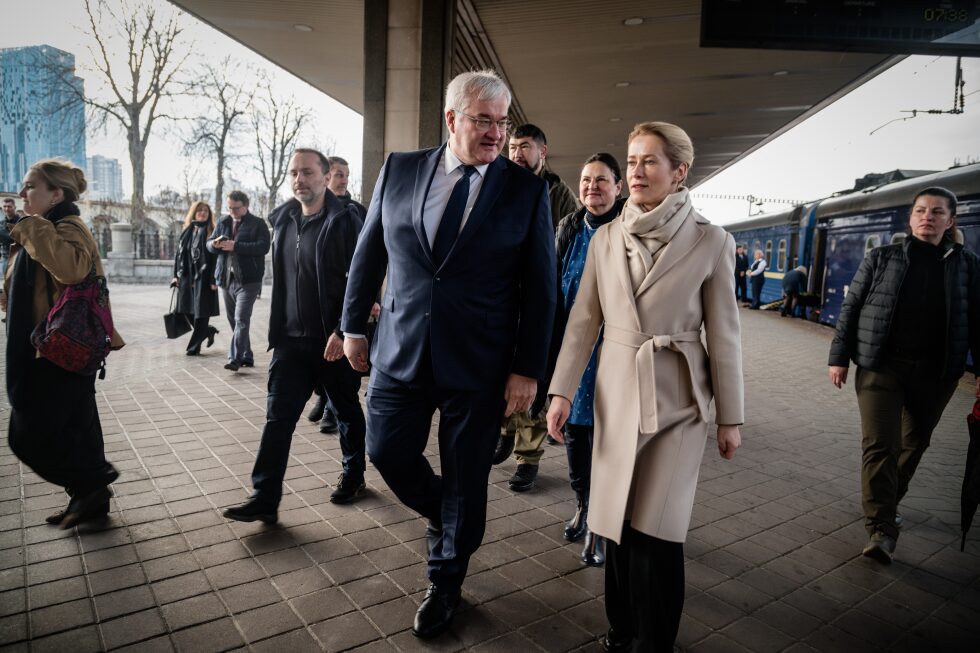
European diplomatic leaders converged in Kyiv on Tuesday to commemorate the four-year anniversary of the Bucha atrocities, delivering a powerful message of continued support for Ukraine amid stalled peace negotiations and shifting global priorities.
A delegation comprising 12 European foreign ministers and numerous officials arrived via train to the Ukrainian capital, where they were greeted by Ukrainian Foreign Minister Andrii Sybiha. The somber occasion marked the grim anniversary of the shocking discoveries made when Ukrainian forces liberated Bucha from Russian occupation in spring 2022, uncovering evidence of mass civilian executions during what Russian forces had termed a ‘cleansing operation.’
With U.S.-mediated peace talks currently suspended and Washington’s attention diverted by Middle East conflicts, European nations are intensifying their focus on what has become Europe’s most significant land warfare in decades. The high-level European presence served as both a symbolic gesture of solidarity and a substantive commitment to pursuing accountability for Russian military actions.
European Union foreign policy chief Kaja Kallas emphasized the critical importance of establishing comprehensive accountability mechanisms during the visit. “One of the things that is really necessary is accountability. Otherwise, you have revenge and retaliation,” Kallas stated en route to Kyiv. “If you don’t see people doing this to your family held accountable, you will want revenge.”
The diplomatic mission included discussions focused on reassuring Ukrainian officials of Europe’s unwavering determination to maintain pressure on Russia through both judicial channels and continued military support. Foreign Minister Sybiha characterized the strong European presence as demonstrating that “justice for this and other Russian atrocities is inevitable,” noting that “comprehensive accountability for Russian crimes is vital to restore justice in Europe.”
With the conflict now entering its fifth year and peace negotiations effectively stalled, European leaders acknowledged their particular responsibility in sustaining international attention on Ukraine’s plight. “We can’t let it slip off the table,” Kallas emphasized. “We are the ones who have to keep this up because nobody else does.”