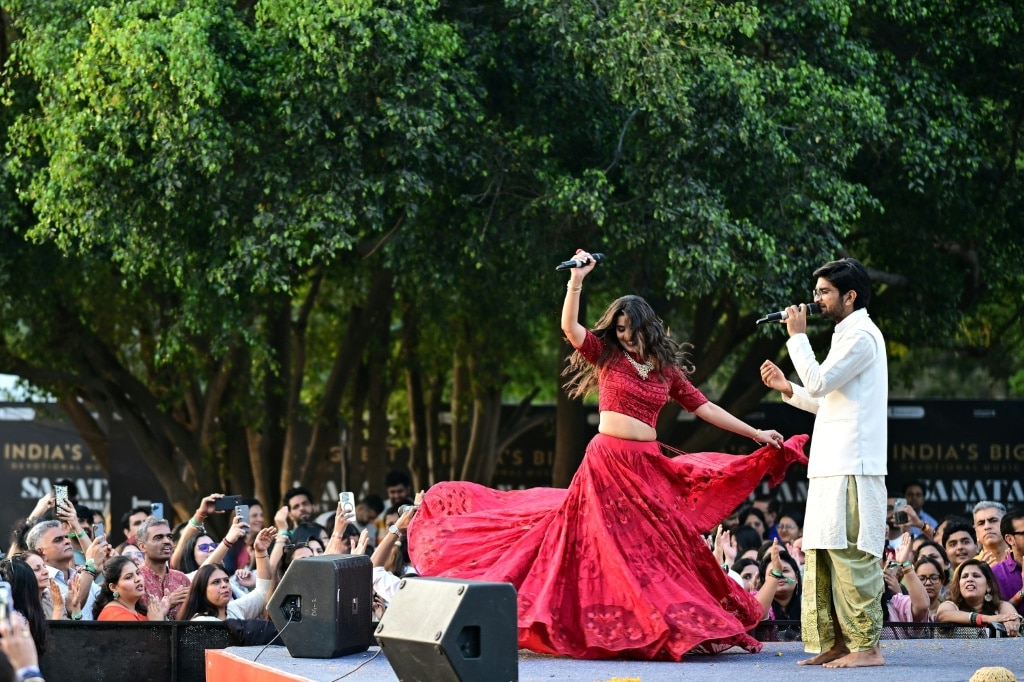
Across India’s urban landscapes, a cultural phenomenon is transforming traditional worship into a vibrant nighttime experience. ‘Bhajan clubbing’ has emerged as an unexpected fusion of ancient Hindu devotional songs and contemporary concert energy, drawing thousands of young professionals to spiritual gatherings that pulse with electric guitars and powerful drumbeats.
In New Delhi’s suburbs, venues like the ChaiLeela cafe regularly host these innovative events where IT professionals, nuclear physicists, and doctors sway to rhythmic reinterpretations of songs praising deity Krishna. The atmosphere crackles with spiritual energy as modern instrumentation elevates centuries-old bhajans into immersive musical experiences.
This movement represents more than musical innovation—it’s a cultural bridge connecting millennials and Gen Z with their spiritual heritage through mediums they understand. March 2026 witnessed at least five major devotional concerts across the capital, with attendance reaching tens of thousands. The 16th-century Purana Qila fort recently hosted approximately 7,000 devotees in an event that resembled a rave more than traditional religious gathering.
Prime Minister Narendra Modi has endorsed this trend, recognizing in his weekly radio broadcast how bhajan clubbing ‘incorporates the spirit of devotion into the youth’s experiences and lifestyles.’ The movement has gained political support, with Delhi Chief Minister Rekha Gupta from Modi’s party introducing a massive devotional show at Jawaharlal Nehru Stadium.
Organizers emphasize the alcohol-free nature of these events, offering young people an alternative to conventional nightlife. ‘We want the youth to be high on spirituality, not spirits,’ stated Nikunj Gupta, organizer of the Purana Qila festival. This approach has resonated with conservative Hindus while providing socially acceptable entertainment options.
The phenomenon reflects broader cultural shifts in India, where public expressions of Hindu identity are experiencing revival. The movement has transcended national borders, with neighboring Nepal hosting bhajan club nights attracting over 3,000 participants. Organizers maintain the essential spiritual core while delivering it through modern musical arrangements that appeal to younger demographics.
Attendees report multiple benefits—from spiritual connection to national pride and psychological calm. The events successfully merge traditional devotion with contemporary entertainment values, creating a unique cultural space that respects religious traditions while embracing modern expression.