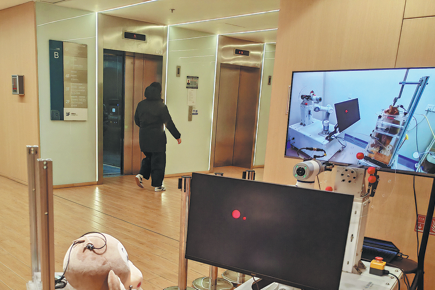
Chinese neuroscientists have achieved a significant clinical milestone with the successful development of Beinao No 1 NeuCyber Matrix, an advanced brain-computer interface system demonstrating remarkable results in human trials. This groundbreaking technology represents a paradigm shift from conventional machine assistance to enabling partial self-recovery in paralyzed patients.
The Chinese Institute for Brain Research in Beijing reported that their domestically developed wireless system has shown stable, long-term performance in treating conditions including spinal cord injuries, ALS, and stroke-related paralysis. The system’s effectiveness is exemplified by the case of 31-year-old Xiao Rui, who suffered quadriplegia from a spinal injury two years ago. Remarkably, within just five days post-implantation, Xiao mentally commanded a robotic arm to pour water. One year later, he has regained sufficient control to independently feed himself, including picking up strawberries and bringing them to his mouth.
Professor Yi Zhiqiang, Director of Neurosurgery at Peking University First Hospital, emphasized the transformative potential: ‘From this pioneering patient, we anticipate Beinao No 1 will deliver groundbreaking advancements benefiting millions with neurological conditions.’ The technology has already been implanted in seven patients, with over thirty clinical trials scheduled across numerous medical institutions nationwide this year.
The system utilizes innovative membrane electrodes composed of lipid materials that rest on the brain’s surface without penetration, recording electrocorticography signals through direct cortical contact achieved via skull opening. These signals are wirelessly processed and decoded to interpret the patient’s intended movements, enabling control of external devices and even exoskeletons for assisted walking.
Institute Director Luo Minmin confirmed the system’s exceptional stability and effectiveness, noting: ‘Our patients can now control computer cursors and exoskeleton devices with their thoughts, marking tremendous progress toward functional recovery.’ The research team anticipates completing clinical trials by next year, potentially revolutionizing treatment for global stroke patients with safer, more effective neurotechnology solutions.
The technological advancement follows the institute’s recent recognition in Nature journal for revealing common mechanisms behind fast-acting antidepressant therapies. The next-generation Beinao No 2 system is currently showcased at Beijing’s prestigious Zhongguancun Forum, demonstrating China’s growing leadership in cutting-edge neuroscience innovation.