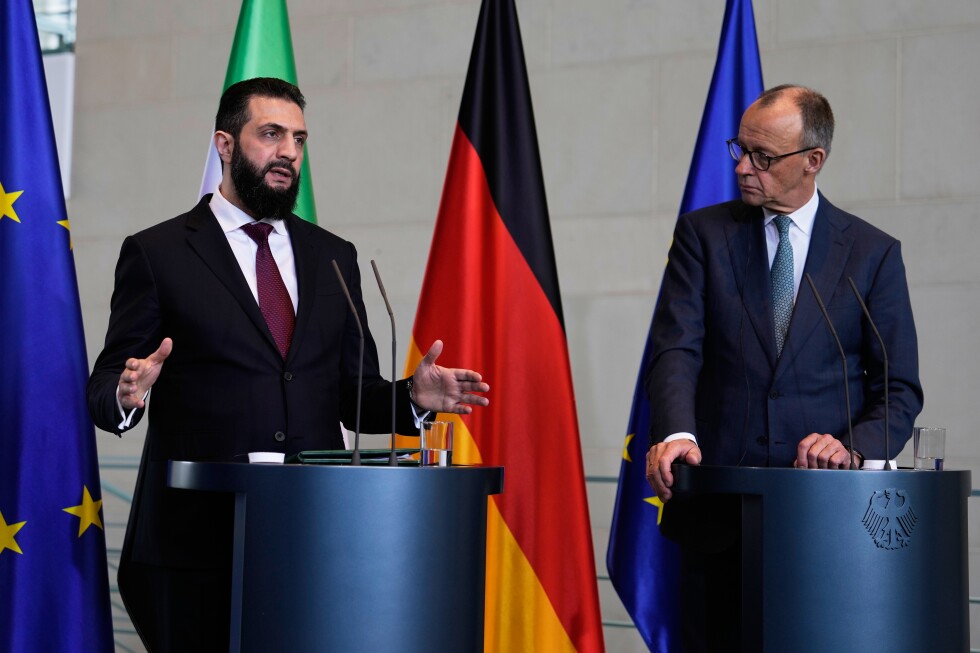
In a significant diplomatic meeting in Berlin, German Chancellor Friedrich Merz and Syrian interim President Ahmad al-Sharaa engaged in substantive discussions regarding the future of Syrian migrants in Germany and Syria’s post-war reconstruction. Chancellor Merz articulated a vision where a substantial majority of Syrian nationals currently residing in Germany—potentially up to 80%—would return to their homeland over the next three years to contribute to rebuilding efforts. This proposal was framed as aligning with the wishes of the Syrian leadership.
The context for these talks is a Syria emerging from a devastating civil war that concluded in late 2024 with the ousting of former President Bashar Assad. The conflict resulted in approximately half a million deaths, catastrophic infrastructure damage, and a massive refugee exodus. Germany became a primary destination, currently hosting over 900,000 Syrian citizens, many of whom have since obtained German citizenship.
Chancellor Merz clarified that Germany’s immediate priority is the repatriation of a specific group: Syrians who have committed crimes and are deemed to have ’caused problems.’ However, he expanded the long-term strategy to include a much broader return migration, stating that Syria needs its citizens for national recovery while Germany seeks to manage migration flows, a key policy of his eleven-month-old administration.
President al-Sharaa, while not explicitly confirming the 80% figure, presented a contrasting perspective by highlighting the significant contributions of the Syrian diaspora. He noted the presence of 6,000 Syrian doctors in German hospitals and over 250,000 tax-paying individuals, describing them as ‘common national assets.’ Instead of a simple mass return, al-Sharaa advocated for a ‘circular immigration model.’ This innovative approach would allow skilled Syrians to contribute to Syria’s revival without being forced to relinquish their stable lives and established careers in Germany, fostering a partnership that benefits both nations.
The discussions extended beyond migration to economic cooperation, with the leaders attending a German-Syrian economic roundtable. Chancellor Merz pledged Germany’s support for Syria’s future, emphasizing the heightened importance of success and stability given the ongoing war in Iran and regional tensions.