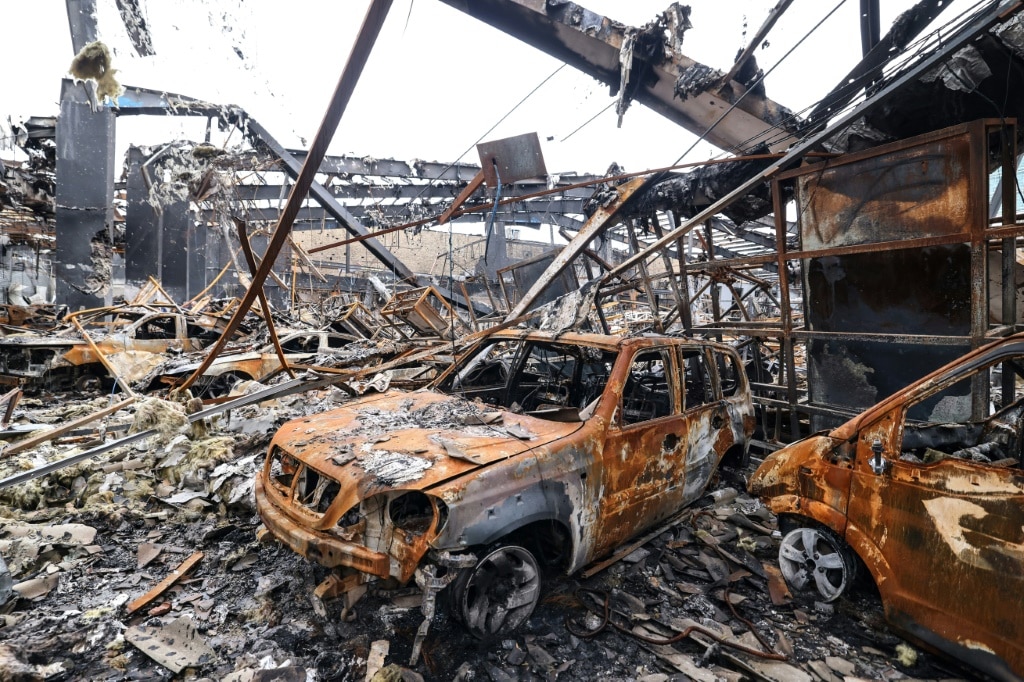
The ongoing conflict in the Middle East has intensified with significant developments across multiple fronts, resulting in heightened military engagements and diplomatic strains. Iran officially confirmed the death of Revolutionary Guards commander Alireza Tangsiri, who succumbed to injuries sustained in an Israeli airstrike. This announcement came through the Guards’ Sepah News website, marking a substantial blow to Iranian military leadership.
Israeli forces reported conducting precise strikes on numerous weapons production facilities within Iran, including a critical manufacturing line for long-range surface-to-air missiles located in Tehran. Despite these attacks, Iranian authorities managed to restore electricity in parts of the capital and adjacent regions after strikes previously damaged power infrastructure.
Beirut’s southern suburbs, a known stronghold of Hezbollah, experienced renewed strikes as shown in AFPTV footage. Israel had issued prior warnings for residents to evacuate the area. The Israeli military confirmed these actions targeted Hezbollah operational sites.
International repercussions continued as Indonesia confirmed the death of one peacekeeper in Lebanon from indirect artillery fire near Adchit al Qusayr, with three others wounded. Meanwhile, U.S. President Donald Trump remarked in a Financial Times interview that American forces could ‘very easily’ capture Iran’s Kharg Island, which houses a vital oil terminal, questioning Iranian defensive capabilities there.
Saudi Arabia’s defense ministry announced the interception of five ballistic missiles aimed at Eastern Province, though without specifying their origin. Trump additionally stated that the conflict had effectively achieved ‘regime change’ in Iran, dealing with entirely new leadership.
Kuwait reported casualties from an Iranian strike on a power station, resulting in one Indian worker’s death and damage to facility infrastructure. Separately, Kuwait’s defense ministry noted ten service members injured in a military camp attack.
Israel’s parliament approved its 2026 budget, incorporating approximately $10 billion in new military spending, elevating total defense allocations to about $45 billion. The International Atomic Energy Agency confirmed severe damage to Iran’s heavy water production plant in Khondab, rendering it non-operational after Israeli strikes targeted what was described as a key plutonium production site.
Diplomatic efforts emerged as Pakistan offered to broker and host meaningful talks between the United States and Iran, receiving support from the United Nations and China. Foreign ministers from Pakistan, Saudi Arabia, Egypt, and Turkey convened in Islamabad to discuss peace initiatives.
Tensions extended to diplomatic relations as Iran’s ambassador refused to leave Lebanon despite being declared persona non grata over accusations of political interference. Academic institutions also suffered, with a university in Isfahan hit by U.S.-Israeli airstrikes for the second time.
Lebanon’s health ministry reported 1,238 fatalities from Israeli strikes since the conflict’s escalation with Hezbollah began on March 2. Israeli Prime Minister Benjamin Netanyahu ordered further expansion of security zones within Lebanon. Iran entered its 30th day of nationwide internet blackout, severely limiting information access and communication for millions.