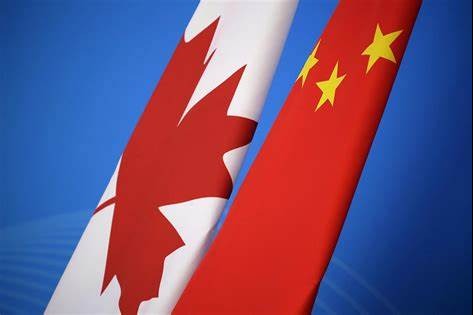
Canadian enterprises are transitioning from cautious observation to active market positioning in China, driven by improving bilateral relations and clearer policy directions. This strategic pivot marks a significant departure from previous hesitancy as companies seek to capitalize on emerging opportunities in one of the world’s largest economies.
According to Bijan Ahmadi, Executive Director and COO of the Canada China Business Council, this period represents a constructive phase for Canadian firms to deepen or expand commercial engagement with China, provided they approach with strategic planning and risk management protocols. Recent survey data from the CCBC reveals that 68% of Canadian companies are preparing to expand their Chinese operations, with 86% identifying China as either their top priority or among their foremost strategic focuses globally.
The economic underpinnings of this shift are substantial. Canada-China bilateral merchandise trade reached C$124 billion (approximately US$89.5 billion) in 2025, with Canadian exports to China surging by 13.8% to C$33.5 billion. This trade relationship is increasingly dominated by energy and mineral exports, which saw remarkable growth—energy exports skyrocketed 77.8% to C$9.5 billion, while metal ores and minerals increased 42.5% to C$7.91 billion.
Multiple factors are driving this renewed commercial interest. China’s massive market scale remains fundamentally attractive to Canadian businesses, who continue to view it as strategically vital. Beyond traditional export opportunities, China is evolving into an innovation hub and advanced technology center, while simultaneously serving as a critical supplier of manufacturing inputs for Canadian industries.
Policy environment appears favorable, with 82% of Canadian companies believing Prime Minister Carney’s current approach to China will yield positive business impacts. However, corporate decision-making remains influenced by political dynamics, including potential risks from US policy shifts that could create broader macroeconomic and geoeconomic repercussions.
Looking forward, industry experts anticipate pragmatic growth in bilateral relations, contingent upon policy stability, sustained official dialogue, and developments in tariffs and market access. The broader geopolitical landscape, particularly US-China relations, will continue to serve as a determining factor in the trajectory of Canada-China commercial engagement.