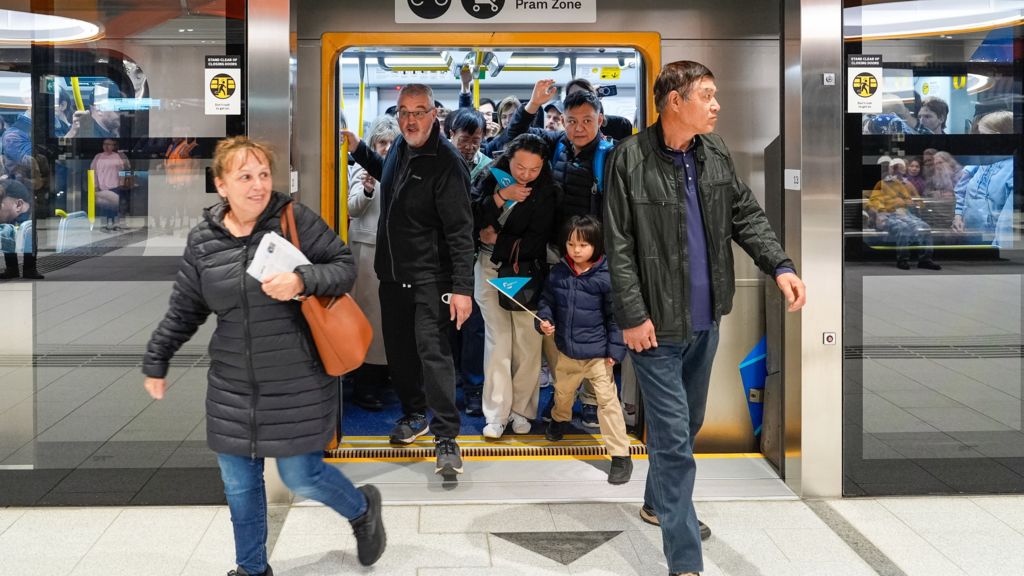
In response to skyrocketing fuel prices triggered by Middle East conflicts, two Australian states have announced unprecedented free public transport initiatives. Victoria and Tasmania are implementing temporary fare-free periods to alleviate financial pressure on commuters and reduce road traffic.
Victoria Premier Jacinta Allan confirmed that all train, tram, and bus services will be completely free throughout April. “This immediate measure won’t resolve every challenge, but it provides crucial relief for Victorians during this difficult period,” Allan stated on Saturday. The initiative aims to decrease dependency on private vehicles as petrol prices continue their upward trajectory.
Simultaneously, Tasmania announced an even more extensive program, eliminating fares on coaches, buses, and ferries from Monday through June’s end. Premier Jeremy Rockliff emphasized that “rising fuel costs significantly impact family budgets, prompting our decisive action to protect Tasmanians.” The island state will additionally waive school bus fees, generating approximately A$20 weekly savings for affected families.
This policy divergence highlights regional variations in addressing the fuel crisis. New South Wales Transport Minister John Graham indicated his state reserves resources for potential extended disruptions, noting “this situation will likely persist beyond a single month.” Other states including South Australia, Queensland, and Western Australia have implemented alternative measures such as expanded senior travel benefits, previously introduced flat fares, or historical fare reductions.
The national context reveals severe price inflation, with average petrol costs surging from A$2.09 to A$2.38 per litre within one month according to Australian Institute of Petroleum data. Although supply chain issues aren’t cited as primary concerns, international oil market volatility continues driving domestic price increases.
Globally, Australia joins multiple nations implementing conservation measures following the effective closure of the Strait of Hormuz—a critical waterway handling 20% of global oil and gas shipments. Egypt has mandated early business closures and remote work policies, Ethiopia placed non-essential government staff on leave, and the Philippines declared a national emergency incorporating transport subsidies and reduced government operational days.