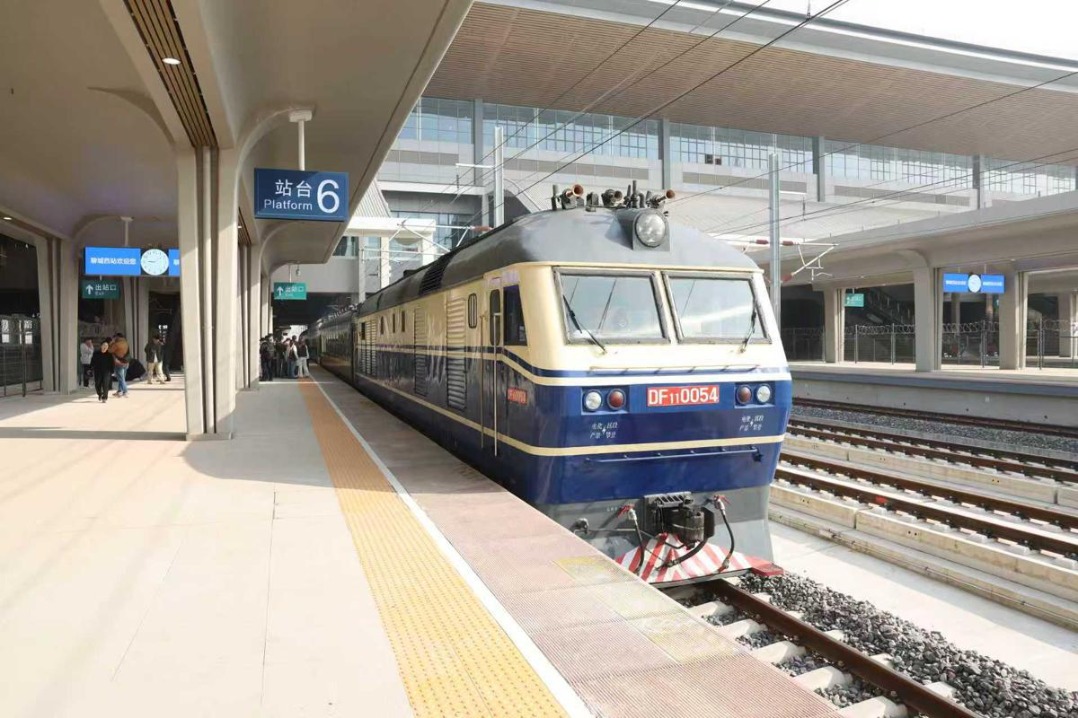
The Shandong segment of the pivotal Xiong’an-Shangqiu high-speed railway has officially commenced its comprehensive joint commissioning and testing phase, marking a significant milestone in China’s ongoing infrastructure expansion. The testing train’s departure from Liaocheng West Station on Friday initiated a meticulous three-month evaluation process for this crucial segment of the broader Beijing–Hong Kong high-speed rail corridor.
According to Wang Yongwu, Director of the Science, Technology and Information Department at China Railway Jinan Group, the testing regimen will unfold in two primary phases: progressive speed assessment followed by rigorous signal system validation. Specialized inspection trains and high-speed test vehicles will be deployed to gather critical performance data across multiple parameters including track geometry, overhead contact systems, and train control mechanisms.
The extensive testing protocol aims to thoroughly evaluate the integrated functionality of traction power supply, catenary systems, communications infrastructure, and advanced monitoring systems designed to detect natural disasters and object intrusions. Through systematic debugging and optimization, engineers will verify that all subsystems collectively meet stringent design specifications and operational safety standards.
Spanning 269 kilometers through western Shandong province, the newly constructed segment traverses the cities of Liaocheng, Jining, and Heze while incorporating seven strategically positioned stations. Upon operational launch, this transportation artery is projected to substantially enhance regional connectivity and optimize the structural configuration of Shandong’s railway network, facilitating more efficient passenger and freight movement across the region.