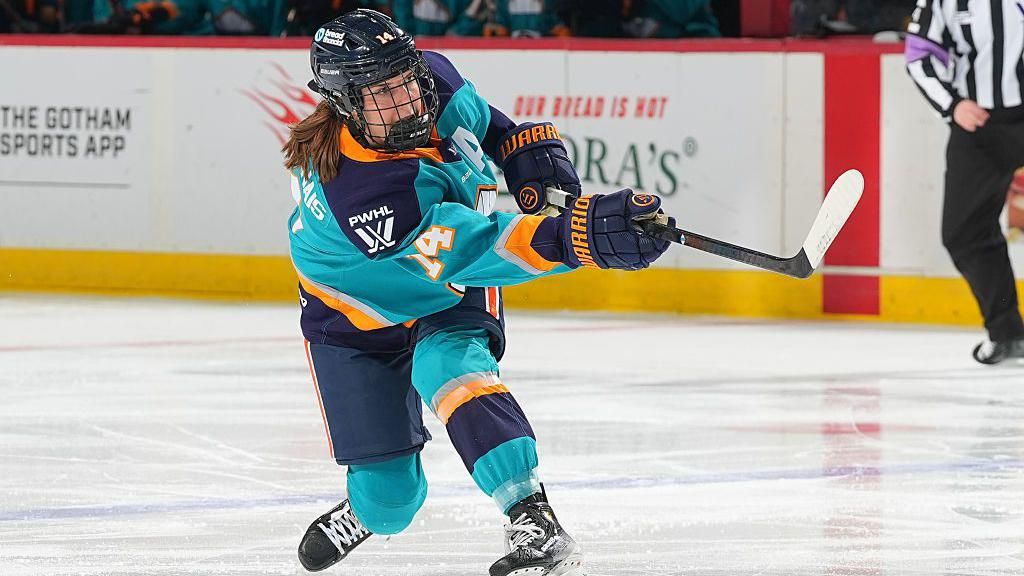
This Saturday marks a watershed moment for women’s professional hockey as the Professional Women’s Hockey League (PWHL) makes its historic US national television debut. The groundbreaking broadcast will feature the New York Sirens facing off against Montreal Victoire from Detroit’s Little Caesars Arena, reaching over 126 million American households through Scripps Sports’ ION network.
The monumental broadcast represents the culmination of decades of growth in women’s sports, accelerated by the US team’s gold-medal victory against Canada at the 2026 Winter Olympics. That championship game attracted over five million viewers, setting a record as the most-watched women’s hockey game in US history.
For pioneers like Kate Hoos, who witnessed the sport’s first Olympic appearance in 1998, this national exposure signifies a dramatic transformation. “There are a lot of people who could be seeing it for the first time, just flipping through the channels,” Hoos noted. “It’s great exposure.”
The television debut coincides with unprecedented commercial momentum for women’s sports. Recent McKinsey & Company analysis reveals that between 2022 and 2024, revenue from women’s sports grew 4.5 times faster than men’s sports. Projections indicate women’s sports could generate $2.5 billion in value for US rights holders by 2030—a 250% increase from 2024 figures.
Kendall Coyne Schofield, Minnesota Frost player and Olympic gold medalist, emphasizes the significance of sustained visibility: “For as long as I can remember, women’s hockey went silent after the Olympics. Now there’s no more ifs, ands or buts—it’s coming back. The awareness, the visibility, it matters.”
The league’s growing appeal is evident in sold-out arenas at Madison Square Garden and TD Garden, while small businesses report surging demand for women’s hockey merchandise. Artist Alex Douglas, who creates player portraits, reports female athletes outsell male counterparts four-to-one.
Though currently a one-time broadcast arrangement, experts believe national television exposure creates vital sponsorship opportunities and fan engagement. Thayer Lavielle of The Collective think tank observes: “When you’re opening it up to millions more people to watch, it creates viability, sponsor awareness. It’s an entirely new set of variables for the sport.”