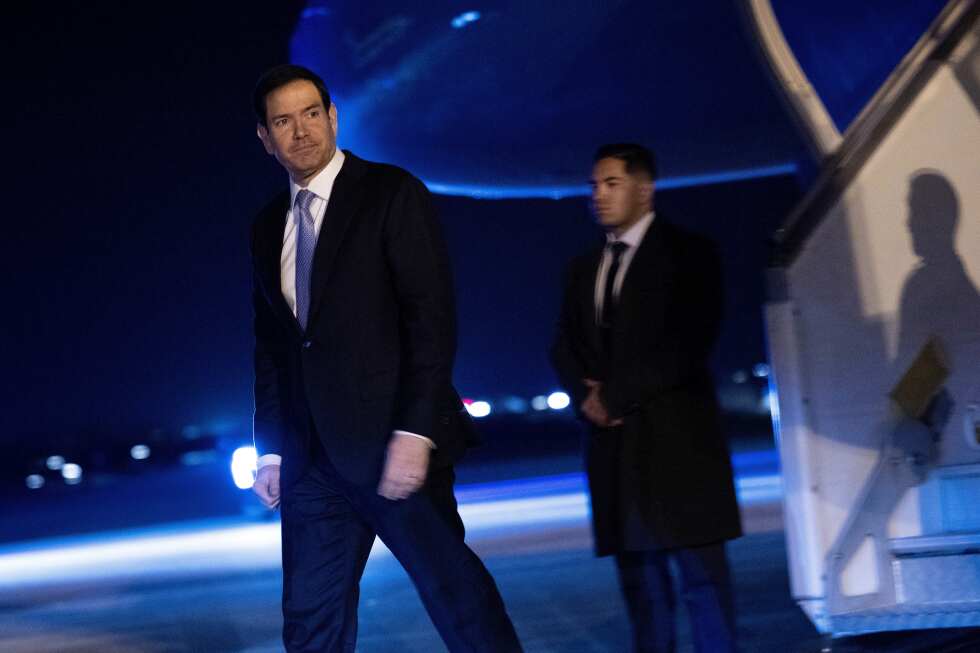
U.S. Secretary of State Marco Rubio encountered a challenging diplomatic landscape Friday as he convened with Group of Seven counterparts in France, following President Donald Trump’s sharp criticisms of NATO allies regarding the Iran conflict. The gathering near Versailles occurred amidst heightened transatlantic tensions, with multiple European nations expressing deep reservations about American military strategy in the Middle East.
President Trump’s Thursday cabinet meeting remarks questioning NATO’s value and expressing disappointment in alliance members’ reluctance to support U.S. operations in Iran created additional complications for Rubio’s diplomatic mission. Of the G7 member nations, only Japan stands outside the NATO framework, while Britain, Canada, France, Germany and Italy all belong to the transatlantic military alliance.
The Secretary of State’s mission to build consensus faces multiple obstacles beyond the Iran situation. European partners remain concerned about earlier U.S. demands regarding Greenland’s transfer from Denmark and seek reassurance about continued American support for Ukraine against Russian aggression. These existing tensions are now compounded by differences over Middle Eastern strategy.
Trump specifically criticized NATO countries for not assisting with securing the Strait of Hormuz, where Iranian actions have disrupted oil shipments and driven energy prices upward. The president asserted that the U.S. protects NATO members from Russia without reciprocal protection, adding that he never believed the alliance was necessary and had previously been ‘doing a test.’
Despite these challenges, Rubio struck an optimistic tone before departing Washington, expressing anticipation for ‘great meetings’ with world leaders. He later emphasized on social media that the discussions would address shared global security concerns, particularly regarding the Middle East and Russia-Ukraine conflict.
NATO Secretary-General Mark Rutte had earlier noted increased defense spending by member states, acknowledging European and Canadian overreliance on U.S. military capability while highlighting a developing ‘shift in mindset.’ Rutte confirmed NATO’s recognition of Iran’s threatening missile programs and nuclear ambitions, characterizing U.S. actions as degrading those capabilities.
French military leadership expressed particular concern about the lack of consultation before American military engagements. General Fabien Mandon, chief of the French defense staff, noted that allies were surprised by U.S. decisions to intervene without notification, affecting European security interests. Nevertheless, France has organized multilateral talks involving 35 nations to address reopening the Strait of Hormuz once hostilities diminish.
German Foreign Minister Johann Wadephul echoed the need for stability, emphasizing that support for Ukraine must not waver during the Iran conflict. He advocated for developing a joint position that would ensure sustainable conflict resolution, Hormuz security, and continued restraint of Iranian regional influence.