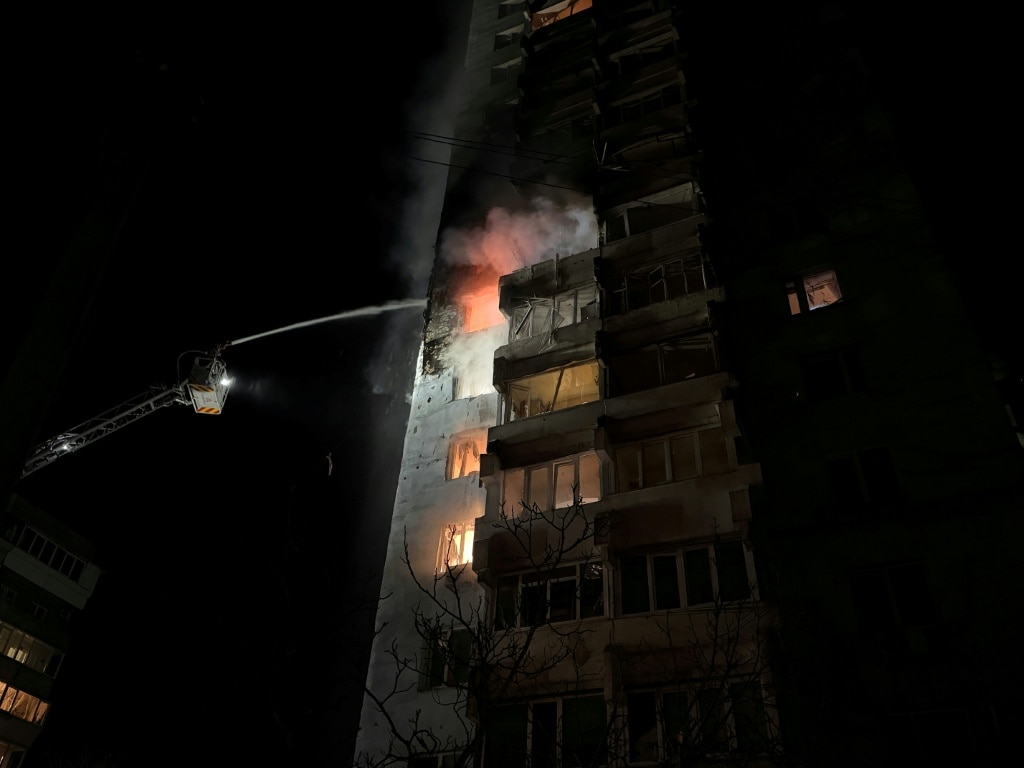
In a significant escalation of aerial tactics, Russian forces launched one of their most extensive daytime drone assaults against Ukraine, deploying nearly 1,000 unmanned aerial vehicles over a 24-hour period. The coordinated offensive resulted in at least eight fatalities and targeted multiple western regions far from conventional front lines.
The attack marked a dramatic departure from Moscow’s typical nighttime bombardment strategy, with 550 drones dispatched during daylight hours following 392 overnight launches. Western cities including Lviv, Ivano-Frankivsk, and Vinnytsia suffered severe impacts, with civilian infrastructure and cultural landmarks sustaining substantial damage.
In Lviv, a UNESCO-protected historic center came under fire during evening rush hour, with strikes damaging areas adjacent to the 17th-century St. Andrew’s Church and Bernardine Monastery. Eyewitnesses reported flames engulfing residential buildings, with roofs collapsed and windows shattered throughout the city center. First responders and civilians sought refuge in churches during the attack, awaiting clearance to emerge.
The assault on Ivano-Frankivsk proved particularly devastating, with two civilians killed and four injured—including a six-year-old child. A maternity hospital and approximately ten residential buildings sustained damage in the strike. Vinnytsia region reported one fatality and eleven wounded, while Lviv documented at least thirteen hospitalizations.
Ukrainian President Volodymyr Zelensky emphasized the urgent need for enhanced air defense capabilities, stating the massive drone numbers demonstrate requirement for increased protection against Russian strikes. The attacks occurred amid growing concerns about Ukraine’s dwindling supplies of US-provided air defense systems, compounded by shifting international attention to the Middle East conflict.
The bombardment extended beyond western regions, with overnight strikes hitting residential areas and critical infrastructure across Poltava, Kharkiv, Zaporizhzhia, and Kherson. Five additional fatalities occurred in these attacks, which also severed power connections to neighboring Moldova and compromised energy infrastructure serving the Zaporizhzhia nuclear facility.
This tactical shift to大规模daylight drone warfare represents a new phase in the four-year conflict, challenging Ukraine’s air defense resources and testing civilian resilience across previously relatively secure western regions.