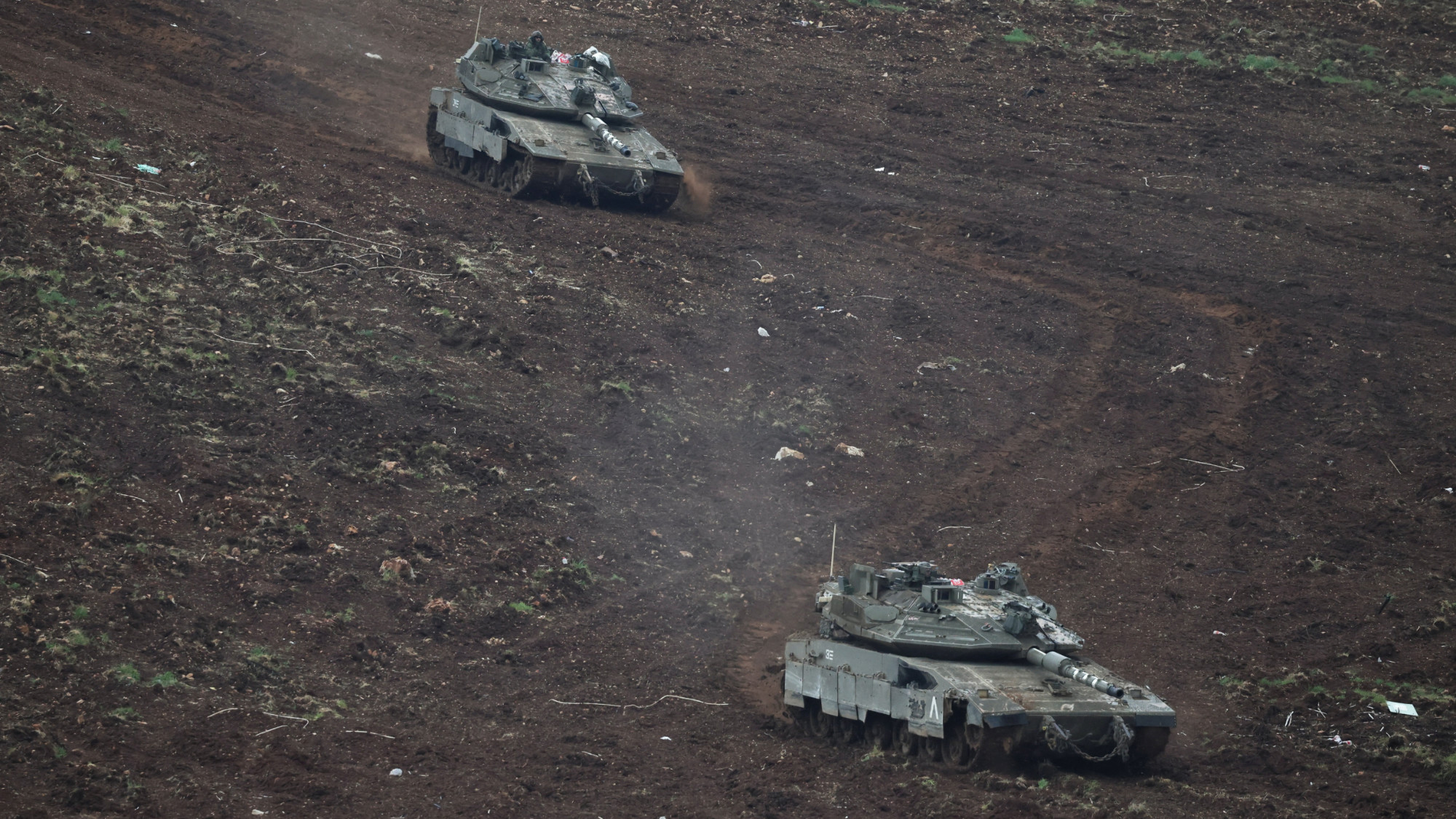
Israeli Defense Minister Israel Katz declared on Tuesday that military forces intend to establish control over southern Lebanon, following similar territorial assertions by Finance Minister Bezalel Smotrich who advocated for redrawing the border at the Litani River. Katz specified that hundreds of thousands of displaced Lebanese civilians would be prohibited from returning to their homes until Israel’s northern border security is fully guaranteed, with plans to maintain a security zone extending to the Litani River.
‘The fundamental principle remains unequivocal: areas harboring terror activities and missile launches will be cleared of residences and inhabitants, with IDF presence established throughout,’ Katz stated. These remarks follow his recent directive for military operations to destroy all bridges crossing the Litani River and accelerate the demolition of Lebanese properties near the boundary.
Finance Minister Smotrich addressed the Knesset on Monday, emphasizing that the ongoing conflict should conclude with ‘radical transformation’ beyond defeating Hezbollah. He proposed establishing a ‘sterile security cordon’ deep within Lebanese territory, suggesting the Litani River should become Israel’s new border with Lebanon—comparable to the ‘Yellow Line’ in Gaza and the buffer zone on Mount Hermon in Syria.
Israel has historically maintained undefined borders with Lebanon, Syria, and Palestinian territories, relying instead on ceasefire agreements from 1949 and 1967. The strategic Mount Hermon in Syria came under Israeli occupation in 2024 following the collapse of Bashar al-Assad’s government, while the unilaterally imposed ‘Yellow Line’ in Gaza has expanded to encompass over half the territory since its establishment during the US-brokered October ceasefire.
These developments occur amid reports from Axios indicating Israel’s preparation for a substantial ground offensive into Lebanon, with objectives to capture all territories south of the Litani River—located approximately 30 kilometers north of the current border and serving as a vital connection between southern Lebanon and the remainder of the country. Recent military actions, including the destruction of key Litani River bridges and strikes on border-area residences, have prompted Lebanese President Joseph Aoun to warn of potential preliminary measures toward a full-scale ground invasion.