The magnificent haveli mansions of Old Delhi, once the stately homes of Mughal-era nobility, now face an uncertain future, delicately balanced between ambitious restoration efforts and irreversible decay. These historic residences in the 17th-century walled city of Shahjahanabad present a study in contrasts—where a handful have been meticulously preserved, many more succumb to neglect, complex inheritance disputes, and intense urban development pressures.
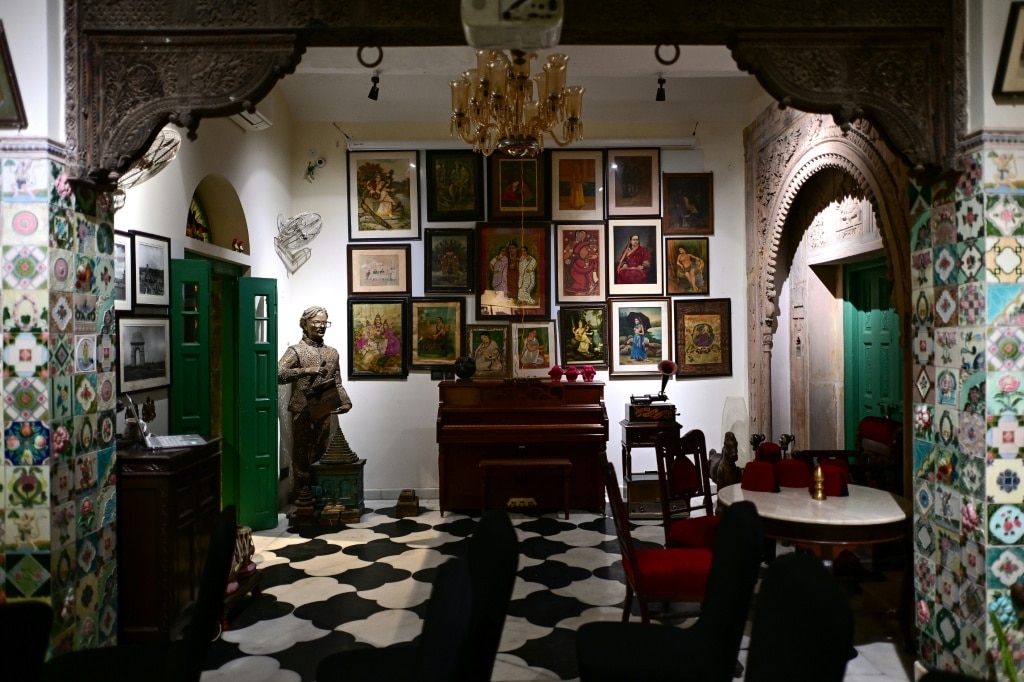
Throughout the ancient quarter, the architectural heritage reveals itself through cracked facades, sealed gateways, and sagging balconies. Yet within carefully restored spaces like the Kathika Cultural Centre, visitors can experience the havelis’ original grandeur—sunlight filtering through stained glass onto carved sandstone arches, the air scented with polished wood and rosewater. Here, musicians perform in frescoed courtyards that once hosted noble gatherings, offering glimpses into a vanishing way of life.
The challenge of preservation is multifaceted, as explained by conservation advocates. Atul Khanna, founder of Kathika Cultural Centre, highlights how divided ownership among multiple heirs often prevents coordinated conservation efforts. ‘When there are multiple ownerships, that becomes a challenge,’ he notes. ‘If the haveli is decaying, who is going to spend the money?’ Khanna and other preservationists point to bureaucratic obstacles and advocate for streamlined processes to encourage restoration.
Some success stories exist, such as the 18th-century Haveli Dharampura, now transformed into a heritage hotel. According to owner Vidyun Goel, such projects demonstrate potential but remain isolated without sustained institutional support. Meanwhile, residents like Ashok Mathur, fourth-generation inhabitant of Mathur ki Haveli, continue living in these aging structures despite deteriorating conditions. ‘We are in love with this house,’ Mathur affirms, though he acknowledges the vanished community that once defined haveli life.
Conservation expert K.T. Ravindran emphasizes that meaningful revival requires neighborhood-level regeneration rather than piecemeal projects. Oral historian Sohail Hashmi adds that each haveli represents not just architecture but ‘a larger social ecosystem of neighborhoods, crafts and traditions.’ As these structures disappear, so too does living history—every carved pillar and courtyard representing irreplaceable artistic and cultural heritage.