In the expansive floodplains of Brazil’s Solimoes River, the upper reaches of the Amazon basin, an ancient economic practice is gaining modern global significance. Local communities are meticulously harvesting and processing malva fiber—a natural textile resource—creating sustainable economic opportunities while preserving traditional knowledge.
The production process reveals both ecological harmony and economic potential. Under the intense Amazon sun, harvested malva stalks are arranged in precise rows across forest clearings, their pale hues creating a striking visual contrast against the lush green canopy. This natural drying technique, perfected through generations, transforms the raw vegetation into durable fiber ready for market.
This traditional industry has evolved into a vital economic bridge connecting remote Amazonian communities with international markets. The natural fibers, prized for their sustainability and quality, are increasingly sought by global manufacturers seeking eco-friendly alternatives to synthetic materials. The trade represents more than mere commerce—it embodies a sustainable development model that simultaneously supports local livelihoods and forest conservation.
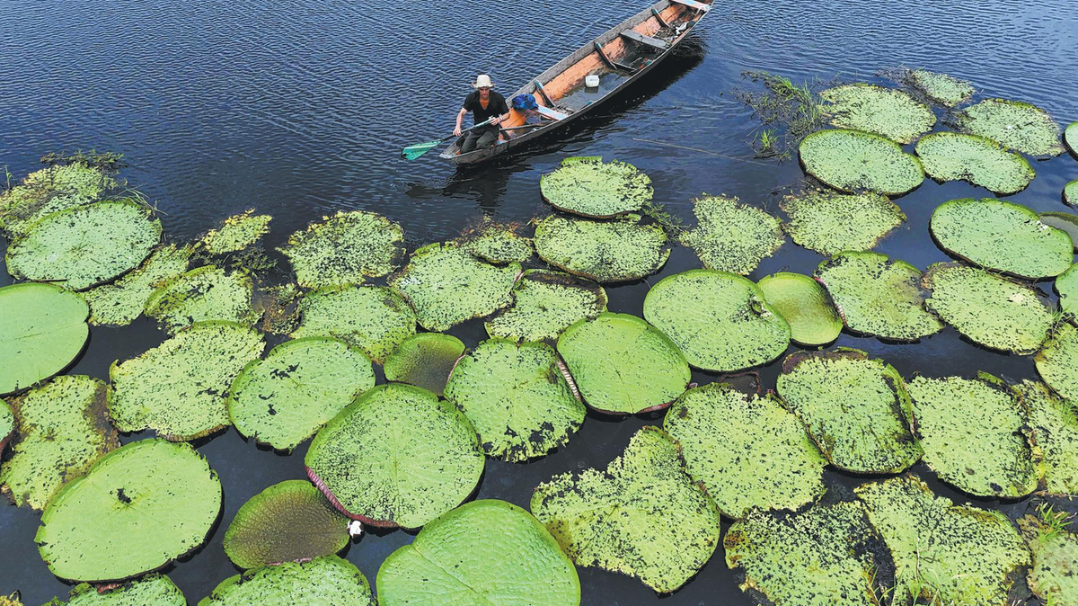
Recent photographic documentation from the Sao Sebastiao riverine community in Manacapuru captures the seamless integration of this industry with Amazonian life. Images show local harvesters navigating waterways abundant with giant water lily plants while transporting their valuable natural cargo, demonstrating how traditional practices coexist with the region’s unique ecosystem.
The malva trade has emerged as an economic lifeline for riverside communities, providing stable income while encouraging forest preservation. Unlike extractive industries that damage rainforest ecosystems, fiber harvesting represents a renewable economic model that aligns economic interests with environmental stewardship. This balance between utilization and conservation offers a template for sustainable development in biologically sensitive regions worldwide.
International market demand for sustainable natural materials has transformed this traditional practice into a commercially viable industry with global reach. The fibers eventually reach international supply chains, connecting Amazonian harvesters with conscious consumers worldwide who prioritize environmentally responsible products. This economic linkage demonstrates how localized traditional knowledge can find relevance in contemporary global markets while maintaining ecological integrity.