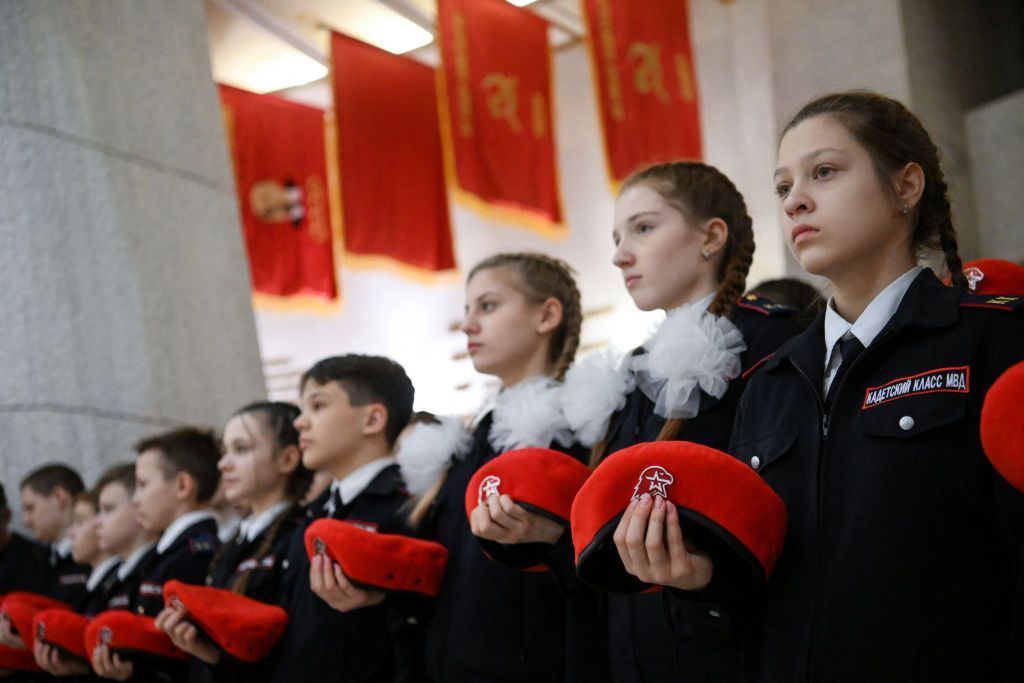
In contemporary Russia, a silent struggle unfolds within households as parents attempt to counter state-mandated patriotic education programs permeating school curricula. The Oscar-winning BBC documentary ‘Mr Nobody Against Putin’ illuminates this phenomenon through footage captured by Pavel Talankin, a former school events coordinator from Karabash in the Ural Mountains.
The film reveals how children are systematically exposed to militaristic narratives following Russia’s 2022 invasion of Ukraine. Classrooms now incorporate flag-raising ceremonies, revised history textbooks labeling the conflict as a ‘special military operation,’ and compulsory lessons promoting state-approved Russian values. The education ministry recently announced plans to introduce government-vetted toys and games to nurseries to further reinforce traditional values.
Parents like Nina from Moscow face difficult dilemmas when their children enthusiastically participate in these activities. ‘She likes her teacher, she likes her classmates – she likes being a part of it,’ Nina explains, having changed her name for safety concerns. When she once kept her daughter home to avoid a patriotic event, the child felt excluded from her peer group.
Psychological experts note the particular vulnerability of young children to authority figures’ messages. ‘If you tell a young child that the war is good, they will accept it,’ says psychotherapist Anastasia Rubtsova. Researchers like Emily Willoughby from the University of Minnesota suggest that while childhood provides a critical window for attitude formation, parental influence typically prevails when families actively counter institutional messaging.
However, in Russia’s tightly controlled information environment, outcomes become less predictable. Implementation varies significantly across schools, with some educators enthusiastically embracing the guidelines while others subtly resist or dilute the messaging.
The documentary captures telling scenes: children receiving Russian flags during assemblies, classrooms where students are warned about enemy propaganda, and the creation of a new youth organization reminiscent of Soviet-era Pioneer groups. Despite these efforts, many students like 14-year-old Maia from St. Petersburg find the ‘Conversations about Important Things’ sessions boring and perfunctory.
As Professor Paul Goode of Carleton University notes, compelling public performances of patriotism serves to reinforce the regime’s power perception—a message amplified through state media and controlled elections. Meanwhile, authorities have streamlined military recruitment for school-leavers, using financial incentives and patriotic appeals to bolster troop numbers.
This educational transformation represents a profound societal shift where childhood development becomes intertwined with state political objectives, leaving families to navigate the delicate balance between institutional compliance and personal values.