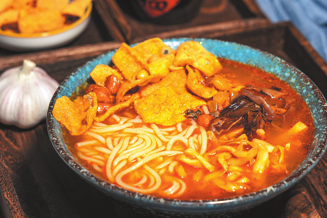
Once confined to the streets of Liuzhou in China’s Guangxi region, luosifen—a pungent rice noodle dish featuring river snail broth and fermented bamboo shoots—is now captivating international palates. This distinctive culinary export challenges Western perceptions of Chinese cuisine while demonstrating how strategic adaptation can bridge cultural divides.
Global appreciation for luosifen represents a significant shift in international food culture. Unlike traditional Western introductions to Chinese food through dishes like lemon chicken and spring rolls, luosifen offers an authentic, complex flavor profile that initially tests unfamiliar diners with its strong aroma before winning them over with its rich, layered taste.
New Zealander Shawn Christopher’s experience typifies this transition. Despite warnings about the dish’s intense odor, the Christchurch resident discovered a sophisticated balance of pork bone richness, spicy heat, and silky noodles that absorbed the complex broth. His endorsement of the deep-fried egg accompaniment as ‘absolute magic’ reflects growing international acceptance.
The transformation from local specialty to global phenomenon resulted from deliberate strategy. Since 2016, Liuzhou authorities implemented over 40 targeted policies supporting international expansion. Manufacturers like Guangxi Luobawang Food Technology developed export-friendly versions—less sour, milder spice, faster cooking—while preserving the dish’s essential character.
This culinary diplomacy has generated substantial economic returns, with nearly $20 million in exports across 30+ countries. Social media platforms like Xiaohongshu document the trend through viral ‘foreigners trying luosifen’ content, particularly among younger demographics embracing authentic international experiences.
The dish’s standard configuration includes pickled bamboo shoots, fried tofu skin, peanuts, and wood ear mushrooms, with customizable spice levels and premium additions like braised pork trotters or duck feet. Both soup and dry noodle variations have found international appeal, demonstrating how regional specialties can achieve global recognition through thoughtful adaptation without compromising authenticity.