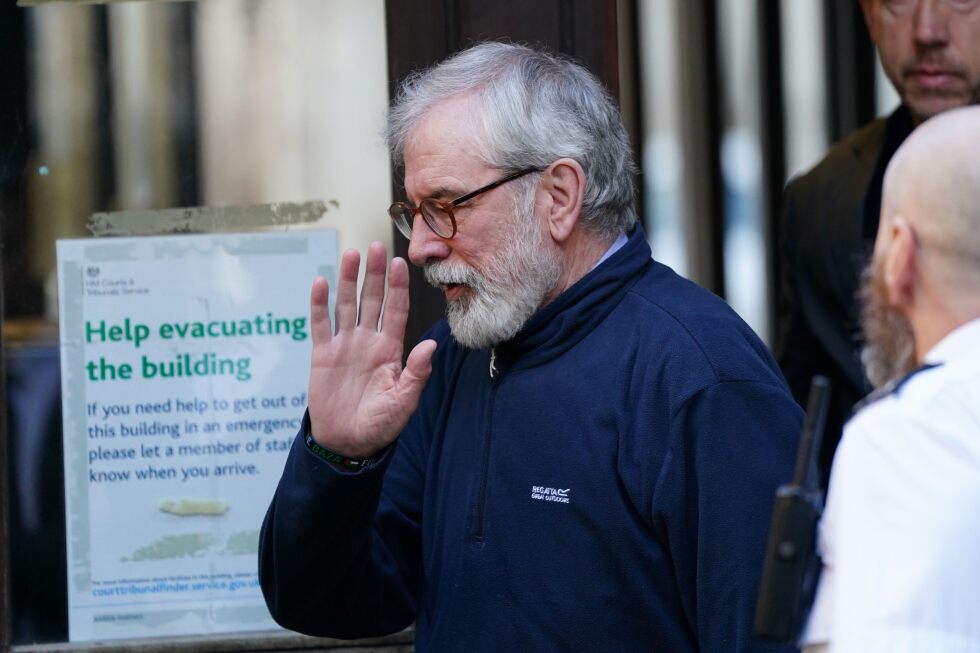
A landmark civil trial against former Sinn Féin leader Gerry Adams collapsed unexpectedly at London’s High Court on Friday, as three victims of Irish Republican Army bombings withdrew their damages claim. The plaintiffs—John Clark, Jonathan Ganesh, and Barry Laycock—had sought symbolic damages of £1 (approximately $1.34) from Adams, alleging his direct responsibility for Provisional IRA operations in England during the Troubles.
The case’s sudden termination came during what was scheduled as the final day of the two-week trial. The claimants’ attorney, Anne Studd, announced the discontinuation citing legal developments overnight related to ‘abuse of process’ arguments, though no specific details were provided.
Adams, who testified earlier in the proceedings but was absent from court Friday, issued a statement welcoming the outcome. ‘I attended the civil case out of respect for them,’ the 77-year-old political figure stated. ‘This decision brings to an emphatic end a case that should never have been brought.’
The plaintiffs had alleged that Adams served on the IRA’s Army Council and shared responsibility for the 1973 Old Bailey courthouse bombing and the 1996 attacks on London’s Docklands and Manchester’s Arndale shopping center. These incidents left Clark with permanent shrapnel injuries, Ganesh with psychological trauma, and Laycock with 50% disability alongside financial and emotional struggles.
Adams has consistently denied IRA membership despite his leadership of the republican political party Sinn Féin from 1983 to 2018. He played a pivotal role in negotiating the 1998 Good Friday Agreement that largely ended Northern Ireland’s three-decade conflict, which claimed approximately 3,600 lives. While never charged specifically for the bombings, Adams faced historical allegations of IRA involvement—including a 1978 membership charge that was dropped due to insufficient evidence. Last year, he successfully won a £100,000 libel verdict against the BBC over claims he authorized an informant’s execution within the republican movement.