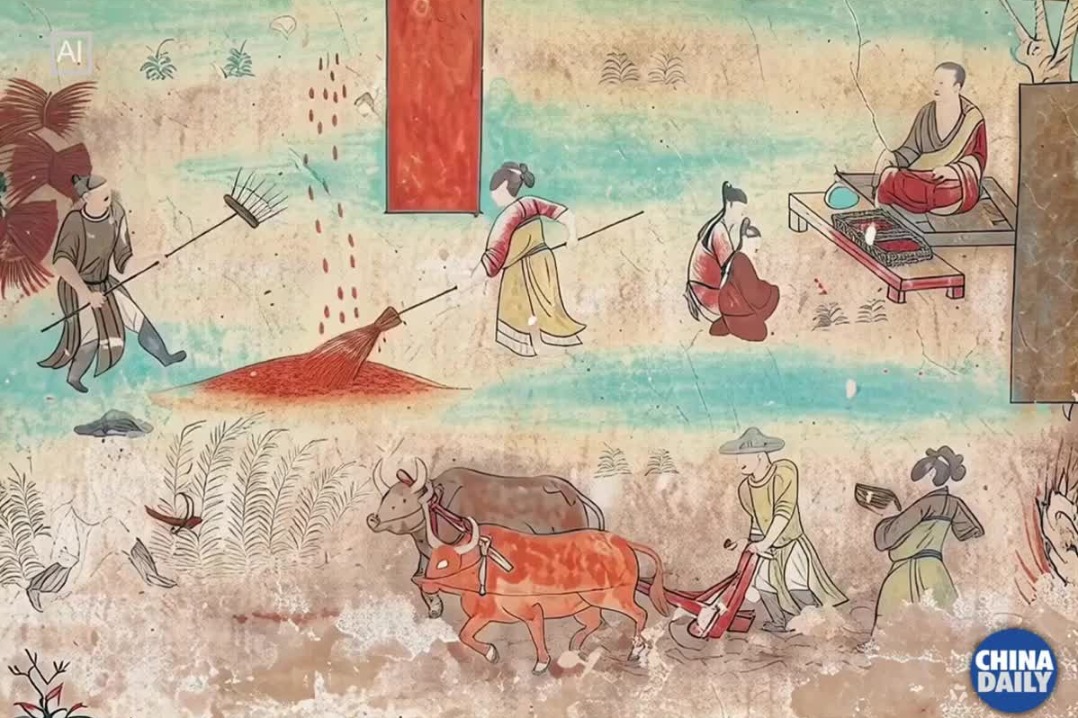
A remarkable mid-Tang Dynasty (618-907) mural from the Dunhuang caves in Northwest China’s Gansu province offers a vivid window into ancient agricultural traditions coinciding with the Spring Equinox. This culturally significant artwork, preserved for over a millennium, depicts farmers and their cattle commencing seasonal fieldwork during this important solar term that began on March 20.
The meticulously preserved mural showcases the sophisticated farming techniques and rural生活方式 that characterized China’s agricultural civilization during the Tang Dynasty’s golden age. The artwork forms part of the extensive Dunhuang Mogao Grottoes collection, a UNESCO World Heritage site containing some of the world’s most exceptional Buddhist art spanning ten dynasties.
Archaeological experts note that such murals provide invaluable insights into the daily lives, tools, and seasonal practices of ordinary people during historical periods often documented primarily through official records and elite perspectives. The Spring Equinox depiction particularly highlights how ancient Chinese agricultural societies synchronized their farming activities with the 24 solar terms—an agricultural calendar system still influencing rural practices today.
The preservation of these murals represents ongoing efforts by Chinese cultural authorities to protect and study the Dunhuang caves, which contain approximately 45,000 square meters of murals and more than 2,400 painted sculptures. Recent conservation technologies have enabled researchers to analyze these artworks in unprecedented detail, revealing information about historical climate patterns, crop varieties, and farming implements used over a thousand years ago.