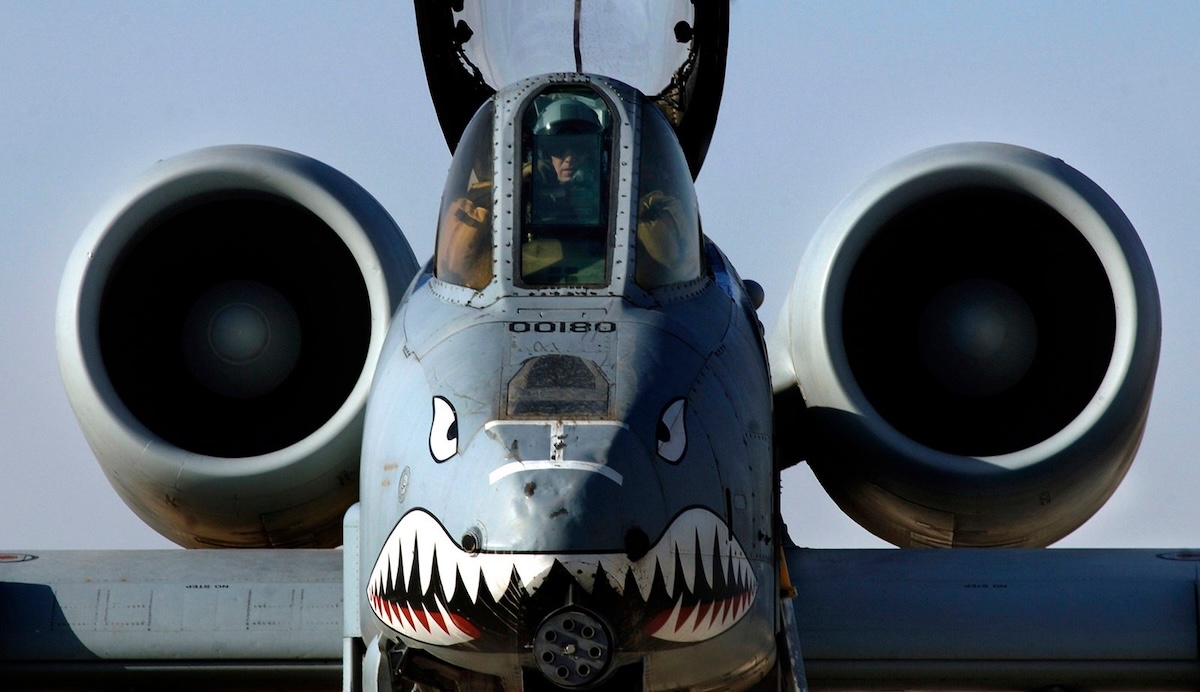
The venerable A-10 Thunderbolt II, long targeted for retirement by the U.S. Air Force, has emerged as a critical asset in ongoing operations against Iranian threats throughout the Middle East. Despite years of efforts to phase out the aging fleet, the heavily armored close-air support aircraft has been transformed through comprehensive upgrades that include advanced networking capabilities, artificial intelligence integration, and precision weapon systems.
Operating primarily from Muwaffaq al-Salti Air Base in Jordan and Al-Dhaffra Air Base in the UAE, the modernized A-10s perform multiple combat roles. These include neutralizing Iranian Shahed-136 suicide drones using the Advanced Precision Kill Weapon System (APKWS II), providing maritime force protection for U.S. Navy operations, eliminating shore-based missile sites, destroying fast attack boats threatening Persian Gulf shipping, and targeting Iranian proxy militias in Iraq.
The aircraft’s survivability, demonstrated during previous conflicts, remains unmatched. The A-10’s design features—including titanium armor protection, redundant systems, and engine placement—have proven effective against modern threats. During Operation Desert Storm, nearly half of the deployed A-10s sustained combat damage yet returned safely, a testament to the aircraft’s rugged construction.
Significant technological enhancements have transformed the platform’s capabilities. The integration of Link 16 networking technology enables real-time data sharing with advanced platforms like the F-35, while AI-assisted targeting systems can generate attack plans in seconds rather than minutes. The APKWS II guidance system, combined with new proximity fuses and specialized software, has made the A-10 particularly effective against low-cost drones, providing a cost-efficient solution to the drone threat.
Despite these demonstrated capabilities, the Air Force continues its planned retirement of the fleet. Congressional mandates currently prevent reducing the inventory below 103 aircraft through September 2026, with complete retirement scheduled for 2029. This ongoing phase-out occurs even as the modernized A-10s demonstrate unprecedented effectiveness in current combat operations, raising questions about the timing of their retirement given their proven combat value.