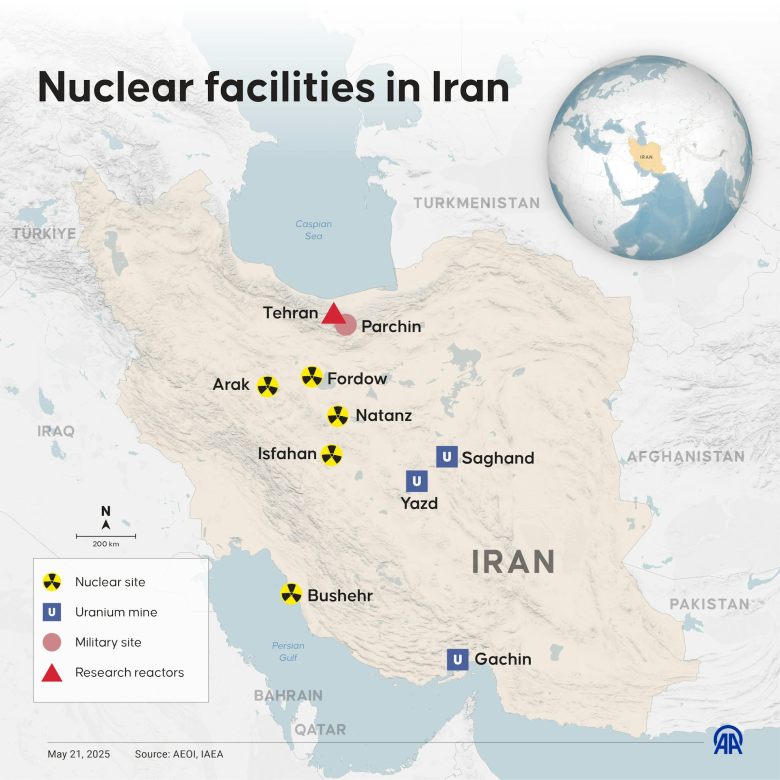
Despite President Trump’s declaration that military strikes had ‘completely obliterated’ Iran’s nuclear capabilities, emerging evidence suggests Tehran’s enriched uranium stockpiles remain largely intact within fortified underground facilities. The ongoing conflict has created a precarious nuclear standoff with no clear resolution strategy from the administration.
According to intelligence assessments, approximately 441 kilograms of 60% enriched uranium—material capable of weapons conversion—survived the June 2025 bombings. These critical stockpiles are believed to be secured within deep tunnel networks near Isfahan, the Pickaxe Mountain facility at Natanz, and the previously targeted Fordow site. Military officials acknowledge the practical impossibility of destroying these deeply buried facilities using conventional bunker-buster munitions.
The survival of these materials presents multiple security dilemmas: Iran could potentially weaponize existing stocks within weeks, unauthorized transfers could occur during governmental instability, or terrorist organizations might eventually access the materials. The situation echoes post-Soviet collapse concerns regarding loose nuclear materials.
Options for addressing the threat range from diplomatic engagement to high-risk military operations. Cooperative removal, similar to Project Sapphire’s 1994 operation in Kazakhstan, remains theoretically possible but politically challenging. Alternatively, special forces operations could attempt secure or disable the materials, though defense experts warn such missions would be ‘very perilous’ and require substantial military commitment.
Complicating matters further, Iran maintains additional nuclear assets including 6 tons of 5% enriched uranium, centrifuge arrays, weapons design documentation, and scientific expertise—all essentially immune to aerial bombardment. The persistence of these capabilities suggests the military campaign may have inadvertently strengthened Iran’s determination to pursue nuclear weapons while failing to eliminate the fundamental threat.
The current impasse highlights the limitations of military solutions against distributed nuclear programs. Many experts argue that durable security ultimately requires diplomatic frameworks similar to the 2015 JCPOA agreement, which the Trump administration abandoned in 2018. The ongoing conflict has likely diminished prospects for such diplomatic solutions for the foreseeable future, creating enduring nuclear security challenges in the region.