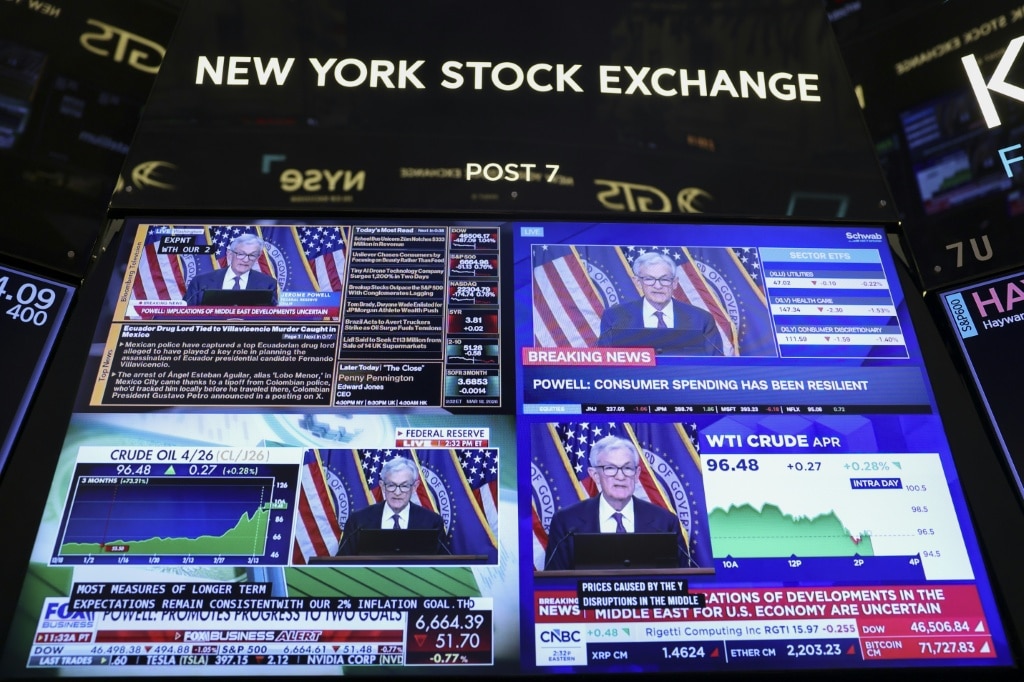
The Federal Reserve maintained its benchmark interest rates unchanged during Wednesday’s policy meeting while elevating inflation projections through 2026, citing economic uncertainties stemming from the Middle East conflict. The decision, reached through an 11-1 vote, keeps the federal funds rate within the 3.50% to 3.75% range despite mounting political pressure for reductions.
Chair Jerome Powell addressed the complex economic landscape, noting that escalating energy prices resulting from regional tensions would inevitably drive inflation upward. However, he emphasized the premature nature of quantifying the conflict’s full economic impact, stating policymakers must adopt a ‘wait-and-see’ approach regarding duration and magnitude.
The revised projections indicate the Fed now anticipates its preferred inflation gauge—the personal consumption expenditures (PCE) index—to reach 2.7% by December 2026, substantially above the previous 2.4% forecast. This adjustment reflects growing concerns about persistent price pressures alongside emerging geopolitical risks.
Powell simultaneously addressed personal scrutiny regarding his leadership, vehemently declaring his intention to remain on the Federal Reserve Board until completion of a Justice Department investigation into alleged cost overruns during headquarters renovations. His current term as chair concludes in May, though his governor tenure extends through 2028.
The monetary policy statement acknowledged elevated economic uncertainty despite solid expansion pace, with job gains remaining subdued and unemployment stable. The Fed’s economic projections maintained 2.4% GDP growth expectations for fourth-quarter 2024 while holding unemployment forecasts at 4.4%.
Notably, dissenting voice Stephen Miran—a former Trump economic advisor—advocated for a quarter-point reduction, highlighting internal divisions regarding optimal policy direction. Economic analysts observed concerning indicators within the projections, with some characterizing the combination of stagnant growth, rising unemployment, and persistent inflation as approaching stagflation-like conditions.
Powell dismissed stagflation concerns during his press briefing, reserving the term for more severe circumstances while maintaining cautious optimism about fundamental economic strength amid unprecedented global uncertainty.