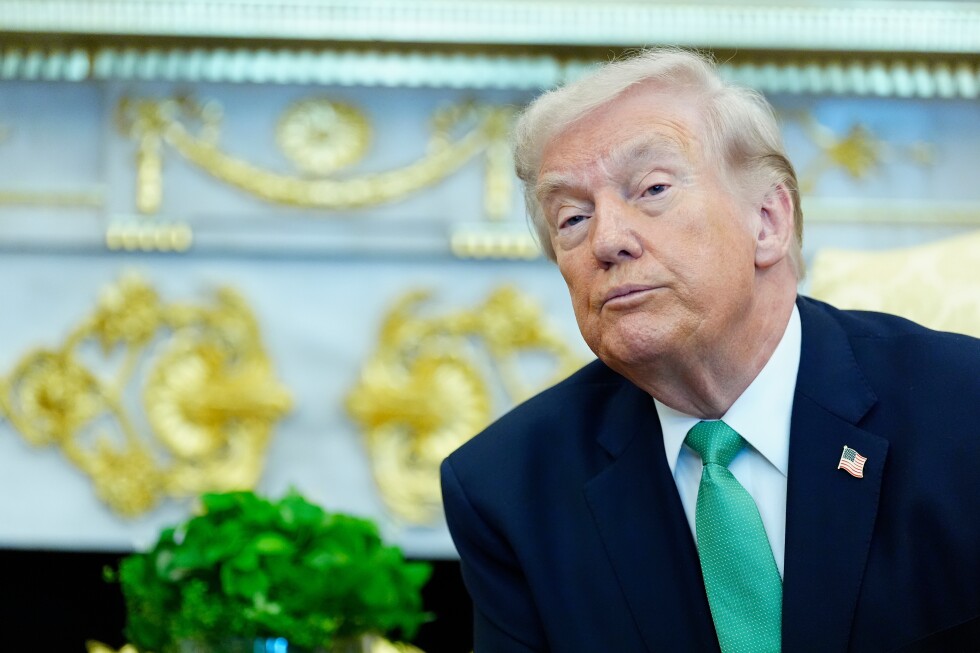
President Donald Trump expressed sharp frustration on Tuesday as NATO members and key global allies declined his appeals for military assistance in securing the Strait of Hormuz amid escalating tensions with Iran. During a St. Patrick’s Day meeting with Irish Prime Minister Micheál Martin, Trump revealed that traditional U.S. partners had rejected his calls for naval support in the critical waterway, despite what he characterized as substantial American investments in global security.
The President specifically criticized NATO members for their reluctance to contribute minesweepers or naval assets, noting that such assistance would involve minimal financial burden. Trump’s comments highlighted growing tensions within the transatlantic alliance, which he accused of benefiting from American protection while refusing reciprocal support. “We will protect them, but they will do nothing for us, in particular, in a time of need,” Trump stated via social media.
European leaders pushed back strongly against the administration’s requests. EU Foreign Policy Chief Kaja Kallas explicitly stated that member nations “do not have the wish to be dragged into this” conflict, emphasizing that the European Union was neither consulted about nor responsible for initiating military actions against Iran. French President Emmanuel Macron offered conditional support for securing the strait but only through operations separate from current hostilities.
The administration has meanwhile pursued diplomatic pressure campaigns, with the State Department circulating cables urging foreign governments to designate Iran’s Islamic Revolutionary Guard Corps and Hezbollah as terrorist organizations. This effort forms part of a broader strategy to isolate Iran internationally through economic sanctions and diplomatic measures.
Trump’s relationship with NATO remains characteristically volatile, with the President openly questioning the alliance’s value and suggesting he might reconsider U.S. participation without congressional approval—though legal experts note that 2023 legislation requires congressional authorization for NATO withdrawal.