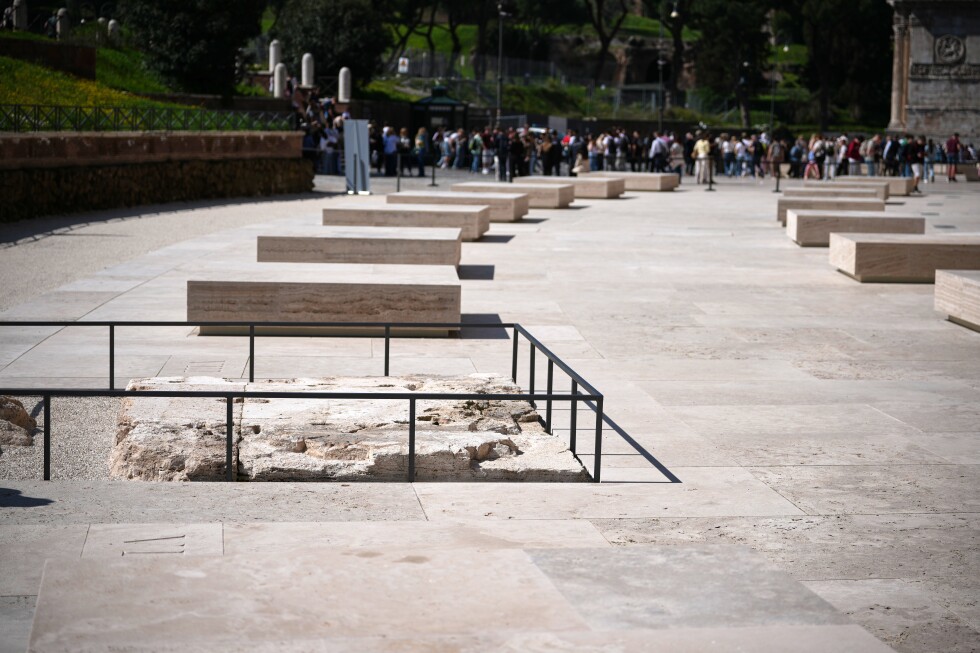
ROME — In an extraordinary fusion of ancient craftsmanship and modern restoration techniques, Rome’s iconic Colosseum has undergone a transformative renovation using travertine marble sourced from the same quarries that supplied ancient Roman builders two millennia ago. The landmark project has successfully recreated sections of the massive columns that once framed the arena’s entrance arcades, offering visitors an unprecedented glimpse into the monument’s original splendor.
The comprehensive restoration focused on the semicircular piazza surrounding the amphitheater, where Roman spectators once gathered beneath towering marble columns reaching 50 meters (164 feet) high. These architectural marvels, which collapsed over centuries due to earthquakes and unstable terrain, have now been symbolically restored through precisely positioned travertine slabs marking their original locations.
Italian architect Stefano Boeri, the visionary behind the piazza’s redesign, explained the project’s philosophical approach: ‘We strategically placed these travertine marble blocks exactly where the original pillars stood. Our fundamental concept was to restore public understanding of the arcades’ monumental proportions and the majestic scale of the archways that guided ancient crowds into the Colosseum’s heart.’
The restoration process revealed archaeological treasures buried beneath centuries of debris and overgrowth. As workers excavated one meter down to the original travertine paving stones, they uncovered a trove of historical artifacts including ancient coins, statues, animal bones, and even a gold ring. Deeper excavations reached the secret underground passage once used by Emperor Commodus to enter the arena while avoiding public scrutiny—a tunnel system that only became accessible to visitors last year.
The project maintained historical authenticity by sourcing materials from the same Tivoli quarries that supplied ancient Rome. Fabrizio Mariotti, representing the fourth generation of his family’s stonecutting firm, expressed the significance of participating in the restoration: ‘For our family, who has worked with travertine across four generations, contributing to the Colosseum—which symbolizes both Rome and this magnificent material—carries profound importance.’
Funding for the ambitious restoration came from compensatory resources allocated from Rome’s recent multi-billion euro metro expansion, which included constructing a new subway station directly beneath the Colosseum. The synergistic urban development represents Italy’s ongoing commitment to preserving its cultural heritage while advancing modern infrastructure.
The Colosseum remains Italy’s premier tourist destination, attracting approximately 9 million visitors in 2025 alone. This restoration not only enhances the visitor experience but also reconnects modern audiences with the architectural grandeur that once hosted gladiatorial combats and spectacular public events for thousands of Roman citizens.