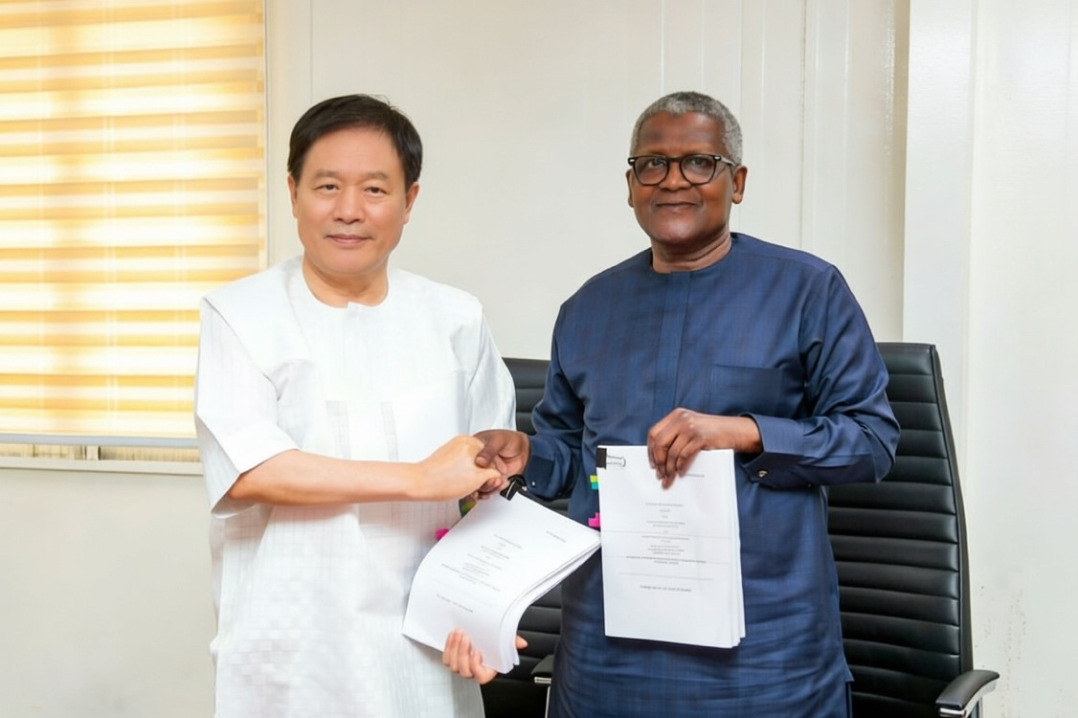
In a landmark move for African industrialization, Chinese energy conglomerate GCL Group has entered into a comprehensive 25-year natural gas supply agreement valued at approximately $4.2 billion with Nigeria’s Dangote Group. This strategic partnership will fuel a transformative fertilizer manufacturing project in Ethiopia that promises to reshape agricultural production across East Africa.
The agreement, finalized during recent ceremonies in Lagos, establishes an integrated energy-to-agriculture value chain connecting Ethiopia’s Ogaden Basin gas reserves with industrial manufacturing capabilities. GCL will extract and supply natural gas from the Calub Gas Field, transporting it via a dedicated 108-kilometer pipeline to Dangote’s state-of-the-art urea fertilizer complex in the Somali Region. With operations scheduled to commence in 2029, the facility will boast an annual production capacity of 3 million tons, positioning it as East Africa’s premier modern fertilizer production center.
The $2.5 billion project features an equity structure with Dangote Group controlling 60% ownership while Ethiopian Investment Holdings maintains a 40% stake. This arrangement reflects a collaborative approach to African industrial development that combines international expertise with local investment participation.
Aliko Dangote, founder of the eponymous conglomerate, emphasized the strategic significance of breaking Africa’s cycle of exporting raw materials while importing finished goods. “This partnership establishes an efficient value chain from natural gas extraction to fertilizer production,” Dangote stated, “ultimately strengthening Africa’s capacity to secure its own food supply through agricultural self-sufficiency.”
GCL Chairman Zhu Gongshan characterized the agreement as a milestone in China-Africa industrial cooperation, highlighting how the partnership merges Chinese energy infrastructure expertise with Dangote’s extensive manufacturing footprint across the continent. The project represents an evolution in China-Ethiopia relations, which have deepened through practical cooperation across infrastructure, manufacturing, and energy sectors in recent years.
Industry analysts project substantial market impacts, noting that East African nations currently depend heavily on imported fertilizers to meet agricultural demands. Upon completion, the complex is expected to fully satisfy Ethiopia’s domestic urea requirements while generating surplus for regional export markets.
Beyond fertilizer production, the initiative promises broad economic benefits including thousands of local employment opportunities, infrastructure development enhancements, and strengthened energy security. The integrated model—connecting upstream gas production, midstream transportation, and downstream manufacturing—establishes a new paradigm for large-scale China-Africa industrial collaboration while advancing low-carbon industrial production through natural gas utilization.