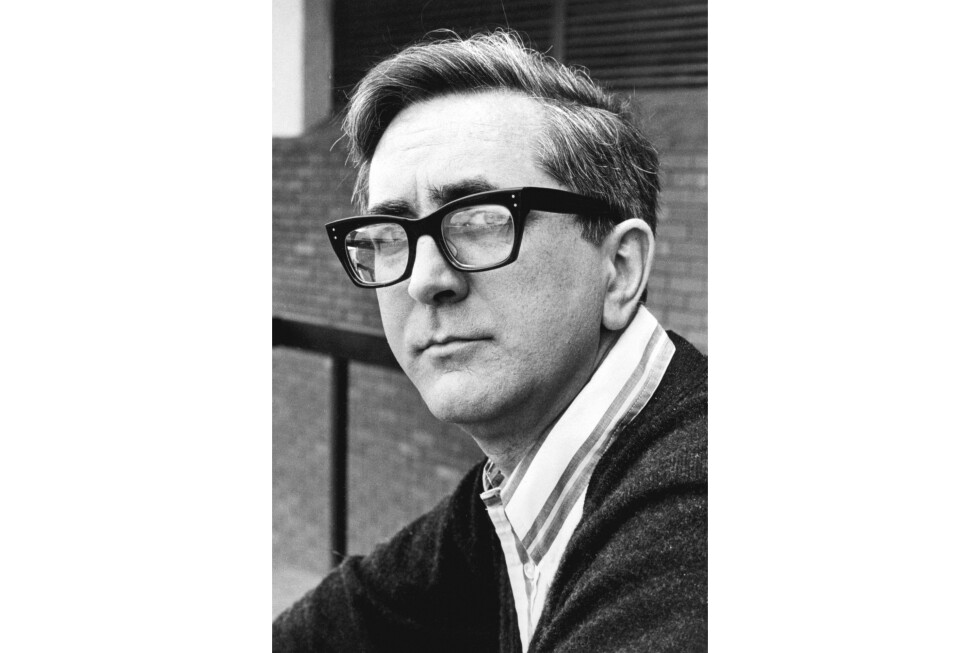
LONDON — Len Deighton, the acclaimed author whose sophisticated and gritty spy novels defined a generation of thriller writing and remained on bestseller lists for decades, has passed away at age 97. His literary agent, Tim Bates, confirmed his death occurred on Sunday, though no specific cause was provided.
Deighton’s literary career launched spectacularly with his 1962 debut novel, “The IPCRESS File,” which captured the cool, realistic tone of 1960s espionage fiction. The work was subsequently adapted into a successful film featuring Michael Caine in a star-making performance, propelling both author and actor to international acclaim and enduring careers.
Bates memorialized Deighton as “a Titan” of literature, noting that he was “not only one of the greatest spy and thriller writers of the 20th century but also one of our greatest writers in any genre.”
Born in 1929 to a working-class family in an affluent London neighborhood—his father worked as a chauffeur while his mother served as a part-time cook—Deighton developed early insight into the complexities and contradictions of Britain’s class structure. Before achieving literary fame, he pursued diverse vocations including Royal Air Force service during mandatory national service, art studies, and work as a waiter, pastry chef, and flight attendant. He initially found professional success as a book and magazine illustrator, creating the cover design for the first UK edition of Jack Kerouac’s seminal work “On the Road” in 1958.
Deighton conceived “The IPCRESS File” during a vacation as personal entertainment. The novel, which followed a secret agent navigating bureaucratic obstacles and internal deception while investigating a Soviet kidnapping operation, ultimately sold millions of copies worldwide. His depiction of espionage as a messy, error-prone profession stood in stark contrast to the glamorous world of Ian Fleming’s James Bond novels.
In a 1997 BBC interview, Deighton revealed he had never read a Bond book, yet coincidentally published his debut novel the same month the first 007 film “Dr. No” premiered. His gritty narrative approach, reminiscent of John le Carré’s morally complex spy world, resonated with contemporary audiences and benefited from what he described as a “backlash against Bond’s huge success.”
Deighton continued his anonymous protagonist through several sequels including “Horse Under Water,” “Funeral in Berlin,” “Billion-Dollar Brain,” and “An Expensive Place to Die,” with multiple adaptations featuring Caine. In 1983, he introduced MI6 officer Bernard Samson in “Berlin Game,” initiating a ten-novel series that included “Mexico Set” and “London Match,” later adapted into the 1988 television series “Game, Set and Match.”
His literary scope extended beyond contemporary espionage to World War II narratives, notably “Bomber” (1970), which presented the air war from both British and German perspectives, and “SS-GB” (1978), an alternative history novel imagining Nazi-occupied Britain that was adapted for television in 2017.
Deighton authored over two dozen novels, concluding his final trilogy—”Faith,” “Hope,” and “Charity”—in 1996. He also produced historical nonfiction works including an analysis of President John F. Kennedy’s assassination and “Fighter: The True Story of the Battle of Britain.”
Beyond literature, Deighton cultivated expertise in gastronomy, serving as food correspondent for The Observer during the 1960s and authoring several cookbooks targeted specifically at male audiences—an innovative concept at the time. His 1965 “Len Deighton’s Action Cook Book” featured recipes illustrated in comic strip format.
Deighton was first married to illustrator Shirley Thompson before their divorce, later marrying Ysabele de Ranitz with whom he had two sons.