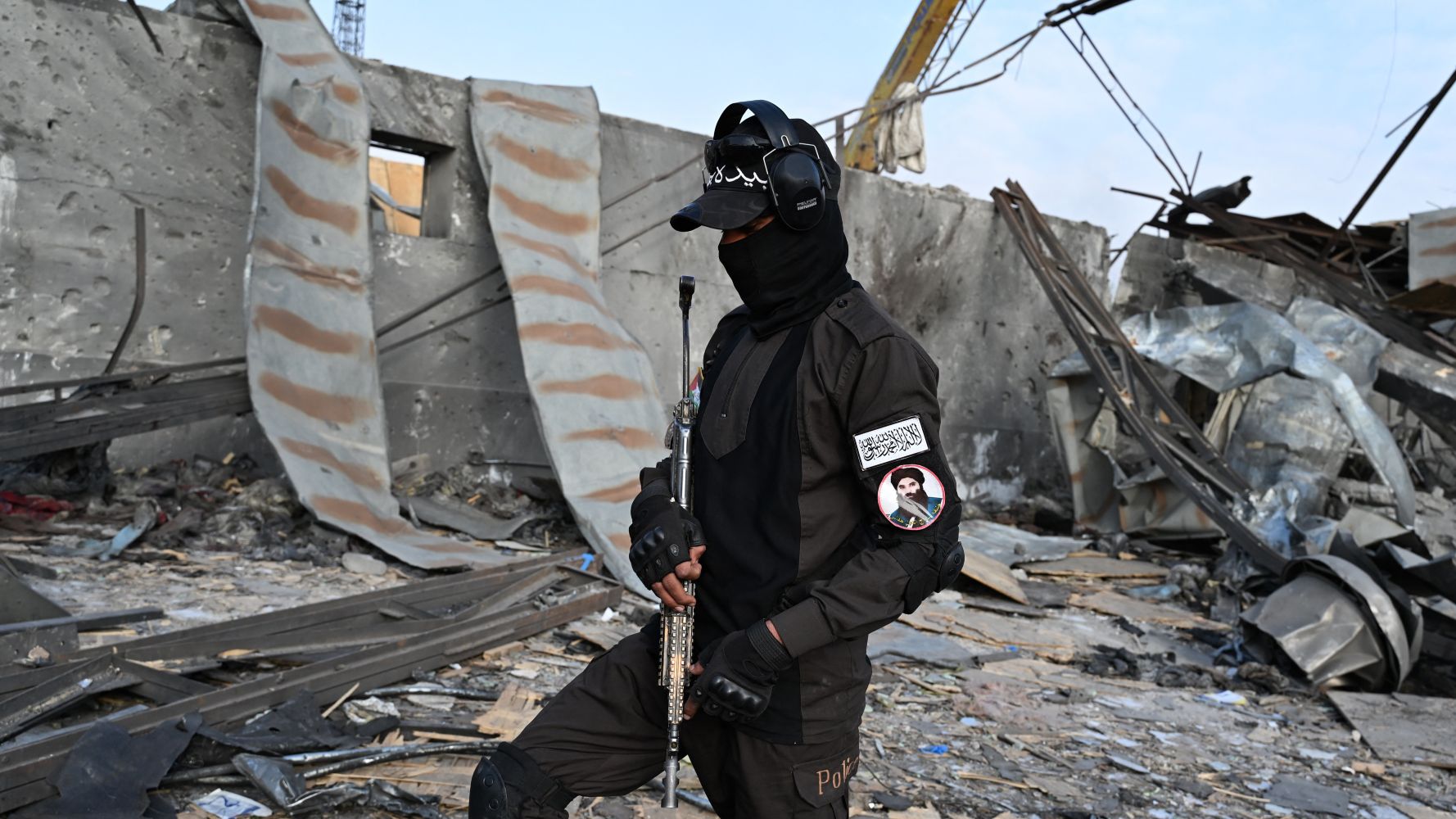
A significant escalation in cross-border hostilities has erupted between Afghanistan and Pakistan, with the Taliban government leveling a grave accusation against its neighbor. Senior Taliban official Hamdullah Fitrat, serving as deputy spokesman, has publicly charged Pakistan with conducting a lethal assault on the Omid Addiction Treatment Hospital in Kabul. The facility, described as a 2,000-bed drug rehabilitation center, was reportedly struck on Monday evening.
According to Taliban claims, the attack resulted in catastrophic structural damage to the hospital complex. Disturbing imagery circulated by international news agencies depicted rescue personnel from the Afghan Red Crescent organization extracting numerous victims from the collapsed wreckage. Survivors were photographed congregating in makeshift triage areas near the devastation.
Fitrat provided a stark casualty assessment via social media platform X, stating: ‘As a consequence of this aggression, substantial portions of the medical facility have been demolished. We hold serious apprehensions regarding a substantial death toll, which has regrettably reached approximately 400 fatalities, with an additional 250 individuals sustaining injuries.’
The Pakistani government has issued an emphatic rebuttal of these allegations. Information Minister Attaullah Tarar dismissed the reports as ‘factually incorrect and deliberately crafted to misguide international perception.’ Official statements from Islamabad maintain that military operations exclusively targeted terrorist infrastructure allegedly operated by Afghan-based militants.
Minister Tarar specified that precision strikes were conducted against bases utilized by the Taliban regime to support armed factions designated as Fitna Al Khawarij and Fitna Al Hindustan. These groups have claimed responsibility for numerous attacks against Pakistani military and civilian targets in border regions including Balochistan and Khyber Pakhtunkhwa.
This incident exacerbates already deteriorating diplomatic relations between the neighboring nations. Tensions have intensified considerably since the Taliban’s ascension to power in 2021 following the United States’ withdrawal from Afghanistan. Former strategic allies have engaged in open conflict since February, with both sides reporting hundreds of combatant casualties in border skirmishes.
The geopolitical complexity is deepened by ethnic dimensions, as the Taliban predominantly comprises Pashtun members. This ethnic group maintains a significant population of approximately 40 million within Pakistan’s 200 million citizens, further complicating bilateral relations. Both nations routinely exchange accusations regarding civilian targeting and support for insurgent groups operating across their shared 2,640-kilometer frontier.