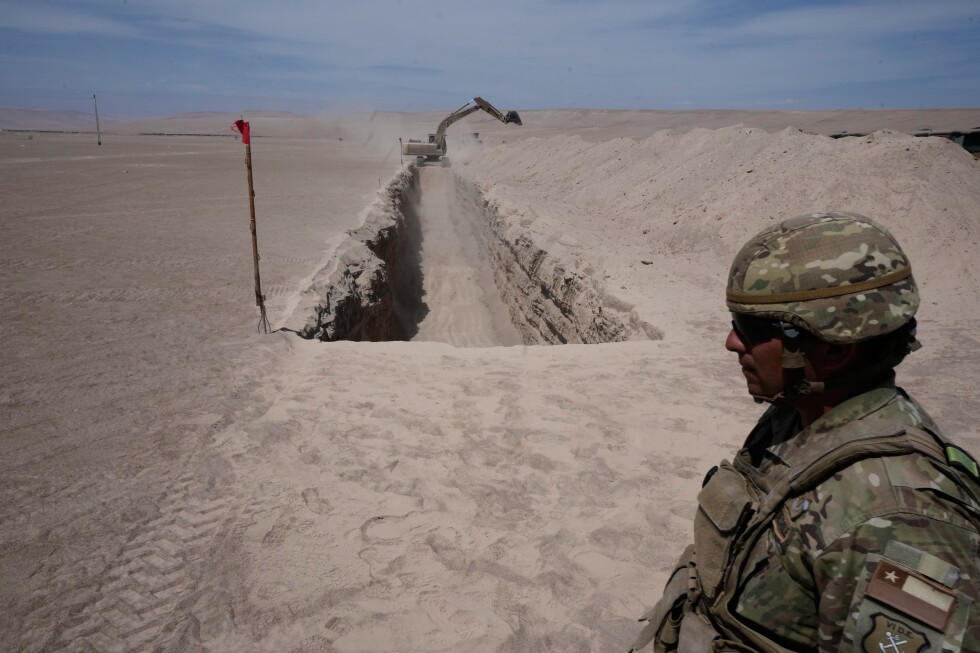
SANTIAGO, Chile — In a decisive move fulfilling his campaign pledge, Chile’s newly inaugurated conservative President José Antonio Kast has initiated the construction of a comprehensive border barrier system along the nation’s northern frontier. The project, dubbed “Border Shield,” represents one of the administration’s first major policy implementations since Kast took office less than a week ago.
The strategic northern border area of Chacalluta, which has served as a primary entry point for undocumented migrants crossing from Peru into one of South America’s most prosperous nations, now serves as the starting point for this ambitious security initiative. The multi-layered defense system will incorporate physical barriers including trenches and fencing, complemented by advanced drone surveillance and military patrols.
While initial construction activity appeared modest—with a single bulldozer excavating desert terrain to create defensive trenches—the president characterized the undertaking as “a milestone for all of Chile.” Kast emphasized his administration’s commitment to “clear and concrete decisions to close our border to illegal immigration, drug trafficking and organized crime” without delay.
The policy approach bears resemblance to border security measures advocated by former U.S. President Donald Trump, with Kast employing emergency presidential powers to enact half a dozen decrees targeting enhanced border protection and expedited deportation procedures for undocumented foreigners.
This hardening of immigration policy responds to demographic shifts that have seen Chile’s foreign population double between 2017 and 2024. Current estimates suggest over 300,000 undocumented immigrants reside in the country, with significant numbers fleeing Venezuela’s economic collapse and political persecution.
While Chile maintains among the region’s lowest homicide rates, the settlement of foreign criminal organizations from Venezuela and elsewhere has introduced previously uncommon crimes including carjackings, kidnappings, and contract killings. These developments have generated widespread public concern and increased anti-immigrant sentiment among Chilean citizens.
Kast’s election represents Chile’s most significant rightward political shift since the nation restored democracy in 1990 following 17 years of military rule under General Augusto Pinochet—a leader whom Kast supported during his early political activism.