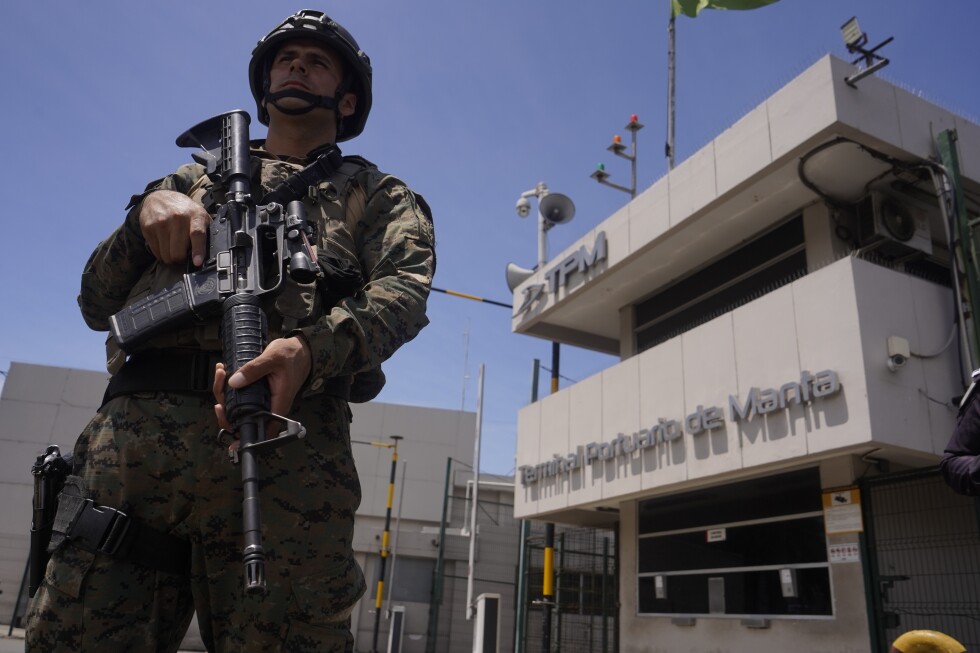
Ecuador has initiated an unprecedented security mobilization, deploying 75,000 military and police personnel to four violence-plagued provinces while implementing strict nighttime curfews. The emergency measures, which began Sunday night, prohibit civilian movement between 11 p.m. and 5 a.m. in Guayas, El Oro, Los Rios, and Santo Domingo de los Tsachilas provinces for an initial two-week period.
The massive security operation has already resulted in 253 arrests for curfew violations. Interior Minister John Reimberg confirmed authorized artillery strikes against three identified targets, declaring emphatically that operations would continue regardless of consequences. Remarkably, these initial strikes resulted in no recorded casualties according to official reports.
This dramatic escalation responds to Ecuador’s spiraling security crisis, with homicide rates quintupling since the COVID-19 pandemic to reach 50 murders per 100,000 residents last year—the highest rate in decades. The violence stems primarily from competing international drug cartels battling for control of coastal ports used to transport cocaine to United States markets.
President Daniel Noboa has extended a state of exception granting military authority to conduct joint patrols with police and enter homes without warrants. The conservative leader has pointed fingers at neighboring Colombia, accusing its government of insufficient action against cartels operating along their shared border. In retaliation, Noboa imposed tariffs on Colombian imports in January, vowing to maintain them until security conditions improve.
Ecuador’s military recently collaborated with United States forces in a cross-border operation targeting a training camp used by Colombian drug traffickers. Officials identified the facility as belonging to Comandos de la Frontera, a splinter group originating from Colombia’s FARC guerrillas.
Despite these aggressive measures, civil society groups criticize Noboa’s iron-fisted approach, arguing it has failed to reduce crime while endangering civilians. The strategy faced particular scrutiny after eleven soldiers received 30-year prison sentences last year for the abduction and murder of four children whose bodies were discovered near a military base outside Guayaquil.