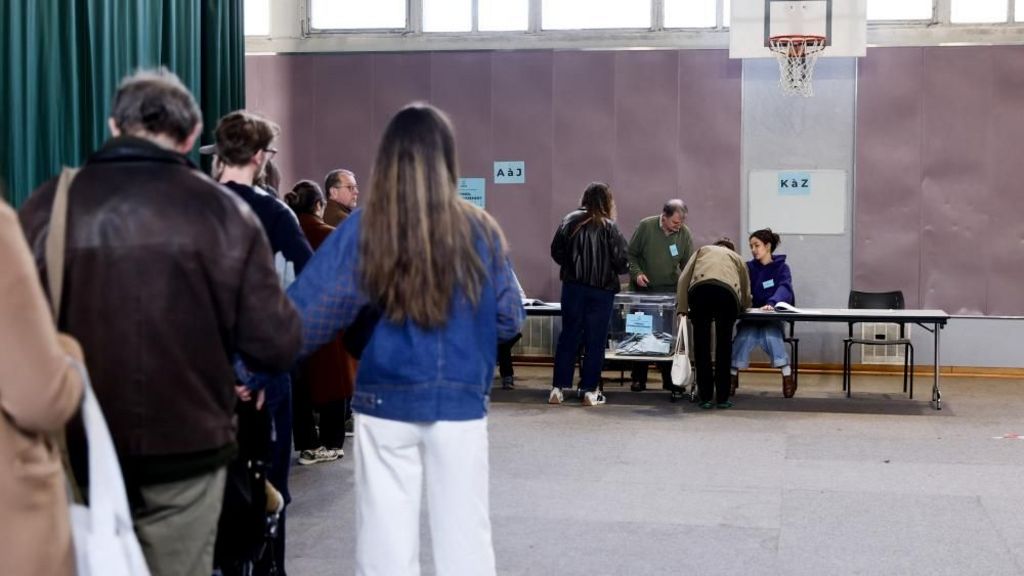
The aftermath of France’s first-round municipal elections has plunged mainstream political parties into a strategic quagmire, forcing uncomfortable considerations of alliances with extremist factions. As the country approaches decisive run-off votes, both center-left Socialists and center-right Republicans face politically hazardous choices between ideological purity and electoral practicality.
In multiple major urban centers including Marseille and Paris, preliminary results demonstrate the rising influence of far-right National Rally (RN) and far-left France Unbowed (LFI) movements. This electoral surge creates complex mathematical scenarios where traditional parties must contemplate partnerships with ideological opponents to secure victories.
Marseille exemplifies this political dilemma: Socialist incumbent Benoît Payan maintains a marginal lead over RN candidate Franck Allisio, while Republican contender Martine Vassal and LFI’s Sébastien Delogu remain competitive. This four-way contest forces consideration of previously unthinkable alliances—Socialists potentially aligning with LFI or Republicans collaborating with RN—despite significant reputational consequences.
Paris presents similar complications. Socialist candidate Emmanuel Grégoire has publicly rejected alliances with LFI’s Sophia Chikirou, potentially jeopardizing his electoral prospects. Conversely, conservative candidate Rachida Dati faces parallel challenges regarding far-right candidate Sarah Knafo, whose support might prove mathematically essential yet politically toxic.
Historically, French politics maintained clearer boundaries, with RN considered beyond acceptable partnership. The contemporary landscape demonstrates increased complication, with LFI now joining RN as politically problematic partners. This shift follows the dissolution of the left-wing NUPES alliance that previously united Socialists, LFI, Greens, and Communists during 2024 legislative elections.
The breakdown accelerated following recent controversies including a Lyon murder case involving far-left perpetrators with LFI connections and party leader Jean-Luc Mélenchon’s controversial wordplay regarding Jeffrey Epstein’s Jewish surname. These incidents prompted Socialist leader Olivier Faure to reject national-level agreements with LFI while permitting localized arrangements, as already demonstrated in Toulouse.
The resulting political environment exhibits heightened polarization, with accusations of hypocrisy echoing across the ideological spectrum. This municipal electoral dynamic foreshadows greater challenges for next year’s presidential election, suggesting French politics will increasingly be shaped by fringe movements rather than traditional center-ground consensus.