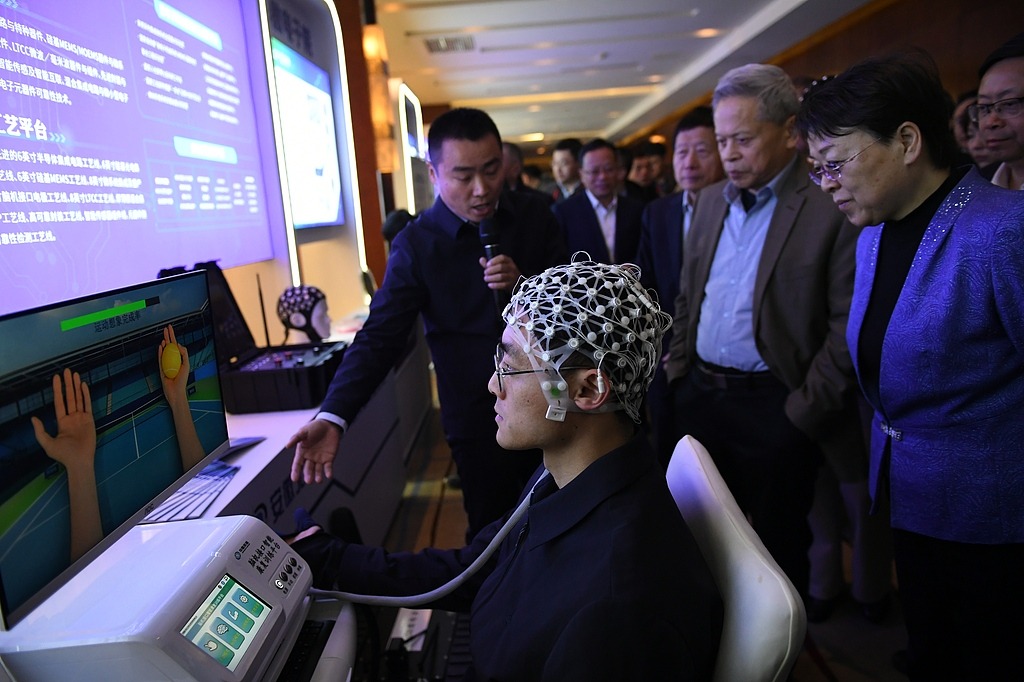
China has officially designated brain-computer interface (BCI) technology as a national priority in its latest government planning, recognizing its transformative potential in treating neurological and mental health conditions. The technology, which establishes direct communication pathways between the brain and external devices, has been included in both China’s Government Work Report and the 15th Five-Year Plan (2026-30) as a key future industry.
According to Yao Dezhong, a National People’s Congress deputy and professor at the University of Electronic Science and Technology of China, BCI technology offers groundbreaking alternatives for patients unresponsive to traditional medication. “Approximately one-third of mental health patients don’t respond to medication,” Yao noted, emphasizing that BCI can provide new diagnostic and therapeutic pathways for conditions including depression, anxiety, and Alzheimer’s disease.
The technology operates by recording electrical activity within the brain’s approximately 86 billion neurons, translating these signals into commands that can regulate neural patterns. Yao explained the mechanism: “When we sleep, low-frequency signals dominate the brain. When we’re working, high-frequency signals act. If we cannot fall asleep, the problem likely lies in abnormal brain frequency.” BCI technology can readjust these neural signals to restore balance between relaxed and excited states.
While currently widely used for motor impairments from spinal cord injuries and stroke, BCI’s application for mental disorders remains in early research stages. The primary challenge for noninvasive BCI involves identifying affected brain areas and developing user-friendly electrodes that don’t require conductive gel or cause discomfort.
Despite these challenges, noninvasive BCI offers significant advantages including enhanced safety, lower costs, and minimal side effects compared to invasive procedures. Market-available BCI products are already priced under 2,000 yuan ($290), making them accessible for household use.
Industry developments are underway, with Yao’s institute collaborating with Sichuan Jinhong Traditional Chinese Medicine Technology Co to develop a third-generation noninvasive sleep-aid device scheduled for launch in early 2026. The device combines wearable intelligent hardware with a mobile application for sleep monitoring and management.
Huang Li, another NPC deputy and chairman of Wuhan Neuracom Technology Development Co, revealed advanced capabilities in neural signal processing: “Our ultra-high-density microelectrode array can read signals from individual neurons, accurately decode brain signals, and encode feedback using micro-currents.” This precision enables early intervention for cognitive decline in Alzheimer’s patients.
The technology is already demonstrating clinical utility. Li Longti, vice-president of Taihe Hospital in Hubei province, reported successful applications treating post-stroke hemiplegia, spinal cord injury paraplegia, Parkinson’s disease, and sleep disorders. Li advocated for including BCI technology in medical insurance and critical illness assistance programs to establish public support systems and tiered pricing.
With China’s large population and high prevalence of mental health conditions, experts agree that BCI technology is poised to become an essential component of future healthcare solutions, particularly for medication-resistant patients requiring alternative treatment options.