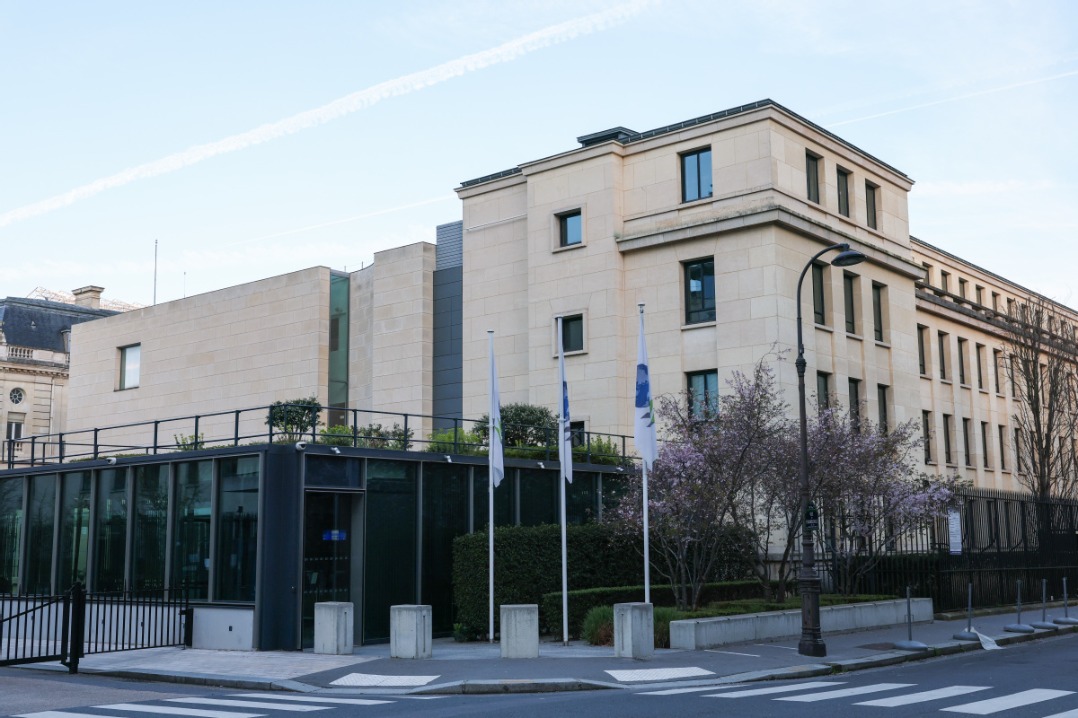
PARIS – High-stakes economic discussions between Chinese and American delegations commenced in Paris on Saturday, marking a critical juncture for preserving the delicate stability achieved between the world’s two largest economies. Vice-Premier He Lifeng is leading the Chinese contingent in these negotiations, which are scheduled to continue through Tuesday at the Organization for Economic Cooperation and Development headquarters.
This sixth round of bilateral trade consultations follows five previous sessions conducted between May and October last year that successfully de-escalated tensions and averted a full-scale trade conflict. According to analysts monitoring the negotiations, both nations must demonstrate good faith and mutual compromise to build upon existing consensus rather than introducing new barriers to progress.
The talks occur against a complex backdrop of recent legal and political developments. Last month’s US Supreme Court decision striking down broad presidential tariff authorities has prompted the Trump administration to seek alternative leverage mechanisms, evidenced by the initiation of Section 301 trade investigations against China and other trading partners just days before the Paris meeting.
Zhou Mi, a senior researcher at the Chinese Academy of International Trade and Economic Cooperation, noted that while previous negotiations achieved significant consensus, many understandings have yet to be formalized into concrete outcomes—a situation requiring joint resolution efforts. Current discussions are expected to address proper handling of unilateral US measures and strengthening of mutual trust.
Economic research from the Federal Reserve Bank of New York indicates that approximately 90% of the financial burden from previous Trump administration tariffs fell on American consumers and businesses rather than foreign exporters. This data underscores the mutual benefits of cooperation, according to He Weiwen, senior fellow at the Center for China and Globalization, who emphasized that Sino-US common interests “far exceed the tariff game.”
The negotiations also follow China’s recent approval of its 15th Five-Year Plan (2026-30), which reaffirms commitments to global business engagement including American companies seeking to participate in China’s development. International financial technical analyst Daryl Guppy highlighted China’s stable investment environment but noted that genuine US commitment is essential for extending cooperation into manufacturing, technology, and service sectors.