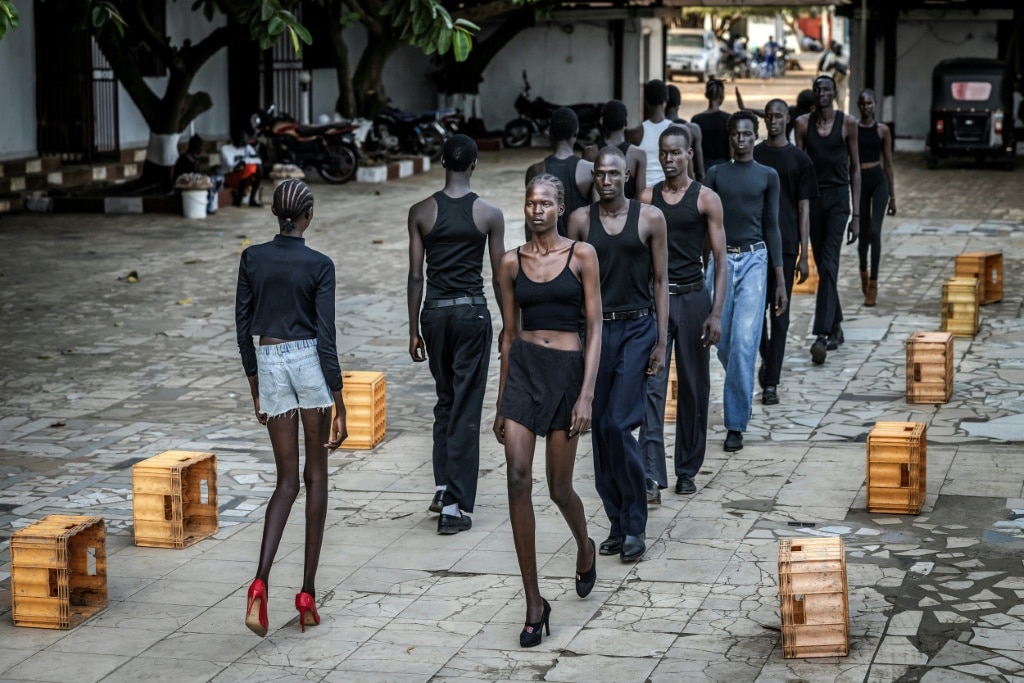
South Sudan has emerged as an unlikely powerhouse in the global fashion industry, producing an extraordinary concentration of modeling talent despite being one of the world’s youngest and most troubled nations. Remarkably, nine of the top 50 models currently ranked on Models.com originate from this East African country, creating a remarkable success story amid ongoing challenges.
The journey from South Sudan to international runways often begins on cracked paving stones in Juba, where aspiring models practice their craft with dreams of escaping poverty. They follow in the footsteps of pioneers like Awar Odhiang, who transitioned from an Ethiopian refugee camp to closing Chanel’s prestigious Paris Fashion Week show, and Alek Wek, who blazed the trail in the 1990s after her family fled conflict.
Doris Sukeji, founder of Jubalicious modeling agency in Juba, confirms the industry’s current dominance: “Paris, Milan, London—the fashion world is presently dominated by South Sudanese boys and girls. Their distinctive dark skin tone has become particularly sought-after by major agencies.”
However, this success story faces significant political obstacles. Despite having the physical attributes and talent demanded by the industry, many South Sudanese models encounter insurmountable visa barriers. Yar Agou, a 19-year-old signed with Jubalicious, experienced this firsthand when her visa was rejected at the last minute, preventing her from participating in Milan Fashion Week. Instead of walking international runways, she currently works as a cleaner while awaiting new opportunities.
The financial stakes are substantial—successful models can earn tens of thousands of dollars in a single season, potentially transformative in a country where 92% of the population lives below the poverty line. Yet Sukeji reports that seven of her models with confirmed work sponsorships have been denied visas in recent months, reflecting increasingly strict immigration policies in Western nations.
Additional challenges include conservative local attitudes toward modeling, which some families associate with prostitution, and the fashion industry’s relentless demand for new faces. Sukeji provides free training that can last up to three months, taking only a 10% commission when her models secure work.
Despite these hurdles, South Sudan’s modeling community maintains hope. As models practice their runway walks on Juba rooftops, they envision futures beyond poverty and conflict, inspired by success stories like Anyier Anei, who transitioned from international modeling to starring in French cinema. Their perseverance demonstrates that even in the most challenging circumstances, extraordinary talent can emerge and captivate global industries.