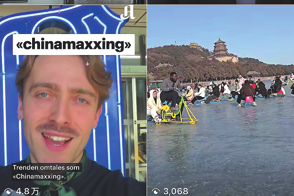
A remarkable cultural phenomenon dubbed ‘Chinamaxxing’ is captivating American Gen Z audiences through social media platforms, representing a significant shift in how younger generations engage with Chinese culture. This digital movement involves Western youth adopting various aspects of Chinese daily life, wellness practices, and aesthetics as a form of personal optimization and lifestyle enhancement.
The trend has gained substantial traction on TikTok and Instagram, where videos tagged #Chinamaxxing have accumulated millions of views. Content creators showcase routines featuring traditional Chinese elements—from drinking honey-infused hot water to the accompaniment of guzheng music to practicing Chinese-style aerobics and enjoying authentic dim sum. Many participants humorously refer to themselves as ‘Chinese baddies’ while documenting their cultural exploration.
This cultural curiosity aligns with recent Pew Research Center data revealing a generational divide in American perceptions of China. Among adults under 30, only 21% hold strongly unfavorable views, compared to 37% of those aged 50-64. Analysts attribute this divergence to younger generations encountering China primarily through algorithm-driven social content rather than traditional news media or political discourse.
Shaoyu Yuan of NYU’s Center for Global Affairs identifies Chinamaxxing as evidence of China’s growing ‘cultural cachet,’ noting that engagement increasingly occurs through lifestyle and aesthetic appreciation rather than geopolitical framing. Jing Gao, founder of Chinese food brand Fly By Jing, emphasizes that this represents more than a passing trend—it’s a meaningful recalibration of cultural perception driven by genuine curiosity and daily practice.
The movement finds embodiment in figures like Matt Soren, an American who has lived in Chongqing for nearly 17 years. Through his platform Baimanzhi, Soren shares his deep cultural immersion, suggesting that Chinamaxxing reflects a broader search for alternatives to Western cultural norms. He emphasizes that truly understanding Chinese culture requires looking beyond superficial habits to embrace underlying values like family connection and tradition.
This organic, youth-driven cultural exchange demonstrates how digital platforms can facilitate cross-cultural understanding through shared daily experiences rather than political narratives, potentially signaling a new era of Sino-American cultural relations.