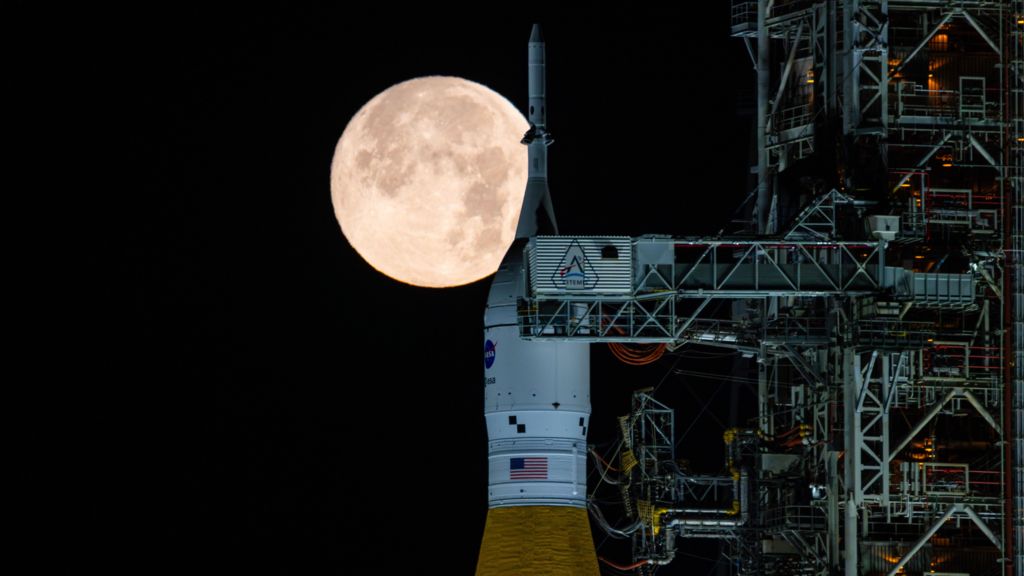
NASA has confirmed preparations are proceeding for the landmark Artemis II mission, targeting an early April launch that will mark humanity’s first return to lunar vicinity in over five decades. The highly anticipated mission, originally scheduled for March, experienced a brief delay after technicians identified a helium leak in the spacecraft systems.
The space agency addressed the technical issue by returning the Space Launch System (SLS) rocket to Kennedy Space Center’s Vehicle Assembly Building in Florida for comprehensive repairs. NASA officials have expressed confidence that the engineering challenge has been successfully resolved, with plans to transport the rocket back to Launch Pad 39B on March 19th. The earliest potential launch window opens on April 1st, though mission controllers emphasize this date remains contingent on final systems verification.
Artemis II will carry a pioneering crew of four astronauts: NASA’s Reid Wiseman, Victor Glover, and Christina Koch, alongside Canadian Space Agency astronaut Jeremy Hansen. This diverse team will embark on a groundbreaking 10-day journey aboard the Orion spacecraft, propelled by NASA’s most powerful rocket ever developed. Their trajectory will carry them around the far side of the Moon—a region perpetually hidden from Earth’s view—before returning home.
Mission leadership acknowledges the inherent risks of space exploration while emphasizing extensive safety preparations. ‘We maintain rigorous focus on identifying potential failure scenarios, thoroughly assessing risks, and implementing comprehensive mitigation strategies,’ stated John Honeycutt, Artemis II Mission Management Team chair. While historical data suggests only 50% success rates for new rocket systems, Honeycutt noted that contemporary engineering approaches and risk management protocols significantly improve mission safety prospects.
NASA has decided to forego additional full-scale dress rehearsals, with the next propellant loading sequence occurring during actual launch procedures. Lori Glaze, acting associate administrator for Exploration Systems Development, explained this decision reflects confidence in existing testing data while prioritizing hardware readiness. The agency remains committed to its internal deadline of launching Artemis II before April 2026, a timeline adjusted from original plans after heat shield concerns emerged during the uncrewed Artemis I mission in 2024.