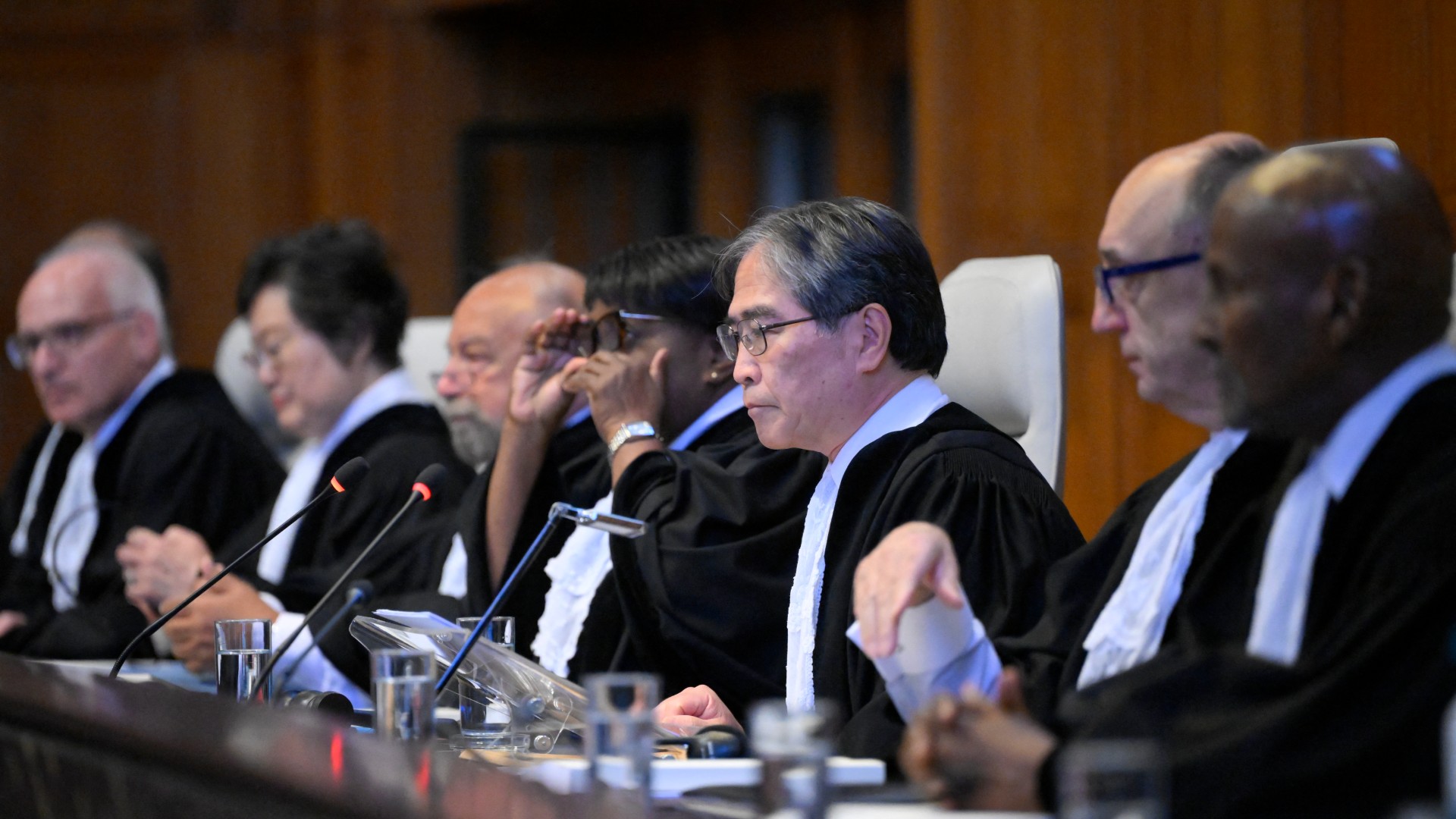
In a significant development at the International Court of Justice (ICJ), Iceland and the Netherlands formally submitted declarations to intervene in South Africa’s genocide case against Israel on Thursday. This brings the total number of nations seeking participation in these landmark proceedings to eighteen.
The two European countries filed their interventions under Article 63 of the ICJ statute, a provision enabling state parties to a convention under legal scrutiny to present their interpretive perspectives on the treaty in question. The case centers on allegations that Israel’s military operations in Gaza since October 2023 violate the 1948 Genocide Convention.
This legal action originated when South Africa initiated proceedings in December 2023, accusing Israel of genocidal acts through its Gaza campaign that has resulted in over 70,000 Palestinian casualties, predominantly women and children. South Africa’s submission contends that Israel’s military operations constitute genocide through systematic killing, infliction of severe physical and psychological harm, and the creation of conditions designed to physically destroy the Palestinian population—charges that Israel vehemently denies.
The interventions coincide with Israel’s scheduled submission of its counter-memorial on Thursday, presenting its legal arguments responding to South Africa’s allegations after the court granted several deadline extensions. Judicial authorities have yet to confirm the filing’s receipt.
The growing coalition of intervening states now includes Colombia, Libya, Mexico, Palestine, Spain, Turkey, Chile, the Maldives, Bolivia, Ireland, Cuba, Belize, Brazil, the Comoros, Belgium, and Paraguay. Palestine and Belize have additionally sought intervention under Article 62, which permits state participation when a nation believes its legal interests might be affected by the court’s determination.
In their legal submissions, Iceland emphasized that the Genocide Convention must be interpreted to support its fundamental objective of preventing and punishing genocide. The Nordic nation argued that genocidal intent can be inferred from behavioral patterns rather than requiring direct evidence, noting that deprivation of essential resources like food, shelter, and medical care could constitute conditions intended to destroy protected groups, with particular vulnerability accorded to children.
The Netherlands similarly advocated for the consideration of conduct patterns and circumstantial evidence in establishing genocidal intent, suggesting that forced displacement and obstruction of humanitarian assistance might constitute Convention violations depending on contextual circumstances.
Both nations clarified that their interventions addressed strictly matters of treaty interpretation rather than factual allegations specific to the case. These proceedings have attracted unprecedented international attention, becoming one of the most closely monitored cases in ICJ history with an extraordinary number of third-state interventions.
The World Court has previously issued binding provisional measures requiring Israel to implement preventive measures against potential Genocide Convention violations and facilitate humanitarian access to Gaza, though it stopped short of mandating a ceasefire. Israel stands accused of repeatedly disregarding these judicial orders.
Legal experts project that a definitive ruling on whether Israel breached the Genocide Convention might not materialize until 2028, indicating a protracted legal battle ahead at The Hague.