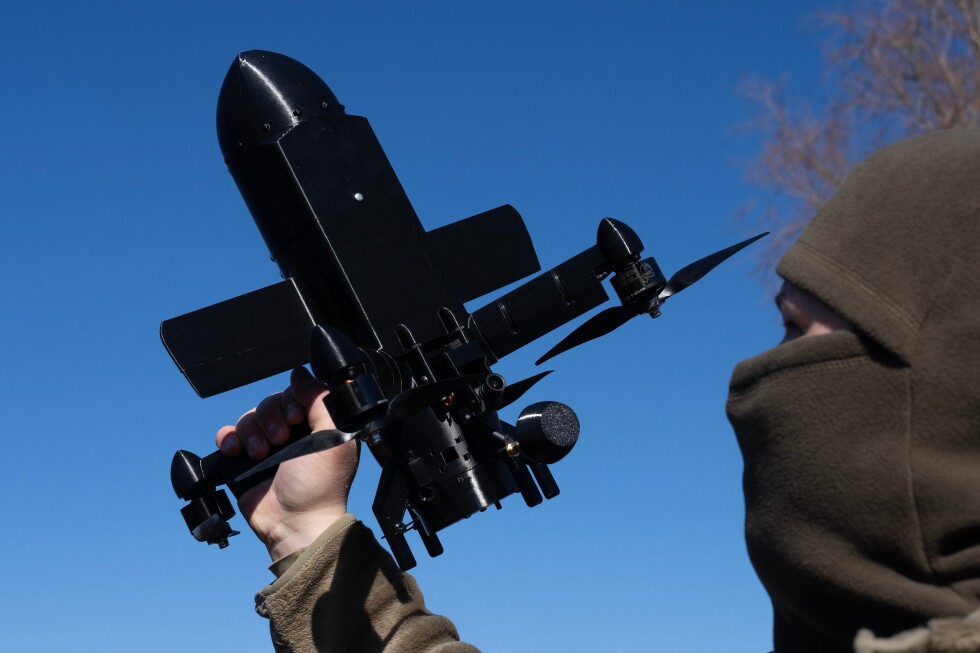
Ukrainian President Volodymyr Zelenskyy announced on Thursday that Kyiv awaits White House authorization for a comprehensive drone manufacturing agreement initially proposed last year. This development emerges as nations worldwide reassess their aerial defense capabilities following recent Middle East hostilities that revealed vulnerabilities in conventional systems.
The proposed bilateral agreement would encompass diverse drone varieties and integrated air defense mechanisms functioning as a unified network. This system is specifically engineered to neutralize mass assaults involving hundreds or potentially thousands of Iranian-designed Shahed drones and missiles. Zelenskyy communicated via social media that the document remains unsigned despite its strategic importance.
Russia has deployed tens of thousands of Iranian-origin Shahed drones against Ukraine throughout the ongoing invasion, recently executing its most extensive nighttime offensive comprising over 800 drones and decoys. Concurrently, Iran has utilized identical drone technology against Middle Eastern targets in retaliation for joint U.S.-Israeli operations.
Ukrainian innovations have revolutionized aerial warfare defense through economically efficient drone interception systems, some costing merely several thousand dollars. These advancements have fundamentally transformed air defense protocols amid growing global interest. However, wartime export restrictions currently prevent international sales.
The escalating Middle Eastern conflict may incentivize U.S. officials to approve Ukraine’s proposal, according to Zelenskyy’s assessment. Such agreements would strengthen Kyiv’s diplomatic positioning in future negotiations with Moscow while securing sustained international backing for Ukraine’s defensive efforts.
Meanwhile, U.S.-brokered peace discussions regarding Europe’s largest military conflict since WWII remain suspended due to Middle East tensions. Zelenskyy’s current diplomatic tour includes meetings with NATO ally Romania, followed by Paris discussions with French President Emmanuel Macron.
Recent analyses reveal that Russia’s oil revenues—critical for financing its military operations—have surged since the Middle East conflict began. The nonprofit Centre for Research on Energy and Clean Air reports daily oil earnings averaging 14% above February levels, attributed to rising crude prices.
Macron’s office confirmed discussions will address countermeasures against Russia’s sanctions-evading ‘shadow fleet’ of oil tankers. Zelenskyy’s Romanian agenda includes meetings with President Nicușor Dan, Prime Minister Ilie Bolojan, and inspections at F-16 pilot training facilities. Romania has served as vital corridor for Ukrainian grain exports and provided energy assistance amid Russian attacks on Ukraine’s power infrastructure.