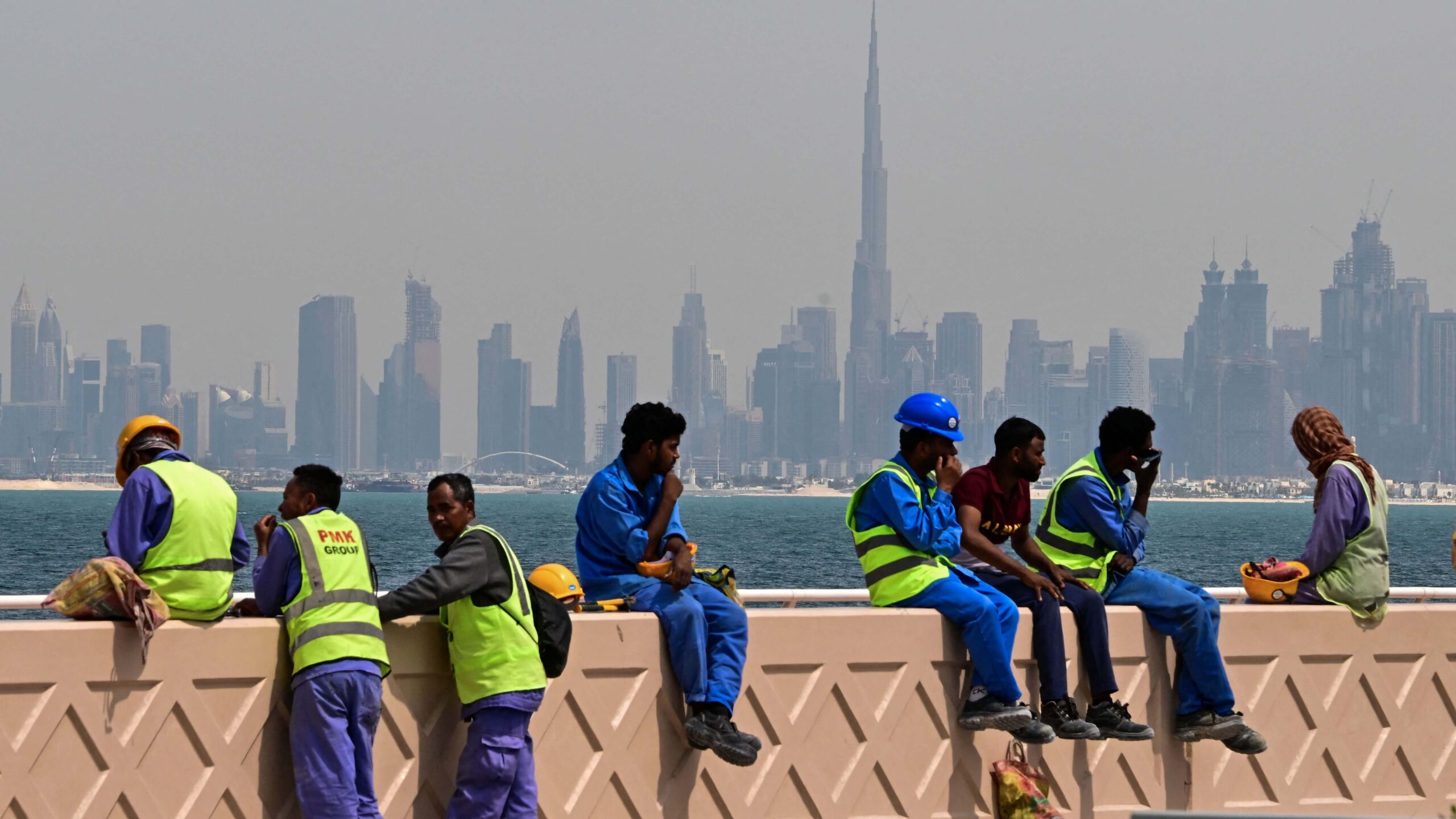
As Iranian missiles strike the Gulf region, the area’s vast migrant workforce continues laboring under dangerous conditions with minimal protection. Delivery riders, cleaners, construction workers, and security personnel—primarily from Bangladesh, Nepal, Pakistan, and other developing nations—find themselves on the frontlines of a conflict they didn’t create.
Despite escalating violence that has killed at least 12 civilians across Gulf states (all migrant workers from South Asia), these essential workers report receiving no safety guidance, shelter information, or evacuation support. According to Equidem, a human rights organization with investigators across the region, migrant workers experience universal trauma and panic while being systematically excluded from official safety measures.
Executive Director Mustafa Qadri identifies two forms of discrimination: exclusion from safety communications and structural discrimination that forces workers to continue working during attacks. ‘There is a conscious choice made to get workers from relatively poor countries,’ Qadri explains, ‘because they’re less likely to complain or demand protection.’
Delivery riders working for major platforms in the UAE describe continuing to work through attacks with no instruction or choice. ‘I came here to earn money, and working in any situation has become a necessity,’ one Pakistani driver told Middle East Eye. ‘If I do not work, I may go hungry.’
Paradoxically, these workers face increased demand for their services as wealthier residents shelter indoors, relying on delivery apps for basic necessities. Some riders report better tips but describe relentless workloads and empty roads as they move toward danger while others flee.
The crisis highlights historical failures by sending countries—including Nepal, Kenya, India, Bangladesh, and Ethiopia—to provide meaningful consular support. Meanwhile, workers on US and Western military bases face particular vulnerability, as standard procedures typically evacuate Western civilians while essential services continue to be run by migrant workers who remain behind.
Migrant workers have also become primary witnesses to the attacks, with much visual documentation circulating online captured on their phones. This has led to arrests, with Bahrain detaining five Pakistani and one Bangladeshi worker for allegedly praising Iranian strikes while filming aftermath footage.
The emotional toll remains largely unaddressed. As one shopkeeper in Qatar noted, ‘Mental health is passive. It’s about being prepared and navigating this if it prolongs. Spending 15 minutes of our day worrying about falling shrapnel is something people have made peace with.’