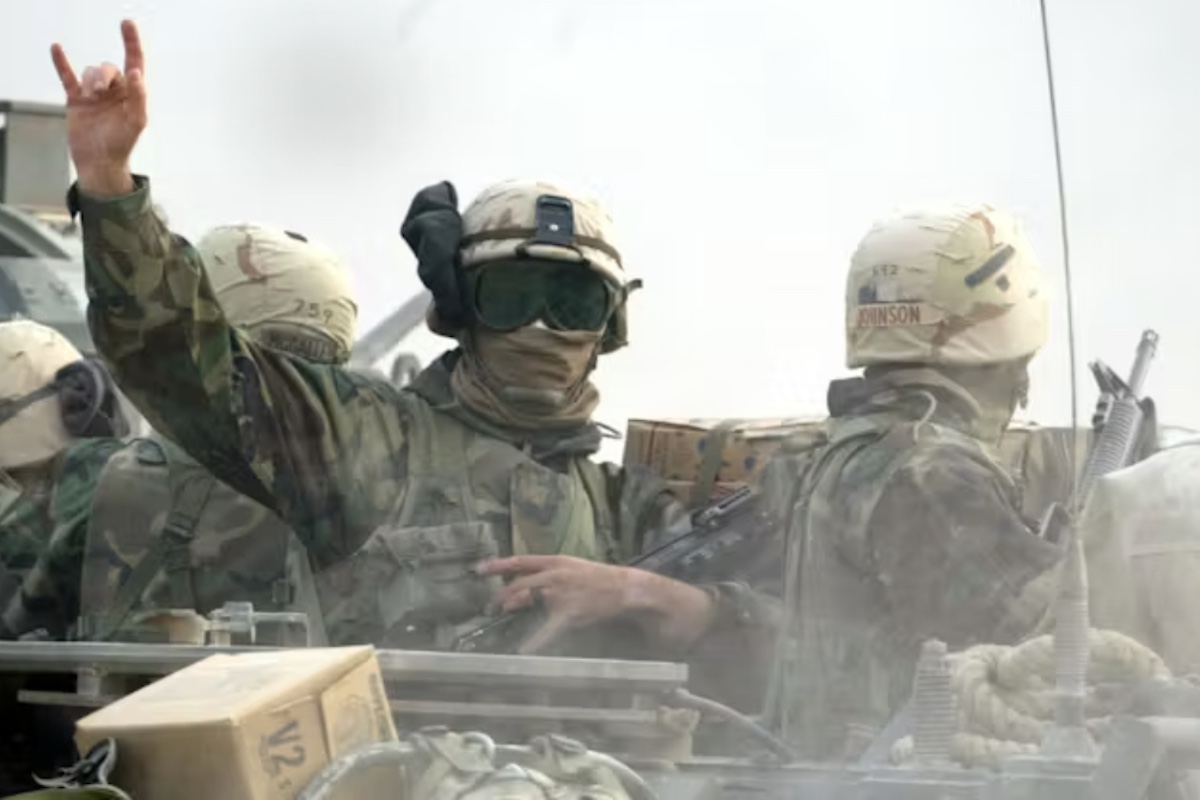
Two decades after the United States launched its invasion of Iraq, the strategic outcome stands as a stark lesson in the limitations of military power. While American forces achieved their immediate tactical objectives with remarkable efficiency—decapitating Saddam Hussein’s regime within 21 days and establishing total air dominance—the political aftermath reveals a profound strategic failure.
Despite expending $2 trillion and 4,488 American lives, the United States ultimately transformed Iraq into an authoritarian state firmly within Iran’s sphere of influence. Iranian-backed militias now operate openly on Iraqi soil, with many holding official positions within the government structure. This paradoxical outcome stems from a critical misunderstanding that has plagued American foreign policy: the conflation of military destruction with effective governance.
The critical turning point came in April 2003 when L. Paul Bremer, head of the Coalition Provisional Authority, issued two fateful orders: Order 1 dissolved the ruling Baath Party and purged all senior members from government positions, while Order 2 disbanded the Iraqi army without disarming it. These decisions effectively eliminated Iraq’s administrative class and created a pool of 400,000 armed, unemployed soldiers who would fuel the insurgency.
Meanwhile, Iran had spent the previous two decades cultivating Shia political networks, exile parties, and militia groups. When the U.S. dismantled Iraq’s existing institutions, Tehran’s well-established networks were positioned to fill the vacuum. The U.S.-backed opposition figures like Ahmed Chalabi and the Iraqi National Congress enjoyed Washington’s favor but lacked domestic legitimacy and governing experience.
This pattern repeats across American military interventions. In Libya, the Obama administration’s 2011 regime change brought enduring political instability rather than democratic transformation. The fundamental error remains the assumption that destroying existing orders creates space for improvement, when in reality it creates opportunities for the best-organized, best-armed, and most-willing actors to seize control.
The contemporary implications for Iran are equally sobering. The Islamic Revolutionary Guard Corps—controlling 30-40% of Iran’s economy and maintaining parallel state infrastructure—represents the organization most likely to fill any power vacuum. External attacks typically produce rally-around-the-flag effects, fusing regime and nation even when citizens despise their leaders.
With 92 million people, active proxy networks, and an unverified stockpile of highly enriched uranium, Iran presents exponentially greater challenges than Iraq did in 2003. The fundamental question remains unanswered: who would govern 92 million Iranians after regime collapse? Military destruction without a coherent theory of governance represents not strategy but strategic bankruptcy.