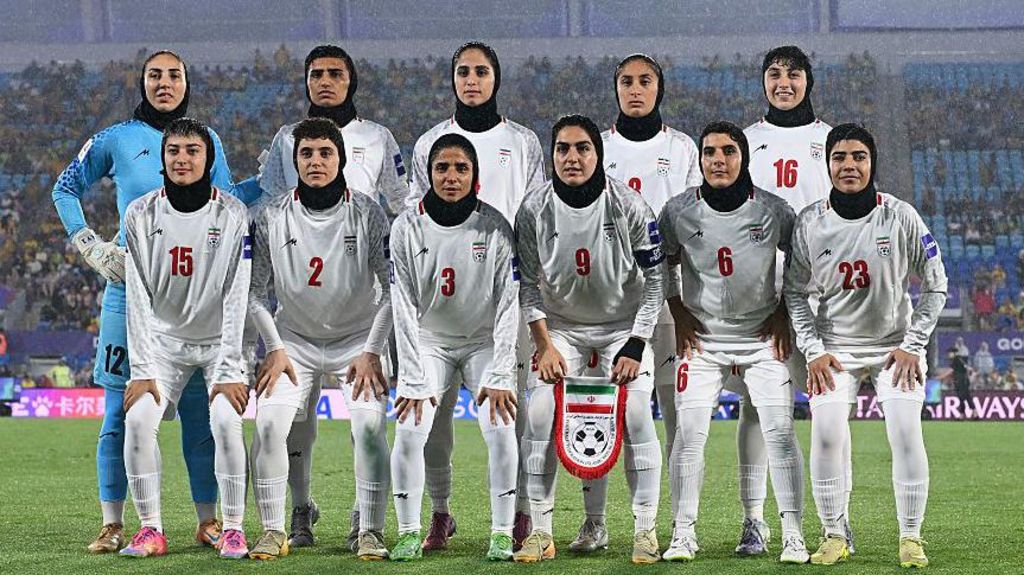
In a dramatic development during the AFC Women’s Asian Cup in Australia, seven members of Iran’s national football team have sought political asylum following their elimination from the tournament, exposing the complex political pressures facing female athletes from the Islamic Republic.
The situation unfolded at the team’s Gold Coast hotel where journalists initially observed players interacting unexpectedly with members of Queensland’s Iranian diaspora community. This casual interaction stood in stark contrast to previous reports suggesting players were under constant surveillance and denied internet access.
The defection plans materialized against a backdrop of intense scrutiny after Iranian state media labeled players ‘traitors’ for initially refusing to sing the national anthem during early tournament matches. The subsequent reversal of this stance in later games suggested possible coercion, raising concerns about potential repercussions upon their return to Iran.
On Monday evening, five players executed a carefully coordinated escape during iftar, the meal breaking Ramadan fasts. Fatemeh Pasandideh, Zahra Ghanbari, Zahra Sarbali, Atefeh Ramazanzadeh, and Mona Hamoudi successfully obtained humanitarian visas within hours. Two additional team members—player Mohaddeseh Zolfi and support staff Zahra Soltan Meshkeh Kar—later joined them, though one subsequently reconsidered her decision.
Australian Immigration Minister Tony Burke confirmed the government’s approach respected individual autonomy, stating: ‘In Australia people are able to change their mind. We respect the context in which she had made that decision.’
The operation involved extensive coordination between Australian Federal Police, immigration officials, and Iranian-Australian activists who worked to counter misinformation from Iranian officials accompanying the team. Activists provided crucial support at stadiums and through digital communication channels, despite players’ limited internet access.
While former U.S. President Donald Trump publicly claimed credit for influencing Australia’s response, government officials revealed that delicate operations had been underway for days. Minister Burke described ‘very late night conversations’ with players who were able to move relatively freely within the hotel despite reports of strict surveillance.
The remaining team members departed Australia on Tuesday night amid emotional protests at airports, returning to an uncertain future in Iran while their former teammates begin new lives in Australia.